
UNIT 4
FROM THE DIARY OF ANNE FRANK
The World Wars fought in the past stand testimony to the fact that fighting wars brings severe human suffering. The sufferers, including women and children are left behind with trauma and indelible impressions on their minds. You have read in the class X English textbook the account of one such war in the diary of Anne Frank who captured the miseries of war in her diary. Discuss how you may relate to Anne Frank’s feelings of alienation and isolation.
READING COMPREHENSION
TEXT I
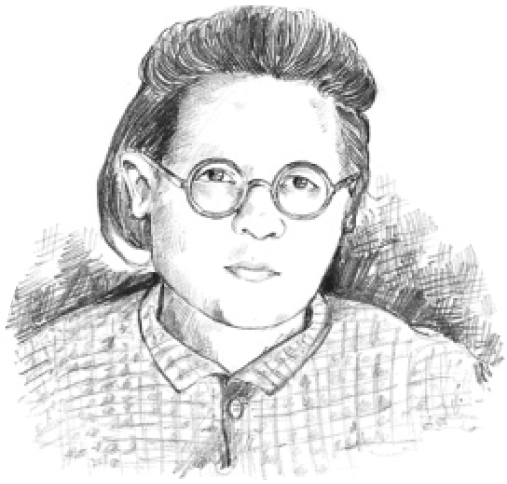
The following excerpt is from the diary of Lena Mukhina, a teenage girl who had undergone the atrocities of Germans when they fortified the city of Leningrad. The siege of Leningrad is an important landmark in the history of Russia. The siege of Leningrad lasted from September 1941 to 1944. The city was cut off from the rest of Russia. The Germans continuously bombarded the city which resulted in death, destruction, and starvation of the people. However, the resolute Russians were warned in the beginning that the enemy was at the gate and it was a question of life and death. They fought bravely and failed the Germans in their evil designs.
LOOK UP AND UNDERSTAND
aftermath
apathy
appalling
inclement
severely
siege
Read the excerpt and answer the questions that follow.
Foreword from The Diary of Lena Mukhina
No one could possibly have known that the city would remain in the grip of siege for 872 days and nights. But Leningrad’s citizens had begun to feel the breath of war as early as September. Daily air raids and artillery bombardment of residential neighbourhoods drove the city’s inhabitants into bomb shelters, several times a day, and for hours at a time. People’s initial curiosity in the aftermath of the first bomb attacks soon gave way to fear and then, in conditions of appalling hunger and cold, to apathy. Leningraders welcomed inclement weather for the reduced visibility it brought. They came to dread sunny days and moonlit nights, when the Germans would be sure to bomb their city. Cloud cover, however, offered no protection from artillery fire: in just over six months from the start of the siege there were only thirty-two days when shells did not explode on the city’s streets.
Hunger soon set in. Between September and November 1941 the bread rations that had been announced in July were reduced five times, reaching their lowest point on 20 November — 125 ‘blockade grams’ for children, dependents and white-collar workers and 250g for manual workers, technicians and engineers. Rations of meat, butter, sugar and other food items were severely reduced. The summer months and the beginning of autumn, when it was still possible to buy food without ration cards in ordinary shops and canteens were no more than a distant memory.
Q.1. Infer the meanings of the following expressions. The first has been done for you as an example.
(a) to feel the breath of war: there were indications that war was going to start soon
(b) appalling hunger and cold: ________________________
_________________________.
(c) start of the siege: _______________________________
_______________________________.
(d) blockade grams: ______________________________
______________________________.
Q.2. List the words from the passage which are related to the war, for example ‘bombardment’.
___________________________________
___________________________________
___________________________________
Q.3. Answer the following questions:
(a) Who were the captives as stated in the above passage?
_______________________________
________________________________
(b) Why did the people under siege welcome the bad weather conditions?
_____________________________
_____________________________
(c) What were the fears in the mind of the people?
________________________________
________________________________
(d) Have the people lost hope or reconciled to the existing situation?
________________________________
________________________________
Q.4. Tick the correct answer
‘…when it was still possible to buy food without ration
cards in ordinary shops and canteens were no more
than a distant memory.’ It means:
(a) There was hope of getting ration soon.
(b) Citizens under siege had to show their ration cards for buying food.
(c) There were shops and canteen for buying food for the people under siege.
(d) The possibility of buying the food without a ration card as in the past, was no more than a memory now.
READING COMPREHENSION
TEXT II
There are many ways of recording the events, news, and personal experiences. Diary writing, logbook, daybook, journal, etc. are a few to name. The journal writing is about writing the everyday record of an event or writing about an event, activity or experience, etc.
The following is an excerpt from the beginning of A journal of the Plague Year by Daniel Defoe.
A Journal of the Plague Year
It was about the beginning of September, 1664, that I, among the rest of my neighbours, heard in ordinary discourse that the plague was returned again in Holland; for it had been very violent there, and particularly at Amsterdam and Rotterdam, in the year 1663, whither, they say, it was brought, some said from Italy, others from the Levant, among some goods which were brought home by their Turkey fleet; others said it was brought from Candia; others from Cyprus. It mattered not from whence it came; but all agreed it was come into Holland again.
LOOK UP AND UNDERSTAND
discourse
inspection
plague
tokens
vent
We had no such thing as printed newspapers in those days to spread rumours and reports of things, and to improve them by the invention of men, as I have lived to see practiced since. But such things as these were gathered from the letters of merchants and others who corresponded abroad, and from them were handed about by word of mouth only; so that things did not spread instantly over the whole nation, as they do now.
But it seems that the Government had a true account of it, and several councils were held about ways to prevent its coming over; but all was kept very private. Hence, it was that this rumour died off again, and people began to forget it as a thing we were very little concerned in, and that we hoped was not true; till the latter end of November or the beginning of December 1664 when two men, said to be Frenchmen, died of the plague in Long Acre, or rather at the upper end of Drury Lane. The family they were in endeavoured to conceal it as much as possible, but as it had gotten some vent in the discourse of the neighbourhood, the Secretaries of State got knowledge of it; and concerning themselves to inquire about it, in order to be certain of the truth, two physicians and a surgeon were ordered to go to the house and make inspection. This they did; and finding evident tokens of the sickness upon both the bodies that were dead, they gave their opinions publicly that they died of the plague. Whereupon, it was given in to the parish clerk, and he also returned them to the Hall; and it was printed in the weekly bill of mortality in the usual manner, thus — Plague 2. Parishes infected 1.
Q.1. The above passage is written in the English that was prevalent in the eighteenth century. Find some words and phrases from the text which seem different as compared to the English language usage at present. List them and find an appropriate substitute for each. Look at the example given below:
|
Example: whence — when ______________________________________ ______________________________________ ______________________________________ ______________________________________ ______________________________________ |
Q.2. Answer the following questions:
(a) What is being talked about in the first paragraph of Daniel Defoe’s journal?
______________________________________
______________________________________
______________________________________
______________________________________
(b) How was news about important events circulated during those days?
______________________________________
______________________________________
______________________________________
______________________________________
(c) Why did the rumour about the plague die off?
______________________________________
______________________________________
______________________________________
______________________________________
(d) How was the news about the plague confirmed?
______________________________________
______________________________________
______________________________________
______________________________________
Q.3. Tick the correct answer.
‘… the weekly bill of mortality’ means:
(a) The weekly payment of dues
(b) The weekly news about the deaths
(c) The statement about the hospital expenditure issued every week
(d) The list which was issued weekly, of persons who died due to plague
FUN FACTS
IDIOM
A baker’s dozen: thirteen
Egg on one’s face: be embarrassed, feel foolish
VOCABULARY
- I can’t tell you the plan because I don’t know about it .
(him her it them)
- One should learn to defend _____________ against bullies.
(herself itself himself oneself)
- The girls ____________ were helping you were probably Rahul’s friends.
(which who that they)
- These dresses belong to you. I am sure they are _________.
(yours your yours’ theirs)
- The fire caused serious ___________ to the group of houses.
(damage damages injuries injury)
- The board was ________________ plans for the tournament.
(concerned to concern about
concerned at concerned with)
GRAMMER
1. Refer to the lesson ‘From the diary of Anne Frank’ in your Class X textbook. There are some idiomatic expressions in the text. For example:
- Our entire class is quaking in its boots.
Quake in (one’s) boot: to tremble with fear or nervousness
- Until then we keep telling each other not to lose heart.Not to lose one’s heart: not to lose hope or not to feel demoralised
Now, look at the idiomatic expressions given below. Use a dictionary to find out the meanings. Make sentences using the expressions.
|
all’s fair in love and war icing on the cake call the shots chalk and cheese raining cats and dogs breaking the ice |
2. Fill in the blanks using the contracted forms of the verbs. One has been done for you.
This is a beautiful flower. Is not it? Isn’t it?
- You should not eat so much. You ________ eat so much.
- They have written the story. ________ written the story.
- Let us go watch a movie. _______ go watch a movie.
- He did not play tennis. He __________ play tennis.
- I could not find my friend in the crowd.
I _________ find my friend in the crowd.
- Here is your bag. __________ your bag.
- I would guide him. __________ guide him.
- They are not rich. They ____________ rich.
3. Fill in the blanks with the phrasal verbs given below. Change the tense of the verbs wherever required.
(breakdown, find out, look for, go out, check out)
Suhasini wanted to __________________ with her mother to the book shop. Her mother came back home very late. She said that her car __________________ on the way back. She had to __________________ a mechanic. She _________________ several apps for roadside assistance but then _________________ that her internet was not working.
FUN FACTS
TONGUE TWISTERS
I saw Susie sitting in a shoeshine shop
EDITING
 1. Read this quote from Max Müller. There are errors in the text. Find out the errors and write the correct word in the space provided
“If I was asked under what sky the human mind ___________
has most fully developed some for its choicest gifts, ___________
has most deeply pondered on the greatest problems ___________
of life, and has find solutions of some of them which ___________
well deserve the attention even of them who have___________
studied Plato and Kant, I should pointed to India. ___________
And if I were to ask me from what literature ___________
we who has been nurtured almost exclusively ___________
on the thoughts of Greeks and Romans, and of the Semitic race, the Jewish, may draw the corrective which is most want in order to make our inner life more perfect, ___________
more comprehensive, more universal, in fact most truly human a life... ___________
again I should point to India.”
Max Müller
LISTENING
|
_____________________________________ _____________________________________ _____________________________________ _____________________________________ _____________________________________ _____________________________________ |
SPEAKING
- Ask your teacher to recite the poem. Listen to the poem attentively and identify the qualities mentioned.
- Discuss these qualities with your partner.
- Think of a person who has some of these qualities and talk about them to your partner. You can highlight the incidents and actions of the person that reflect these qualities.
FUN FACTS
COMMA
Comma can be used in the opening and closing of a letter.
Dear Rashmi,
I would like to thank you.
Love, Rekha
Lena Mukhina’s Diary
22 May 1941–25 May 1942
‘Remember My Sad Story: Lena Mukhina’s Siege Diary’
Consider any day on which you do not discover anything new or learn anything useful a lost day!
Anyone can become strong, smart and steadfast. There is only one essential requirement – will power!
Will power can conquer anything.
A strong-willed person is persistent and determined.
People are not born brave, strong and smart.
These qualities must be acquired through perseverance and with determination, like the ability to read and write.
WRITING
|
_____________________________________ _____________________________________ _____________________________________ _____________________________________ _____________________________________ _____________________________________ |
2. Write a report on any one of the following — conservation of environment, plantation of trees, waste disposal, water harvesting, and the cleanliness drive under Swachh Bharat Abhiyan carried out in your locality.
|
_____________________________________ _____________________________________ _____________________________________ _____________________________________ _____________________________________ _____________________________________ |
PROJECT
- Affected area(s)
- Reasons of famine
- Relief measures
- Pictures, films, etc.
Prepare a poster using pictures and highlighting the information you have collected. Give a title of your choice to the poster and display it in the class.
DO YOU KNOW
|
One of the three islands in the Juan Fernandez archipelago, 700 km off the Pacific coast of Chile was discovered in the 16th century. Alexander Selkirk, the Scottish sailor was marooned there for four years and four months. He related his experience to Daniel Defoe, who wrote his famous adventure book Robinson Crusoe based on the sailor’s experience, since then the island is known as Robinson Crusoe. |
|
There is a seemingly unbelievable true story of the orphaned bear cub, which was found by Polish troops during World War II who travelled with them through Iraq, Syria, Palestine, Egypt, Italy and Scotland. During the war, Wojciech Narebski and his fellow Polish servicemen had to lift crates of heavy metal artillery. Fortunately for them, one of the soldiers had superhuman strength: Corporal Wojtek, a Syrian brown bear. When the bear saw that soldiers were struggling, he’d want to help... he’d come over, grab a crate and carry it to the truck. This can be heavy work, even for a bear. When Wojtek (bear) got tired, he would simply stack one crate on top of the other which also helped the soldiers because they didn’t have to lift the crate off the ground. Of course, Corporal Wojtek (bear) got a reward of honey and marmalade. That was his favourite! |
|
You know, things can happen that you wouldn’t normally think are true. Collect some more stories under the title— ‘Sometimes truth is stranger than fiction.’ |