
UNIT 5
GLIMPSES OF INDIA
In the ‘Glimpses of India’ (First Flight, Class X textbook, NCERT) you have read about interesting people and places. India is a place of diversity in terms of culture, language, food, traditions, etc. There are many stories unknown to us about the way of life of people. Work in groups of four and find out about the following in any five Indian states.
- Their regional cuisine
- Dance form and music
- Art form
- Any other information
READING COMPREHENSION
TEXT I
The following is an excerpt about the Parsi community in India and their food.
The following is an excerpt about the Parsi community in India
and their food.
“Aavoji, aavo, aavo! Welcome to Delhi! Let me show you my beautiful city.” The booming voice of Nowrosji Kapadia could be heard across the length and breadth of the platform. It was Nowrosji’s favourite pastime: a walk to the Old Delhi railway station to greet the Frontier Mail as it chugged into Delhi from Mumbai to Peshawar. With this refrain, an eager Nowrosji would cajole Parsi visitors off the train and take them home for a meal and often persuade some to stay overnight or for a few days . He would use this opportunity to tell them about the advantages of shifting to Delhi. Though his wife Jer Bai would occasionally object to unknown visitors, she was always overruled. This was the beginning of the community of Parsis in Delhi....
would use this opportunity to tell them about the advantages
of shifting to Delhi. Though his wife Jer Bai would occasionally
object to unknown visitors, she was always overruled. This was
the beginning of the community of Parsis in Delhi....
LOOK UP AND UNDERSTAND
cajole
dainty
extensive
overruled
vouch
...Writing about Parsis in the Delhi of old is not easy. There are memories of my grandparents and parents—a collective memory of generations past and people long gone, yet here in spirit.... During festive gatherings, the women went to town with the food; outside catering was unheard of. The poorer members of the community never knew who had paid for what. This tradition continued in the northern cities of Lucknow, Kanpur, and Allahabad well into the ‘70s. Sadly, that kind of life has almost gone forever.
Food preparations began two days in advance. Dar ni pori (rich pastry stuffed with sweetened lentils) and malido (halwa) were carried in big vatus (pots) and served with puris. Anyone who has made malido can vouch for the fact that you need strong biceps; it is an exhausting exercise. The first time I made it under my grandmother’s supervision was also the last. I could hardly move my arms for the next two days! Since then, I gained a healthy respect for my dainty grandmother.
The menu was extensive. Breakfast would start with either
sev—brown vermicelli cooked in milk and served with fresh
cream—or ravo, semolina pudding, Mithu dahi or sweetened
curd made with full cream milk was an absolute must. This was
followed by bafellaeeda, hard-boiled eggs, and kheemo kaleji,
mutton mince with liver. For lunch, there was almost always
smori dal chawal and macchi no patio—white boiled rice with
yellow dal offset by a tart and tangy fish curry.
Teatime was special at our home. My grandmother made it
a point to dress for tea; I was made to do the same. Once we
were ready, out came the treats: Parsi biscuits—batasa, nan khatai and flaky khari; patrel, rolled, steamed arbi leaves stuffed
with besan masala; kumas, rich Parsi cake; and my favourite,
bhakra, sweet deep fried doughnuts. That tradition has stayed
with me. I certainly don’t dress up, but I still need a snack with
at least three cups of tea!...
(Source: ‘Down Memory Lane with the Parsis of New Delhi’ by Shernaz Italia, The Wire )
Q.1. Infer the meaning of the following expressions
(a) Nowrosji would cajole Parsi visitors off the train.
_________________________
_________________________
_________________________
(b) Jer Bai would occasionally object to unknown visitors, she was always overruled
_________________________
_________________________
(c) ...outside catering was unheard of. _______________________________
_______________________________
(d) I gained a healthy respect for my dainty grandmother.:
______________________________
Q.2. Answer the following questions.
(a) “Aavoji, aavo, aavo! Welcome to Delhi! Let me show you my beautiful city.” Who said this and why?
_______________________________
_____________________________
_______________________________
(b) Why were Jer Bai’s arguments always overruled?
_____________________________
____________________________
______________________________
(c) Why do you think outside catering was unheard of?
____________________________
____________________________
______________________________
(d) According to the writer what “kind of life has almost gone forever”?
_____________________________
___________________________
_______________________________
(e) What has made the writer more respectful to her grandmother? _____________________________
___________________________
_______________________________
(f) What was special about the tea time in the writer’s home?
_____________________________
___________________________
_______________________________
Q.3.Tick the correct answer
What is "an exhausting exercise"?
(a) Preparing for the festival. ( )
(b) Travelling from Mumbai to Peshawar. ( )
(c) Writing about Parsis in old Delhi. ( )
(d) Cooking malido, the Parsi style halwa. ( )
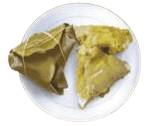
Patara ni Machhi
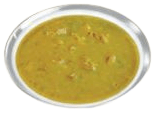
Dhansak
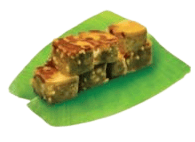
Lagan Nu Custard

Ravo
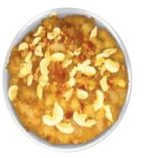

Dar ni pori
Q.4. Make a list of Parsi delicacies as mentioned in the passage. A few are given above. You can add more to the list. Find the words for Mithu dahi in your language.
_____________________________
_______________________
___________________________
TEXT II
You have read about Coorg, its rainforests, and coffee and tea
from Assam in ‘Glimpses of India’ (First Flight, Class X textbook,
NCERT). The following extract is about the cultivation of coffee
in Araku valley in Andhra Pradesh. The story of Araku Valley
traverses an unusual trajectory through Adivasi empowerment,
hot-air balloons and some of the best coffee in the world.
Read the passage given below and answer the questions.
Located at about 1,200m above sea level, the valley, tucked away
in the north-eastern corner of Andhra Pradesh, shares a border
with Odisha. For guests and participants at the Araku Balloon
Festival (ABF), held between 18-20 January every year, this is
sightseeing like nothing else.
The drive to far-flung coffee estates takes us through the five northern mandals of Anantha giri, Dumbriguda, Hukumpeta, Munchingi Puttu and Araku valley. The name Araku for the coffee was chosen simply because it sounded poetic. The view from the ground level is as impressive as the one from above — the landscape changes from densely forested hills to sweeping valleys and terrace farms surrounding occasional village clusters. The journey of Araku Coffee from a livelihood initiative by the Naandi Foundation to a globally appreciated product has been in the making for over a decade. It is also intrinsically tied to the history of how coffee arrived in this valley. It was a British civil servant, N.S. Brodie, who introduced coffee to these hill tracts in 1898.
LOOK UP AND UNDERSTAND
bio-dynamic
entrepreneurs
intrinsically
mandals
terroirs (ter’wa:)
trajectory
traverses
tucked
Today, Araku coffee is a brand that works with 517 villages and
10,986 farmers, all of whom are estate owners and entrepreneurs
with a stake in the business. The reason the coffee is of such high
quality is that it follows the best practices of bio-dynamic farming
by creating an interconnected and symbiotic ecosystem. The soil
is enriched through composting and a variety of shade trees
are planted, including cash-yielding fruit trees like mango and
jackfruit. Terroirs are assessed and careful standard operating
procedures are put in place from “sapling to savouring”, which
ensures healthier plants and sweeter cherries and eventually a
far superior coffee aroma and flavour.
(Source: ‘What’s Brewing in Araku Valley?’
by Diya Kohli, livemint, 23 February, 2019)
Q.1. Infer the meaning of the following:
(a) traverses an unusual trajectory
_____________________________
_____________________________
(b) The drive to far-flung coffee estates
_____________________________
_____________________________
(c) densely forested hills
_____________________________
_____________________________
(d) village clusters
_____________________________
_____________________________
Q.2. Find words from the text which mean the following:
(a) in a place that is hidden (paragraph one)
_____________________________
_____________________________
(b) distant or remote (paragraph two)
_____________________________
_____________________________
(c) to improve the quality or flavour of something (paragraph four)
_____________________________
(d) a smell specially a pleasant one (paragraph four)
_____________________________
Q.3. Answer the following questions.
(a) What is unique about the Araku valley as stated in paragraph one?
_____________________________
_____________________________
_____________________________
(b) Where is Araku valley?
_____________________________
_____________________________
_____________________________
(c) Underline and write below the sentences, words, and expressions which indicate that Araku coffee has moved ahead of being the only means of livelihood.
_____________________________
_____________________________
_____________________________
(d) State a historical fact about the coffee in the valley?
_____________________________
_____________________________
_____________________________
(e) There are specific terms being used in the passage for the cultivation of coffee for example, terrace farms, biodynamic farming, etc. Find more such terms and their meanings.
_____________________________
_____________________________
_____________________________
Q.4. The expression “sapling to savouring” in paragraph four means: (Tick the right answer)
(a) Coffee plants are taken care of from the stage of plantation till its beans are ready for an enjoyable cup of coffee. ( )
(b) Coffee saplings are very delicate hence a lot of care is being taken of them. ( )
(c) The growth of coffee plants is dependent on shady trees. ( )
(d) Coffee plant can give a cup of enjoyable coffee.( )
FUN FACTS
IDIOM
Butter someone
up — to impress
someone with
flattery
VOCABULARY
GRAMMER
1.You have read about -ing and -ed adjectives in the textbook, the First Flight, page number 97. Read it agan to understand how these adjectives are used. These are also the present participles (-ing forms) and past participles (-ed forms) of verbs and are used as adjectives. Read the following sentences to know this.
- Rita gave me a welcoming cup of coffee..
- Her performance in the test was pleasing.
- She appeared delighted with the gift.
- The bored students became restless.
Now fill in the blanks of the sentences with past participle
from one of the following words.
(infect, take, quote, use, watch, frighten, propose)
(a) People demonstrated against the changes______________
(b) The loud cheer went up from the students______________
(c) After the editor read the article, she checked all the
examples______________.
(d) Rub the antiseptic cream in the______________area.
(e) My wallet was among the things______________.
(f) Cyclone Fani was a______________experience.
2. Rewrite in the past tense the following excerpt from the ‘Glimpses of India’ (First Flight, Class X textbook) and check your answers with a partner.
Birds, bees, and butterflies are there to give you company. Macaques, Malabar squirrels, langurs, and slender loris keep a watchful eye from the tree canopy. I do, however, prefer to step aside for wild elephants. The climb to the Brahmagiri hills brings you into a panoramic view of the entire misty landscape of Coorg. A walk across the rope bridge leads to the sixty-four acre island of Nisargadhama. Running into Buddhist monks from India’s largest Tibetan settlement, at nearby Bylakuppe, is a bonus. The monks, in red, ochre, and yellow robes are amongst the many surprises that wait to be discovered by visitors searching for the heart and soul of India, right here in Coorg.
_____________________________________ _____________________________________ _____________________________________ _____________________________________ _____________________________________ _____________________________________ |
EDITING
 1. Some words have been wrongly spelt in the paragraph given
below. Correct the words and read the paragraph aloud
1. Some words have been wrongly spelt in the paragraph given
below. Correct the words and read the paragraph aloudThe Valley of Flowers
The Valley of Flowers The journey to the Valley of Flowers begins about 16 km away from Joshimath, at Govindghat (1,770 m) on the Rishikesh Badrinath heightway. The Valley of Flowers is covered with a rich varity of magnifiscent plants.
Over the past few years, thousand of visitors have ‘discovered’
this idyll amidst the mountain. However, they live like marks
only by way of empty cans, waste-paper and cigarete butts.
Trakking in the area has resulted in the trampling of these
delikate plants by humans and ponies. As a result, the
government of India was compeled to ban all mountainering,
trekking, expeditions and livestock grasing in the area, with
effect from February 20, 1983. This is to privent further
damage to one of our nation’s unique repositories of natural
beauty.
LISTENING
FUN FACTS
IDIOM
Advice — noun Advise — verb
_____________________________________ _____________________________________ _____________________________________ _____________________________________ _____________________________________ _____________________________________ |
SPEAKING
1. Excursions give opportunities to explore nature, places of historical interest, etc. Tourists are interested in meeting people, understanding their culture, and enjoying the variety in food. The Indian Railways have recently introduced glass Vistadome coach in train to provide a delightful travelling experience to the picturesque valley of Araku in Vishakhapatnam.FUN FACTS
Refuse as verb and noun
The dump was so full that the workers had to refuse more refuse.
WRITING
1. Infer the meaning of the following expressions in the passage on Parsi community. “Aavoji, aavo, aavo! Welcome to Delhi.”Now, write an account of a travel by train using these
expressions.
Describe the journey by giving details of distance, booking of tickets, facilities available, and suggestions for improvement. You can add pictures of places, people, etc.
_____________________________________ _____________________________________ _____________________________________ _____________________________________ _____________________________________ _____________________________________ |
2. Write an advertisement for your favourite tea or coffee.
_____________________________________ _____________________________________ _____________________________________ _____________________________________ _____________________________________ _____________________________________ |
3. You have read about breads and bakers in Goa. (First Flight,
Class X).- Now, collect information about breads, parathas, rotis in different parts of the country.
- You can talk to peers, teachers, parents, grandparents, community members and make use of internet.
- Make an interesting collage using pictures and write a few sentences about each bread based on the information you have gathered.
_____________________________________ _____________________________________ _____________________________________ _____________________________________ _____________________________________ _____________________________________ |
PROJECT
3. The Frontier mail, the train mentioned in the passage on the Parsi community was the prestigious and luxurious train which was flagged off in 1928 from Bombay to Peshawar. It was the fastest train known for its punctuality. It covered the distance of 2,335 kms in record time of seventy two hours.