1 साहित्यिक लेखन
Literary Writing


1 . साहित्यिक लेखन
I. भाव, विचार और उसकी रचावट
II. कविता लेखन
III. कहानी लेखन
1 . Literary Writing
I. An Idea and Its Development
II. Writing Poetry
III. Writing a Short Story
जगत सर्व
भाषा विकल्पम्
-
वाक्यपदी यम् भर्तृहारि
1 भाव, विचार और उसकी रचावट
प्रसिद्ध कवि मायकोव्स्की ने अपनी रचनात्मक भाव-स्थिति का वर्णन इन शब्दों में किया है-
मै हाथ हिलाता और शब्दों के बिना बुदबुदाता चला जा रहा। कभी अपनी चाल को धीमा कर लेता हूँ ताकि बुदबुदाने में बाधा न पड़े या कभी तेज़ी से बुदबुदाने लगता हूँ ताकि वह मेरी चाल का साथ दे सके।
यही है भाव की उमड़न। यहाँ अपनी खास तरंगमय धुन में कवि कुछ बुदबुदा ज़रूर रहा है। लेकिन यहाँ शब्द वही नहीं है, जो कविता में आते हैं। यह तो वह उमड़न है, जो तरंग में एक खास तरह की धुन या लय में बहती चली जा रही है।
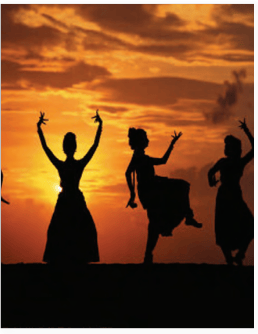
यह लय ही काव्य का आधार होती है। कविता में शब्द इसकी गूँज से आकार लेते हैं। जैसे खुद-ब-खुद उछल कर बाहर आ रहे हों। कभी एक साथ बहुत सारे शब्द उछल आते हैं और कभी बहुत कम।
यह लय अपने साथ लाती है-एक गूँज या ध्वनि। यही वह शक्ति है, जो हमारे बेतरतीब शब्दों को तरतीब में रखती है। हर कवि का अपना अनुभव, संसार होता है, जो शब्दों से अपना एक रिश्ता बनाता है। किस
शब्द को कहाँ रखा जाए या हटा दिया जाए, यह तय करने का काम गूँज का छनना करता है। शब्दों को छानने का आधार होता है-भाव के साथ उसकी निकटता। शुरुआत में यह तुकबंदी की शक्ल में भी हो सकता है। लेकिन वही, कविता नहीं हो जाती।
वह कविता होती है-उस शब्द के सहयोग से, जिसमें अनुभव शामिल हो। ध्वनि इन्हीं शब्दों को व्यवस्थित करती है। इसी तरह अचानक इस गूँज के बीच में से ही एक या कुछेक शब्द एक खास लय में बंधने लगते हैं। अनुभव की यह लय ही फिर इनका विस्तार करती है। यही है-भाव से विचार में उतरना। भाव से विचार और विचार से भाव की यह आवाजाही ही रचना को आकार देती है। आकार तो दे देती है, लेकिन उसकी रचावट के बगैर रचना खिल नहीं पाती। वह खिलती है तब, जब हर भाव रचना में आए शब्द के साथ एक खास प्रवाह बना लेता है। रचना में यह प्रवाह बनना ही सबसे ज़्यादा परिश्रम का काम है। इसके लिए इस प्रक्रिया में लौट-लौट कर उसी धुन के करीब पहुँचना होता है। जहाँ से रचना की शुरुआत हुई थी। यही धुन बनाती है-वे धुनें, जिनमें शब्द स्थान बनाने लगते हैं। इस प्रकार रचनाकार का अनुभव; उसके विचार उसके मन में ध्वनित होते शब्द सब मिलकर एक रचना की शुरुआत करते हैं।
बस, यहीं से प्रारंभ होती है - रचावट की वह खास प्रक्रिया, जो रचना का रूप गढ़ने लगती है। यहीं वह अपने भाव, विचार और उसकी रचावट पर काम करता रहता है।
कहानी में यथार्थ जीवन-दृश्य बड़ा काम करते हैं। कभी उसकी शुरुआत एक दृश्य से हो सकती है, तो कभी किसी संवाद से। कोई मनःस्थिति भी कहानी लिखवा सकती है और कोई घटना या स्थिति भी। लेकिन उसे कथा के रूप में बाँधने के लिए भाव-विचार और उसकी रचावट का इत्मिनान बहुत ज़रूरी है।
यह एक कला को कहने की इच्छा से, जो बदला। अब कविता भी लिखी जाती है-कलम से कहानी के प्लॉट या कथानक के साथ जुड़ती जाती है। पर यही कहानी के अंत को पहले से तय नहीं होने देता। बस उस कथ्य को रचना के रास्ते पर धकेल-भर देता है। कहानी का कथ्य इसी रास्ते पर पकता है। कहानी के अर्थों के रंग और गहरे इसी समय होते जाते हैं। कभी यह एक नया अनुभव बन जाती है और कभी अनुभवों में सुधार। यह एक ऐसा खेल है, जिसकी गिरफ़्त में आते ही हम दुनिया के लोगों, स्थितियों और जीवन को अपनी आँख से देखने लगते हैं। हमारे सुनने, सूंघने, छूने, खाने-पीने और स्वाद लेने का अंदाज़ कुछ अलग हो जाता है।
आगे के अध्यायों में रचनात्मक बिंदुओं को समझते हुए उपर्युक्त बातों को विस्तार से जानेंगे।
2 कविता लेखन
हरभजन सिंह (चोला टाकियाँवाला )
कविता कहना या शेर कहना आपने सुना होगा। अब हम कविता बनाएँगे यानी अब हम कविता लिखने जा रहे हैं। उर्दू में है- शेर कहना। यानी कविता की नहीं जाती है, कही जाती है। जब लिखने का रिवाज नहीं था, तब भी कविता थी। बोली जाती थी। सारे लोकगीत मौखिक हैं, बोले जाते हैं। लेकिन समय बदला | अब कविता भी लिखी जाती है - कलम से कागज़ पर या कंप्यूटर पर। पहले पेंसिल भी चलती थी। कवि भी कान पर पेंसिल रखते थे। पता नहीं, कब काम आ पड़े।
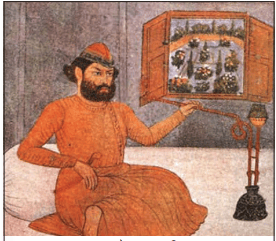
मुशायरे का एक चित्र
कविता से कविता बनती है
पेंसिल, कागज तो उपकरण हैं-बाहर की चीज़ें। पहले तो मन में यानी भीतर कविता उपजनी चाहिए। वह कैसे होता है? लोग बताते हैं कि कविता से कविता खुलती है - निकलती है। कविताओं को पढ़ते-पढ़ते भीतर कविता बनने लगती है। लगता है, मैं भी कर सकती हूँ। ऐसा तो मैंने भी देखा है। ऐसे भाव तो मेरे मन में भी आते हैं। जैसे, नागार्जुन की यह कविता लें -
ब हुत दिनों के बाद
अब की मैंने जी-भर देखी
पकी-सुनहली फसलों की मुसकान
बहुत दिनों के बाद
बहुत दिनों के बाद
अब की मैं जी-भर सुन पाया
धान कूटती किशोरियों की कोकिल-कंठी तान
बहुत दिनों के बाद
बहुत दिनों के बाद
अब की मैंने जी-भर सूबे
मौलसिरी के ढेर-ढेर-से ताज़े-टटके फूल
बहुत दिनों के बाद
बहुत दिनों के बाद
अब की मैं जी-भर छू पाया
अपनी गँवई पगडंडी की चंदनवर्णी धूल
बहुत दिनों के बाद
बहुत दिनों के बाद
अब की मैंने जी-भर तालमखाना खाया
गन्ने चूसे जी-भर
बहुत दिनों के बाद
बहुत दिनों के बाद
अब की मैंने जी-भर भोगे
गंध-रूप-रस-शब्द-स्पर्श सब साथ-साथ इस भू पर
बहुत दिनों के बाद
वह यह तो हम सब का अनुभव है। बहुत दिनों के बाद गाँव लौटने पर यही तो होता है। इस तरह एक इंसान का अनुभव सबका अनुभव हो जाता है। नागार्जुन ने अंत में लिखा-'गंध-रूप-रस-शब्द-स्पर्श सब साथ-साथ! ...। यह बात सीखने की है। ये हमारी पाँचों ज्ञानेन्द्रियाँ हैं, जिनसे हम संसार को देखते-सुनते-सूँघते-चखते-छूते हैं। एक कवि को लगातार चौकनना रहना पड़ता है। लगातार अपनी ज्ञानेन्द्रियों को जगाए रखना पड़ता है। काम के साथ कविता चलती है-ऐसा नहीं कि कविता लिखने का कोई खास क्षण होता हो। बल्कि कविता रचने का काम लगातार चलता रहता है। आपने कुछ देखा, उसे मन में टाँक लिया या फिर एक छोटी-सी डायरी में। कवि-लेखक, डायरी-कलम लेकर चलता है। कोई शब्द सुना, लिख लिया। दूसरे काम करते हुए भी भीतर-भीतर कविता की चक्की चलती रहती है। जैसे कि मुक्तिबोध कहते हैं-
विचार आते हैं रोटियाँ सेंकते
सर्वेश्वरदयाल “सक्सेना” की मशहूर कविता ' बतूता का जूता' को एक कविता-कार्यशाला में अलग-अलग अभिव्यक्ति दी गई-
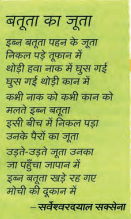
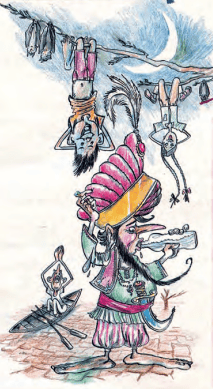
इब्न बतूता पहन के जूता...
सर्वेश्वरदयाल सक्सेना की कविता को नरेश जी ने कुछ ऐसे पेश किया
मोरक्को से चले बतूता, पैदल अपनी शान में
में चलते-चलते पहुँचे हिन्दुस्तान में
जो देखा सो लिखा , न देखा
तो भी लम्बी हॉकी
गोल पिरामिड लिखकर
कोई गप्प न छोड़ी बाकी
गज़ब घुमक्कड़ थे, रहते थे अपनी ही तुकतान में
मन रमता था सदा नए जूतों के अनुसंधान में
इब्न बतूता, इन्हीं गर्मियों में आए भोपाल
हाल देख भोपाल ताल का हुए बड़े बेहाल
किसने सुखा दिया यह ताल
किसने काट दिए सब जंगल किसने फैलाया यह जाल
जब तक यह सब जान न लो तुम
रहो पूछते यही सवाल
इससे तो अच्छा होता तुम रहते रेगिस्तान में
प्यास लगी अब हमें ले चलो पानी की दूकान में
कविता-कार्यशाला में नरेश सक्सेना के साथ बच्चों ने भी कविताएँ लिखीं!
- चमगादड़ के घर में कैसी खातिरदारी -
हम भी लटकें
तुम भी लटको...
- कभी लाल, कभी नीला, कभी पीला आकाश भी गिरगिट की तरह रंग बदलता है
- सूख गया है ताल समझो सूख गया भोपाल!
“चकमक ” से साभार
पिछले पृष्ठ पर दिए गए उदाहरण को ध्यान से देखिए। नरेश सक्सेना ने सर्वेश्वरदयाल सक्सेना की कविता को भोपाल से जोड़ा, खासतौर से भोपाल में कविता का कोई एक मुहूर्त नहीं होता। यह काम साँस लेने जैसा है। तो फिर प्रेरणा क्या है? सब लोग ताल के सूखने और इब्न बतूता को रेगिस्तान से जोड़ा और एक नयी रचना जन्मी। इसीलिए “मोची की दूकान' की जगह “पानी की दूकान' लिखा। ध्यान देने तो कविता नहीं लिखते। लेकिन लिख सकते हैं, अगर कविता पढ़ें, जीवन को ध्यान से देखने-समझने की आदत डालें। आप जो करना चाहते हैं वही की बात है कि इस कविता में “दुकान! का 'दूकान' लिखा जाना भी सौंदर्यानुभूति कराता है। यह कविता में छंद की अहम भूमिका को भी बताता है। तभी नरेश जी ने इसे ज्यों-का-त्यों ही लिखा है। दूसरी ओर बच्चों ने जब कविता लिखी तो चमगादड़ के उल्टा लटकने वाले स्वभाव को कभी बीते समय के खेल के मैदान में या फिर स्कूल में सजा पाए बच्चों से जोड़ा। इस तरह बच्चों ने अपने देखे-सुने तो करते हैं। डार्विन ने लिखा है कि संबेग यानी “इंस्टिक्ट' भी “अक्वायर्ड हैबिद' यानी हासिल की हुई आदत है। हम कोशिश करते हैं और फिर एक दिन कविता हमारी कलम में भी उतर जाती है। यही प्रेरणा है। शमशेर बहादुर 'सिंह' कहते हैं कि उन्होंने अपनी मशहूर कविता “टूटी हुईं बिखरी हुई इसी तरह पहले सोच कर, कोशिश करके अपने कमरे की चीज़ों को एक-एक कर देखते हुए लिखी। चीज़ों पुराने अनुभव को नए अनुभव से जोड़कर रचना में नया प्रभाव पैदा किया है। दूसरी कविता में आकाश के रंग को गिरगिट के रंग बदलने से जोड़ना भी नयी रचना को लिखने में सहायक रहा। तीसरी कविता में भोपाल और ताल के एक दूसरे पर निर्भरता को लयात्मक ढंग से रखा गया है। इसमें नरेश जी की कविता से रचना संकेत भी लिया गया है।
इस तरह आप देखेंगे कि एक कविता, दूसरी नयी कविता को जन्म देती है। ज़रूरी नहीं कि वह पूरी तरह एक दूसरे से जुड़ी हो। कवि भी अपनी स्मृतियों में देखी-सुनी बातों, दृश्यों को टाँकता चलता है। उसे ही कभी-कभी वर्तमान अनुभव से जोड़कर अपनी कविता के भीतर रखता चलता है | इसलिए कविता में स्मृतियों की बड़ी भूमिका होती है |
प्रेरणा क्या है?
कविता का कोई एक मुहूर्त नहीं होता | यह काम सांस लेने जैसा है | तो फिर प्रेरणा क्या है ? सब लोग तो कविता नहीं लिखते | लेकिन लिख सकते है, अगर कविता पढ़े, जीवन को ध्यान से देखने - समझने की आदत डालें | आप जो करना चाहते है वही तो करते है | डार्विन ने लिखा है कि संवेग यानी ‘इंस्टिंक्ट ‘ भी ‘ अक्वायर्ड हैबिट ‘ यानी हासिल की हुई आदत है “| हम कोशिश करते है और फिर एक दिन कविता हमारी कलम में भी उतर जाती है | यही प्रेरणा है | शमशेर बहादुर ‘सिंह ‘ कहते है कि उन्होंने अपनी मशहूर कविता ‘टूटी हुई बिखरी हुई’ इसी तरह पहले सोच कर, कोशिश करके अपने कमरे की चीज़ो को एक-एक कर देखते हुए लिखी | चीज़े पहले से जमा रहती हैं। वे मौका पाकर बाहर आ जाती हैं। तो क्या हर किसी के पास कविता की भाषा होती है? पहली बात तो यह कि कविता की अलग से कोई भाषा नहीं होती। भाषा तो सबकी है - एक ही है। कवि की भी वही भाषा है। वह पहले से है। उसे सिर्फ़ नए ढंग से उठाना है। शेक्सपियर कहते हैं-
I have been to the feast of languages and have stolen the scraps
(मैं भाषा के भोज में गया और वहाँ से टुकड़े उठा लाया।)
यही तो सब करते हैं। यही तो आप भी करेंगे।अपनी भाषा को करीब से पहचानिए। उसके शब्दों, मुहावरों, ध्वनियों को। शेक्सपियर यह भी कहते हैं-
So, all my best is dressing old words and spending again what is already spent.(मैंने यही तो किया-पुराने शब्दों को नये तरीके से सजाया और जो पहले से ही खर्च हो चुका था उसे फिर से खर्चा)
टूटी हुई, बिखरी हुई
की दली हुई पाँव के नीचे
पत्तियाँ मेरी कविता
बाल, झड़े हुए, मैल से रूखे, गिरे हुए, गर्दन से फिर भी चिपके
..... कुछ ऐसी मेरी खाल,
मुझसे अलग-सी, मिट्टी में
मिली-सी
दोपहर-बाद की धूप-छाँह में खड़ी इंतज़ार की ठेलेगाड़ियाँ
जैसे मेरी पसलियाँ ...
खाली बोरे सूजों से रफ़ किए जा रहे हैं... जो
मेरी आँखों का सूनापन है
ठंड भी एक मुस्कराहट लिए हुए है
जो कि मेरी दोस्त है।
- शमशेर बहादुर सिंह
कविता को जम
क्या आप जानते/जानती हैं -मोती केसे बनता है?
कहीं से अचानक धूल का एक कण सीपी के
कवच के भीतर राह बना ले तो उसके खुजली मच
जाती है। अब उसके नाखून तो होते नहीं कि वह
उसका सुखद उपयोग करे, तो खुजली की प्रतिक्रिया
में उसके पूरे वजूद से एक खास तरह का द्रव
तरफ लगता है मोचाबंदी करने। यही आंतरिकः स्राव
'धौरे-धीरे मोती के रूप में जमने लगता है। ..
कविता भी प्रायः ऐसे ही बनती है-कोई एक चोट
लगी, किसी धूलकण का प्रवेश हुआ; कहीं कुछ _
खटका या हमारे आस-पास कोई ऐसी खुशी या दुख
जो परिवर्तन ले आए। तो पूरे वजूद में एक
बेचैनी मच जाती है-ये कई तरह के आंतरिक
उद्देलन अंततः एक तरह की सरेचना में गुलिया-कर
जम जाते हैं और चमकने भी लगते हैं!
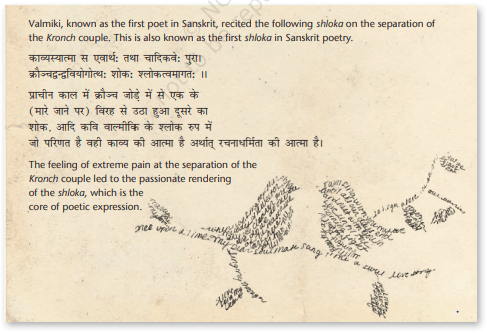
मा निषाद! प्रतिष्ठां त्वमगमः शाश्व्ती समा;।
यत्क्रौँच मिथुनादेकमबंधी: काम मोहितमू॥
– बाल्मीकि
सीपी और मनुष्य में फर्क यह- है कि सीपी को स्राव
गुलियाने-ज़माने में अपनी तरफ़ से कुछ मेहनत नहीं.
होती! जो होता है, स्वयमेव होता है किंतु मनुष्य को.
अपनी प्रतिक्रियाएँ गुलियाने में अपनी स्वाभाविक
उमड़न को एक नियत सरेचना देने में, कभी-कभी
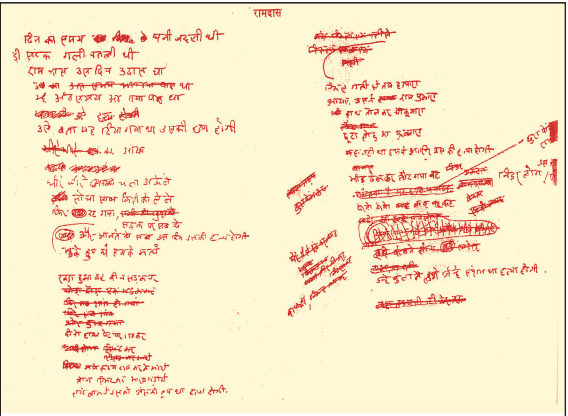
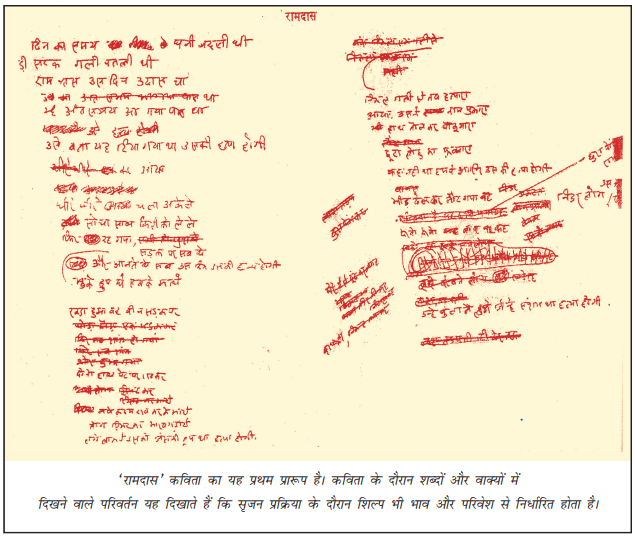
कई-कई ड्राफ़्ट बनाने होते हैं! इसीलिए वर्ड्स्वर्थ
ने कविता को- spontaneous overflow
of powerful feelings ... recollected
in tranquility” कहा
गतिविधि-1
Activity–1
(कुछ आधुनिक कुछ पुरानी कविताएँ पढ़ें) इनमें आकाश, बादल, शाम, धूप, सूरज, शरद जैसे शब्द, प्रयोगों पर ध्यान दें। आप पाएँगे कि ये शब्द पुराने समय से लेकर अब तक कविताओं में तरह-तरह से प्रयुक्त होते रहे हैं | अब
> अपने पोटफ़ोलियो के लिए ऐसी-दो कविताओं (कवि के नाम के साथ) को चुनें।
> यह ध्यान रखें कि इनमें इन शब्दों का प्रयोग अलग-अलग तरीके से किया गया हो।
> अपने इस संचयन में यह टिप्पणी भी लिखें कि ये प्रयोग कैसे अलग हैं।
> अब उन्हीं शब्दों का प्रयोग करते हुए आप भी कुछ नयी काव्य पंक्तियाँ लिखें।
Read few poems (including contemporary poems). Observe closely how the words ‘sky’, ‘cloud’, ‘sun’, ‘daylight’, ‘moon’ and ‘evening’ are used. You might have noticed that these words have been used in different ways in different poems.
> For your portfolio, select two poems (mention the Poet's name) where these words have been used in different ways.
> Observe how these words are used in different ways.
> Create a few new verses using these words.
> Include your comments and poems in your portfolio.
भाषा के साथ बर्ताव
भाषा जो सबकी है, पहले से है उसे नयी तरह से बरतना। आपने भी लोगों को ध्यान से बोलते सुना होगा। आयरिश लेखक जॉन सिंज़ अपने कमरे के एक छेद से कामगारस्त्रियों को बातें करते सुना करते थे, जिससे उन्होंने भाषा के नये ढंग सीखे। नागार्जुन की कविता में भी आप देख सकते हैं कि उन्होंने "अबकी ', 'मौलसिरी ', 'टटके' जैसे बोलचाल के शब्दों का व्यवहार किया है। भवानी प्रसाद मिश्र कहते हैं कि 'जिस तरह तू बोलता है
उस तरह से लिख।' नागार्जुन कहते हैं “जो देखो वो लिखो।' लेकिन यह देखना भी कई तरह का हो सकता है। रघुवीर सहाय की इस कविता को लें-
कौंध। दूर घोर वन में मूसलाधार कृष्टि
दुपहर - घना ताल - ऊपर झुकी आम की डाल
बयार - खिड़की पर खड़े, आ गयी फुहार
रात - उजली रेती के पार:
सहसा दिखी शांत नदी गहरी।
यहाँ पानी के अनेक संस्मरण हैं। सारी यादों को एक साथ जोड़ दिया गया है और इस तरह बिखरे हुए अनुभव, भटकी हुई यादें एक विषय यानी पानी से जुड़ जाती हैं। सब कुछ को स्मृति में जमा करना पड़ता है और फिर कल्पना के सहारे उन्हें जोड़ना पड़ता है। अज्ञेय की इन पंक्तियों को लें-
क्षितिज ने पलक सी खोली
तमक कर दामिनी बोली
यह बिजली चमकने का दृश्य है। लगता है जैसे- दूर धरती-आकाश दो पलकों की तरह खुले और कौंध हुई। दामिनी यानी बिजली दमक कर यानी रोष से बोली। यहाँ तुलना भी की जा रही है। एक चीज़ को दूसरी चीज़ से मिला कर देखा जा रहा है। ऐसे ही उपमाएँ बनती हैं। फिर आगे बिंब बनते हैं। निराला की पंक्तियाँ हैं –
डालियाँ बहुत सी सूख गई,
उनकी न पत्तियाँ हुईं नई,
आधे से ज्यादा घटा विटप,
बीज को चला है ज्यों क्षण-क्षण
यह पतझड़ का पूरा बिंब है, जिसमें पेड़ के फिर से बीज की ओर चलने का ज़िक्र है। लेकिन इसी “बीज को चला! में पुनः सृष्टि की आशा भी है, जो कि वसंत है। इस तरह अपनी जटिलता में यह पद एक साथ पतझड़ और वसंत से जुड़ा है।
भाषा की कुछ बातें और नागार्जुन की कविता में हमने देखा कि कैसे सभी ज्ञानेन्द्रियाँ एक साथ काम कर रही हैं। आपको निरन्तर ध्वनियों को पकड़ना है। कबीर “गगन घटा घहरानी' कह कर घने बादलों के घुमड़ने और उनके गर्जन को व्यक्त कर देते हैं। त्रिलोचन ने भी बरसात की ध्वनियों को पकड़ा है-
भरी रात भादों की ... पथ ... लपका वह कौंधा
दीप्ति भर उठी आँखों में इतनी, फिर हम तुम
कुछ भी पकड़ सके न डीठ से; छाया चौंधा।
तड़ तड़ तड़त्तड़ाड़ श्राढ श्रा श्राऊ श्रढ ध्रुम्
अंतिम पंक्ति की ध्वनियों, विशेषकर 'ड' तथा “ड को देखें। हर वस्तु की, हर अनुभव की अपनी ध्वनि होती है, आपको उसे ढूँढ़ना पड़ता है। पंत ने “झरते हैं झाग भरे निर्झर' में 'झ' ध्वनि से झरने के नाद को व्यक्त किया। दूसरी और दिनकर ने नदी के किनारे की चाँदनी रात की खामोशी को इस तरह व्यक्त किया-
गंडकी सुप्त थी रेतों में
पंछी चुप नीड़ निकेतों में
था रोर शोर अग में जग में
चाँदनी सजग थी जग भर में
कविता और बिंब
आधुनिक कविता शब्द-चित्रों यानी बिबों में ही बात करती है। बिंबों की भाषा एक कूट भाषा होती है- रूपक, उपमा, उत्प्रेक्षा आदि अलंकारों में भी कुछ बिंब समाहित होते हैं- वस्तुऑ/भावो/स्थितियों का शब्द-चित्र जिनका साम्य नाटकीय ढंग से कविता उद्घाटित करती है
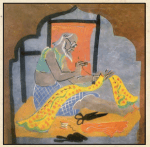
कौन बूढ़ा दर्जी
बादलों की कैथी .
सी रहा है ऐसे
तेज़ हवा की सुई से?
वे सुनहरे धागे
टिमक रहे जब-तब
इधर-उधर और टपक रही हैं उसकी
आँखें थकान से।
यदि आपने किसी बूढ़े दर्जी को फटे सुथन्ने की मग्न मरम्मत करते देखा है और बूँदा-बाँदी के बीच बिजली चमकती हुईं भी देखी है, तो समझेंगे कि दो चित्र एक ही चित्र में पूर दिए गए हैं जैसे - रस्सी पूरी जाती है। दो तरह की घटनाओं में साम्य का उद्घाटन आपको थोड़ा चकित करता है, और उत्सुकता बूढ़े दर्ज़ी के-विषय में जगती है- अचानक वह अपने अँधेरे कोने से उठकर कविता. का नायक हो जाता है। इस पूरी प्रक्रिया में आँखे भी खुलती हैं और चित्र भी।
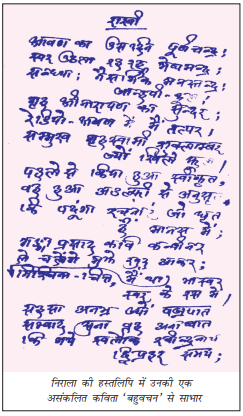
फिर अगला सवाल छंद और तुक का भी है। ध्वनियाँ ही लय बनाती हैं। संगीत बनता है। लयों की बनी हुईं पद्धति या ढाँचा छंद है। हर कवि को उन्हें सीखना पड़ता है। मेहनत करनी पड़ती है। धीरे-: धीरे वे छंद इतने अपने हो जाते हैं कि खुद-ब-खुदः पंक्तियाँ उन्ही साँचों में ढलने लगती हैं। फिर निराला: जैसे कवि नये छंद भी बनाते हैं। लेकिन सच्चा कवि: छंद के लिए रुकता नहीं। अमेरिका के कवि वाल्ट: हिटमैन ने गद्य में महान् कविताएँ लिखीं। । हिंदी में निशगला की “नये पत्ते! कौ कविताएँ: पढ़ कर देखिए। तब आपको यह भी लगेगा कि कविता किसी भी विषय, किसी भी चीज़ पर लिखी जा सकती है। निराला ने “गर्म पकौड़ी' पर, नज़ीरः अकबराबादी ने 'तिल के लड्डू' पर, नेरूदा ने “टम.: पटर! और “पायजामा' पर और सुकांत भट्टाचार्य ने 'माचिस की तीली' पर कविताएँ लिखीं। मराठी के: नामदेव ढसाल, नारायण सुर्वे जैसे कवियों ने अपने! जीवन के निजी पक्षों पर भी कविताएँ लिखीं। ज़रूरत: है-उस वस्तु के भीतर जाकर सत्व को खोजने की। गालिब कहते हैं कि 'कतरे में दरिया को देखना ही वास्तव में देखना है। लेकिन इसके लिए लंबी और गहरी तैयारी ज़रूरी है। तब सिर्फ़ कविता पढ़ना काफ़ी नहीं होगा। तब सब कछ पढना-जानना होगा।' दर्शन, इतिहास, अर्थशास्त्र, राजनीति और विज्ञान सब कुछ का अध्ययन ज़रूरी होगा। कबीर महान् कवि हैं और दार्शनिक भी।
तुलसीदास भी कवि, दार्शनिक हैं। निगाला और प्रसाद भी। मुक्तिबोध इतिहास और राजनीति के विद्वान हैं और अज्ञेय सब कुछ के ज्ञाता। इस तरह आपको भी सब कुछ जानना-समझना होगा। लेकिन जैसा कि अकबर इलाहाबादी ने लिखा: 'है- इश्क को दिल में दे जगह अकबर/इल्म से शाइरी नहीं आती | इश्क मतलब प्रेम-सबसे प्रेम। दुनिया की. छोटी-से-छोटी, तुच्छ-से-तुच्छ चीज़ और प्राणी से प्रेम और सह-अनुभूति। दूसरों के दुःख-सुख में शामिल होना। बॉदलेयर की एक कविता “गली के खाज भरे 'कुत्तों' के बारे में है। नागार्जुन की “मादा सूअर' और उसके 'छौनों' के बारे में। मुकुटधर पाण्डे की 'खोंमचे: 'वाले' के बारे में और कौट्स की “मटर की छीमियों और कहू' के बारे में। कबिता करने का मतलब है सब कुछ से प्रेम करना। कुछ भी कविता के बाहर नहीं है। कविता में किसी देखी गई वस्तु या वस्तुओं, (दृश्यों, घटनाओं और मन में उठने वाली भावनाओं और (विचारों को इस प्रकार पिरोना होता है कि पाठक या. श्रोता पर उसका प्रभाव पड़े। कविता में व्यक्त की गई भावनाएँ उसकी संवेदना को छुएँ। इसका अर्थ यह हुआ कि कविता लिखने से पहले हमें चीज़ों से, दृश्यों-घटनाओं से गहरे तक जुड़ना होता है। उस 'जुड़ाव की मन पर जो प्रतिक्रिया होती है, उसी से कविता बनती है और तभी वह पढ़ने या सुनने बालों: को अपने से जोड़ती है।
पेने दांतों वाली धूप में पसरकर लेटी है मोटी-तगड़ी, अधेड़, मादा सूअर ... जमना- किनारे 'मखमली दूबों पर पूस की गुनगुनी धूप में पसरकर लेटी है यह भी तो मादरे हिंद की बेटी है भरे- पूरे बारह थनों वाली! लेकिन अभी इस वक्त छौनों को पिला रही है दूध मन-मिज़ाज़ ठीक है 'कर रही है आराम । अखरती नहीं है भरे-पूरी धनों की खींच-तान 'दुध्मूँहे छौनों की रग-रग में मचल रही है आखिर माँ की ही तो जान जमना- किनारे मखमली दूबों पर पसरकर लेटी है यह भी तो मादरे हिंदे की बेटी है 'पैने दाँतों वाली ...
- नागार्जुन
प्रतिनिधि कविताएँ
कविता का विषय
एक ज़माना था जब मानते थे कि कविता उदात्त विषयों और महाभावों के इर्द-गिर्द छंद और अलंकार के ताने-बाने से बुनी जाती है- 'झीनी-झौीनी बीनी चदारिया!” यह चदरिया ओढ़कर मनुष्य सन एक अलग तरह का सुख महसूस करता है, एक अलग तरह की आश्वस्ति! करीब-करीब वैसी आशवस्ति जो आप माँ के आँचल में महसूस करते होंगे/करती होंगी। इसी सुख को 'रस' कहते हैं, नौ तरह के रस माने गए हैं- शुगार, वीर, वात्सल्य, करूणा, जात, वीभत्स, हास्य; रौद और अद्भुत! पुद्ने लोग मानते थे कि एक बार में एक ही रस का अवगाहन करें तो अच्छा। नयी कविता यानी विश्वयुद्ध के बाद की कविता ने बहुत-से चलन तोड़े। उसमें से एक चलन यह कि कविता का विषय कुछ भी हो सकता हैं, कि एक साथ कई रसों और कई विपरीत मनःस्थितियों का अवगाहन और विलयन आधुनिक कविता ने मंचित किया-इससे उसकी दुरूहता बढ़ी लेकिन वह जीवन की वास्तविकता के और करीब हुई। वास्तविक जीवन में भी ऐसा शायद ही होता है कि केवल एक भाव या एक ही रस आपके चित्त पर छाया रहे। दया, करुणा, प्रेम, बृणा, क्रोध और जुगृप्सा-कर्ड भावाँ का धुँधलका-सा चित्त पर छाया रहता है। माँ की गोदी में लेटे रहने का संतोष वात्सल्य और ज़ान्त रस का उदाहरण मानिए तो लेटे-लेटे ही परीक्षा की चिन्ता या किसी बूढ़े भिखारी की स्थिति पर क्षोभ् या किसी भी अन्याय पर गुस्सा-इन भावों से भी आप यूर्णतया तो मुक्त नहीं होते।
शब्द
कविता शब्दों से बनती है। जिस तरह चित्र रंगों और रेखाओं से, संगीत ध्वनियों से, मूर्ति पत्थर और मिट्टी से, वैसे हो कविता शब्दों से बनती है। मलामें ने अपने एक मित्र से कहा था- “कविता विचारों से नहीं, शब्दों से बनती है।' और हर कवि को अपनी भाषा के शब्दों से दोस्ती करनी पड़ती हैं। गहरी अंतरंगता बनतौ है, तब कविता बनती है। कालिदास ने इस अंतरंगता को 'बाक्' और “अर्थ” की एकता कहा था। सही शब्द की तलाश से हीं कई बार कविता शुरू होती है। कई बार कोई धुन, कोई एक टुकड़ा, या कोई याद। ध्रुव शुक्ल की एक कविता है 'हा'। इसमें जैसे ककहरा लिखा जाता है वैसे ही उन्होंने 'ह' अक्षर से कविता रची है।
जैसे- ह हा हि ही हु हू हे हो हौ हं हः ह ह ह ह ह ह ह ह ह ह ह हा हा हा हा हा हा हा हा हा
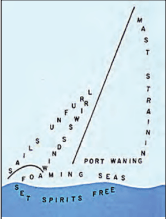
यह एक अद्भुत कविता है, हँसने कक इतने प्रकार हैं और अंत में एक सत्ताधीश का दंभ उभरता है। इसी तरह एक अंग्रेज़ी कविता है, जॉर्ज हर्बट की-सेल ( SAIL ), जिसमें केवल एक ही शब्द हैं- SAIL और उसे इस तरह पूरे पृष्ठ पर सजाया गया है मानों 'एक जहाज समुद्र में बहुत दूर चला गया हो'
गतिविधि - 3
» कविताओं को तरह-तरह से लिखने की परंपरा रही है। वर्णों-पंक्तियों को संख्या के आधार पर इन्हें अलग-अलग नाम दिए जाते रहे हैं। जैसे- दोहा, चौपाई, छप्पय, बरवे, हाइक्, सॉनेट।|
» अपने पोर्टफोलियो के लिए इनकी विशेषताएँ लिखिए। अब अलग-अलग पांच ऐसी कविता/ छंदों का संग्रह करें।
Activity 3
» There are various forms and styles of writing poems. They have been given different names like ‘haiku’, ‘limerick’, ‘couplet’, ‘sonnet’ ‘ballad’, ‘ode’ and ‘lyric’.
» For your portfolio collect five poems (one for each) for any five forms mentioned above and describe their features.
लय
इसी तरह कोई एक धुन या कोई एक लय पूरी कविता को जन्म दें सकती है। सूरदास का प्रसिद्ध पद है-'आज़ु तो बधाइ बाजे मंदिर महर में'। इसे पढ़ते हुए लगता है जैसे कोई उन्मत्त लय आपको घेरती जा रहीं है और आप खुशी से भर जाते हैं, आप नाचने लगते हैं। ऐसे ही तुलसीदास का “हनुमानबाहुक' आपको ओज, शक्ति और विश्वास से भर देता है। कभी-कभी कोई एक-आध पंक्ति आपके भीतर गूँजती रहती है और उससे एक नयी कविता बन जाती है। मख्यूम को कविता है-' आपकी याद आती रही रात भर'| इस पंक्ति को लेकर फैज़ ने भी एक शानदार कविता लिखी। तो ऐसे भी कविता होतीं है। सुभाष मुखोपाध्याय की एक कविता है-'येते येते .......... । आप हिंदी में एक कविता बनाएँ 'चलते चलते .......... से। जैसे-
चलते चलते
दूर दूर कुछ दूर और तब
चलते चलते
नदी मिलेगी
पानी छलछल
रेती गीली
चलते चलते
नाव मिलेगी
यार मिलेगा...
आप इसे आगे बढ़ाते जाएँ। और फिर इसे देखिए--
चल चल
घर चल
शाम हुई अब बर चल
पछी लौटे घर चल ....
>>एक उदाहरण लॉ-'दूर है आकाश, धरती पास है ॥ इसे पहली पंक्ति बनाकर आप एक कविता लिखें। उसे बढ़ाते जाएँ
आप बस लिखें। जैसे बोलते हैं वैसे लिखें। जो भी सुनते हैं उसे कविता में डाल दें। जो भी देखते हैं उसे कविता में डाल दें। कविता लिखने का नियम यही है कि इसका कोई नियम नहीं है। बस कविताएँ पढ़िए, पढ़ते रहिए और तब आपके भीतर भी एक कविता जन्म लेगी। यह कुछ ऐसा है जैसे कलम (छशव्म5शढ़) लगाया वैसे हीं कविता कौ भी कलम लगती है।
अब आप अपनी खिड़की पर खड़े होकर बाहर देखिए और जो भी देख रहे हों, सुन रहे हों, उसे लिखते जाइए इस तरह-
मैंने खिड़की खोली
बाहर धूप है
आकाश दूर है खूब नीला बड़ा 70 एम एम का पर्दा
हवा कम है पेड़ खड़े हैँ पत्ते ज़रा-सा हिल रहे हैं
गाड़ियाँ चल रही हैँ मोटर सायकिल तेज़ी से गुजरी
एक बच्चा दौड़ता जा रहा है
कार्ड जोर से हँसा-कौन?
घर की बंटी बजी-कौन?
एक गिलहरी मुझे देख रही है, कुछ बोली-कैसे?
एक कौंआ भी है-चालाक धूर्त ज्ञातिर होशियार
बुद्धिमान?
सोचता हूँ दीवार में खिड़की न हो तो?
तो क्या होगा? ...
कोई भी एक दृश्य लीजिए-उसका एक छोटा-सा रेखाचित्र शब्दों से इस तरह खींचिए कि अर्थ के पीछे एक और अर्थ झाँकता नज़र आए जैसे- पहेली में-तीतर के दो आगे तीतर तीतर के दो पीछे तीकर आगे तीतर, पीछे तीतर बोलो कितने तीवर। तीतर के पीछे एक और तीतर न भी हो और अभिधा में ही बात कही जाए तो उसमें एक नाटकीय बाँकपन लाना होगा, तभी बात कविता की श्रेणी में आएगी।
आप विनोद कुमार शुक्ल का उपन्यास पढ़िए “दीवार में एक खिड़की रहती थी'। कविता दीवार में खिड़की ही तो है। वह हर दीवार में हर घर में होती है। उसे कोई भी खोल सकता है। और उसके पार एक नयी दुनिया में पहुँच सकता है। केदारनाथ सिंह की इस कविता को लें-
लिखूँगा
एक न एक दिन ज़रूर लिखूँगा ......
एक-एक गंध
एक-एक स्पर्श को लिखूँगा
एक-एक धड़कन
एक-एक साँस को लिखूँगा
एक न एक दिन ज़रूर लिखूँगा
यह प्रभाव तभी पैदा हो सकता हे, जब कवि कविता के विषय से खूब अच्छी तरह-खूब गहराई तक परिचित होता है। यह कौशल कविता लिखना शुरू करते ही किसी नये कवि में नहीं आ जाता। धीरे-धीरे, अभ्यास से विकसित होता है। लेकिन हाँ, चीज़ों को देखने, उनसे जुड़ने और उनके अंदर छिपी कविता को पहचानने की दृष्टि शुरू से ही विकसित करनी होती हे।
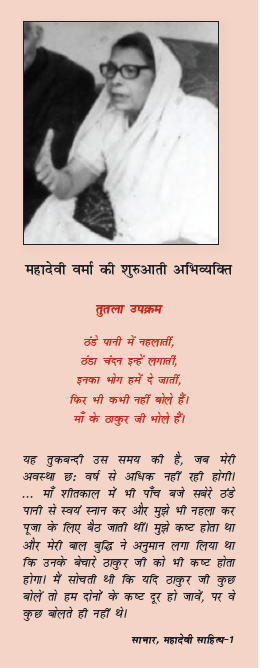
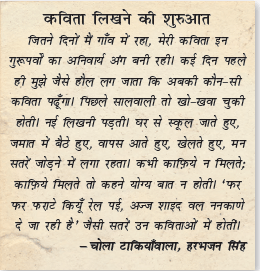
रोज़गार और कविता
यह अनायास नहीं हे कि बचपन से ही खेल-खेल में कविता बनाने की जो शुरुआत होती है। वह आगे चलकर आम आदमी की रोज़ी-रोटी का साधन भी हो जाती है, दरअसल कविता की लय जीवन के साथ घुल-मिल जाती है तो जीने का सलीका देती है-बहुत से बड़े कवियों ने बाज़ार से कविता का रिश्ता बनाने की पहल की है-
चने ज़ोर गरम
चना बनावें घासीराम। निज की झोली में दूकान
चना चुरमुर चुरमुर बोले। बाबू खाने को मुह खोले
चना खावे तौकी मैना। बोले अच्छा बना चबैना
चना खाय गफ़ूरन मुन्ता। बोले और नहीं कुछ सुन्ना।
- भारतेंदु हरिश्चंत्र
जाड़ों में फिर खुदा ने खिलवाये तिल के लड्डू
हर एक ख्वांचे में दिखलाये तिल के लड्डू
कूचे गली में हर जा बिकवाये तिल के लड्डू
- नज़ीर अकबराबादी, जीवनी और संकलन
क्या प्यारी-प्यारी मीठी और पतली ककड़ियाँ हैं
गन्ने की पोरियाँ हैं, रेशम की तकलियाँ हैं।
फ़रहाद की निगाहें, सिरी की हसेलिया हें
मजनूँ की सर्द आहें, लेला की अंगुलिया हैं।
क्या नर्मोनाजुक इस आगरे की ककड़ी
और जिसमें खास काफ़िर सिकंदरे की ककड़ी
जो एक बार यारों इस ज़ाकी खाये ककड़ी
फिर जा कहीं कि उसको हरगिज्ञ न थाये ककड़ी
दिल तो “नज़ीर” गश है यानी मंगाये ककड़ी।
ककड़ी है या कयामत, क्या कहिये हाय ककड़ी।
- नज़ीर अकबराबादी, जीवनी और संकलन
आम आदमी भी बाज़ार से कविता को जोड़ने की खूबसूरत कोशिश करता रहता है-
कच्ची गरी ताज़ा। चार आठ आने में खाजा
ताज़गी नयी पा जा। बन जाएगा तू राजा
आपका ध्यान किधर हे,
साड़ी की दुकान इधर है।
मेट्रो निर्माण में काम करने वाले मज़दूरों की सावधानी बरतने के लिए लिखी गई कविता देखिए-
पैर में जूता सिर पर टोपी
सदा सलामत उसकी रोज़ी रोटी
3. कहानी लेखन
जीवन को अपनी आँखों से देखो और जैसा इसे पाओ वैसा ही इस पर लिखो।
- प्रेमचंद
अनुभव जीवन में प्रायः हर समय होते रहते हैं। घर पर बैठे, आस-पास घूमते या कहीं दूर यात्रा के दौरान भी। लेकिन हर अनुभव कहानी नहीं बन जाता। प्रायः एक दृश्य कहानी का बीज-विचार बनता है। यह दृश्य हमारे रोज़मर्रा के कार्य-व्यापार पर आधारित भी हो सकता है और कभी-कभार अनायास उपस्थित हुआ भी। अधिक प्रभावी वही दृश्य होगा जिसे आपने करीब से देखा-परखा हो। जिसकी ज़्यादा-से-ज़्यादा जानकारी आपको हो। यही होती है कहानी की कच्ची सामग्री। यही कहानीकार का अनुभव बनता है। इससे कहानी की विषय-वस्तु बनती है। इस पर आधारित कहानियों में एक आंतरिक शक्ति होती है। यही वह शक्ति है जो मर्म को छूती हे।
सहदय की नज़र
सहृदय व्यक्ति अपने चारों ओर जो कुछ देखता हे, उससे प्रभावित होता है। उसे हर तरफ़ अपनी कहानी के लिए कच्ची सामग्री फैली नज़र आती है। लेकिन हर दृश्य कहानी नहीं बन जाता। कथ्य की खोज का काम पूरा करने के लिए अंतःप्रेरणा ज़रूरी है। यही रचना को आत्मा से जोड़ती है। उससे जुड़कर ही हम सत्य की अनुभूति कर पाते हैं। इसी के ज़रिये कहानी लिखने वाला व्यक्ति अंतश्चेतना की उस गहन पीड़ा तक रखिंचा चला जाता है जो वह अनुभव कर चुका होता है, लेकिन उससे मुक्त नहीं हो पाता। अक्सर, आपने लोगों को यह कहते सुना होगा कि अमुक दृश्य आज भी आँखों में बसा हुआ हे। उसका यह बस जाना ही बताता हे कि दृश्य में कुछ ऐसा अवश्य रहा होगा जिसकी वजह से वह अविस्मरणीय बन गया। उससे मुक्ति तभी हो सकती है जब आप कहानी में उसे उतारकर रख दें। आइए एक कहानी पढ़ें-
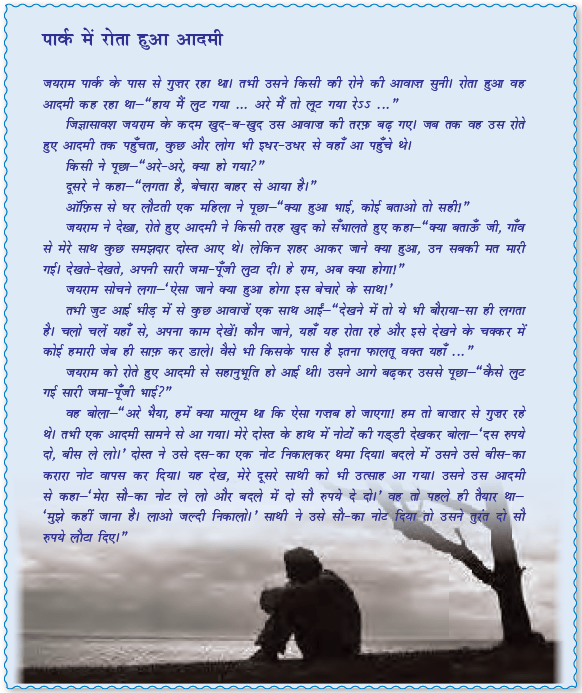
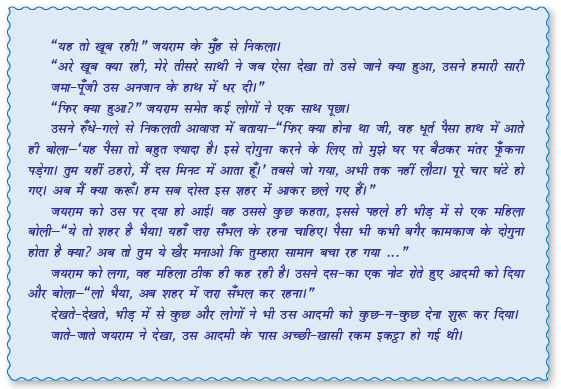
उपर्युक्त कहानी में जयराम यदि पार्क के पास से न गुज़रता तो उस रोते हुए आदमी को न देख पाता। और न देखता तो फिर कहानी का बीज-विचार ही न बनता। यह आवश्यक नहीं कि कहानी में जिस तरह का वर्णन आया है, वह हू-ब-हू लेखक ने देखा ही हो। हो सकता है, कहने को यह दृश्य महज़ इतना हो कि एक लुटा-पिटा-सा व्यक्ति पार्क में बैठा रो रहा हो। लेखक को यह देखकर उस व्यक्ति के प्रति सहानुभूति हो आई हो। हो सकता है, उससे, उसने कुछ पूछ भी लिया हो। उस समय, जल्दी में होने के कारण वह वहाँ न रुक सका हो। लेकिन कहानी का बीज-विचार यहीं से उसके साथ हो लिया हो ... कि ऐसा क्यों और कैसे हुआ होगा भला!
किस्सा एक बड़े लेखक का
कहानीकार जब स्वयं यह सोचता है कि उसका कहानी लिखना शुरू कैसे हुआ तो वह विस्मय से भर जाता है। क्योंकि जब तक वह “कहानी कैसे लिखूँ?' पर घिचार करता रहा और जब वह कहानी लिख चुका, इन दोनों के बीच का समय कैसे और कब निकल गया, उसे खबर ही नहीं होती। प्रेमचंद के बाद हुए कहानीकार जैनेंद्र कुमार का किस्सा इस संदर्भ में पठनीय है-
जब तक चाहता रहा कि कहानी लिखूँ तब तक सोचता रह गया-'कैसे लिखूँ?' और जब लिखी गई, तब पता भी न था कि वह कहानी है। बात यों हुई! वक्त खाली था और मैं नहीं जानता था कि अपना क्या बनाऊकँ। दुनिया में एक माँ की मार्फ़त मेगा नाता था। शेष दुनिया थी और मैं अपने में बंद अलग था। एक बूँदच अलग होकर सूख सकती है, मैं भी सख्न ही रहा था। ... दिन के कुछ घंटे तो लाइब्रेरी के सहारे काटता था, बाकी कुछ खागख्याली और मटरगश्ती मेँ इस हालत में जो पहली कहानी हुई बह यो कि-एक पुराने साथी जैलेदर कुमार थे जिनका ब्याह हुआ था। भाभी पढ़ी-लिखी थीं। पत्रिका पढ़ती थीं और चाहती थीं कि कुछ लिखें, जिससे उनका लिखा छपे और तस्वीर भी छपे।
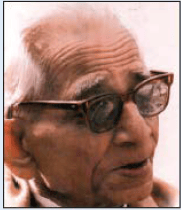
जैनेन्द्र कुमार
हम भी मन-हाँ-मन यह चाहते थे। दोनों ने सोचा कुछ लिखना चाहिए। तय हुआ कि अगले शनिवार को दोनों को अपना लिखा हुआ एक दूसरे के सामने पेश करना होगा। शनिवार आया और देखा कि उनकी कहानी तैयार थी। हमें कुछ बात पकड़ में न आ सकी थी कि कुछ, किसी विषय पर लिख जाता। ऐसे एक हफ़्ता, दो हफ़्ते निकल गए। भाभी तो भी कुछ-न-क़ुछ लिख जाती थीं, यहाँ दिमाग दुनिया भर में घृुषकर भी कोश-का-कोरा रहता था। हम अपनी इस हार को लेकर मन-ही-मन ओछे पड़े जा रहे थे। होते-होते हम जड़ हो गए। स्रोच लिया कि कुछ अपने से होने-हानेवाला नहीँ है। यह अपना निकम्मापन इस तरह तय हो चुका था कि एक दिन घंटी एक दिलचस्प घटना को हमने ज्यों-का-त्यों कागज पर उतार डाला। जाकर भाभी को स़ुनाया। घटना भाई-साहब और भाभी को लेकर थी। भाभी लजाई, मगर खुश भी हुई। मैं मानता हैँ कि वह पहली कहानी थी- जो फिर जाने क्या हुई? ( “मैं-मेरी पहली कहानी" से साभार,)
यही जैनेंद्र कुमार बाद में हिंदी के अद्भुत कथाकार बने। अब चलें, रोते हुए आदमी कौ कहानी के साथ। पार्क में रोते हुए आदमी के दृश्य से लेखक गहरा जुड़ाव महसूस न करता तो वह उसकी स्मृति में बसता ही नहीं। ऐसे अनेक दृश्य होते हैं, जो सामान्य रूप से आँखों के सामने आते ज़रूर हैं लेकिन प्रभावित नहीं करते। आपकी अंतःचेतना को झकझोरते नहीं।
कहानी की रचावट
कौन जाने, कहानीकार ने इस कहानी का कितना रूप दृश्य में सचमुच देखा है। यथार्थ में देखा दृश्य जब हमारी स्मृति में बस जाता है और रचना का बीज-विचार बनने लगता है तो उसमें हमारी कल्पना का मेल भी होने लगता है। मान लीजिए, इस कहानी के लेखक ने पार्क में रोते हुए आदमी को तो देखा, लेकिन उसकी कहानी न सुनी। सिर्फ़ यह देखा कि लोग उसकी दयनीय हालत पर तरस खाकर कुछ सिक्के उसकी तरफ़ उछाल रहे हैं। तब, यह सच होगा कि बीच का दृश्य कहानी में लेखक की कल्पना से आया है। लेकिन अभी ज़रा 'ठहरिये, यह सब अनायास नहीं हो जाता। रोते हुए आदमी को देखकर लेखक का सहृदय उससे जुड़ा। जुड़ा तो उसे लगा कि वह दु:खी है। उसे जिज्ञासा हुई कि ऐसा आखिर क्यों है? बस, यहाँ से विचार कौ रचाबट प्रारंभ हो गई। बार-बार लेखक उसे देखते हुए दृश्य में लौटता और फिर उसकी रचावट में डूब जाता।
उसे लगता है कि इस समय दुनिया का सबसे दुःखी व्यक्ति पार्क में रोता हुआ वही इंसान है जिसे उसने देखा है। उसकी वेश-भूषा और दयनीय रूप कहानी के बीज-विचार को कुछ विस्तार देता। उसमें लेखक की कल्पना भी जा जुड़ती। उसे लगता कि प्रायः गाँव-कस्बों से आए सीधे-सादे लोगों को शहर के चतुर-सुजान लुटेरे बहला-फुसलाकर लूट लेते हैं। कल्पना के पंख जब यथार्थ वृश्य से जुड़ जाते हैं तो बीज-विचार रचनात्मक विस्तार पाने लगता है। अब तक के अर्जित अनुभवों में से कुछ और उसी के साथ आ जुड़ते हैं। जितना उस पर मनन होता जाता है, उतना हो रचाव बढ़ता जाता है। जब यह दबाव बढ़ जाता है, तब रचना-प्रक्रिया प्रारंभ हो जाती है। यहीं वह क्षण होता है, जब कहानी लिखने बाला सचमुच यह तय कर लेता है कि यह रहो मेरी नयी कहानी की ज़मीन।
अनुभव या अनुभूति
अनुभव का देश-काल से बंधन नहीं है। लिखे जाने का कोई समय तो होता नहीं। कुछ क्षणों में अनुभव होता है। जो ठीक-ठीक अनुभव है वह तो उस क्षण में रह गया, इसलिए जो लिखने के काम आता है, वह अनुधूति है, अनुभव नहीं। अनुभूति के बल पर जो बाहर आता है वह आपके अददर से मधकर आता है। इसलिए मेँ कहता हूँ कि जो अनुभव का लेखन है वह यथार्थ का लेखन, आप लाख कोशिश करें, हो ही नहीं सकता। लेकिन अनुभूति में होता हैं और यथार्थ में ' अर्थ आप अपनी तरफ़ से डालते हैं। अपनी ओर से जब आप उसमें अर्थ डालेंगे, तभी आप मानेंगे कि वह आपको रचना है।
- जैनेंद्र कुमार
रचना- प्रक्रिया
पार्क में रोता हुआ व्यक्ति और कहानीकार के अर्जित अनुभवों का मेल रचना-प्रक्रिया कौ शुरूआत बन सकती है। यही है कहानी की असल शुरुआत। कहानी कौ यह शुरूआत प्रायः विचार में होती है। कागज़ पर तो यह बहुत बाद में उतरती है। हम किसी पात्र विशेष, स्थिति, परिवेश या घटना को दृश्य में स्वयं देखकर अथवा किसी और का ऐसा अनुभव सुनकर भी किसी कहानी की रचना-प्रक्रिया प्रारंभ कर सकते हैं। पार्क में रोते हुए व्यक्ति का दृश्य कोई भी व्यक्ति किसी और को सुना सकता है। सुनाते वक्त यह संभव है कि दृश्य में वह अपनी ओर से भी कुछ जोड़कर सुना दे। यह जोड़ना ही कल्पना का यथार्थ से मेल है।
Activity - 7
एक कहानीकार अपने देखे-सुने संसार को कहानी में कच्चे माल की तरह इस्तेमाल करता है। अब तक आपने भी अपने पोर्टफ़ोलियों में बहुत सी रचनाएँ लिखी हैं। लिखने के अपने अनुभव को रचनात्मक ढंग से लिखें। Story writers use their observations of the world around them as their raw material. So far, you have written many creative pieces for your portfolio. Keeping in view your experience of writing, attempt a creative piece on the process of writing.
रोते हुए इस व्यक्ति कौ कहानी, जब लेखक के मस्तिष्क में दौड़ती है, उसे बेचैन करने लगतो है। उसे लगता है कि बगैर इसे कागज पर उतारे या कंप्यूटर पर कंपोज किए वह रह नहीं सकता, समझ लीजिए कि कहानी अब आकार लेकर ही रहेगी। ऐसे में कहानी लिखने बाले का समूचा ध्यान फिर कहानी के कथ्य पर केंद्रित हो आता है। वह सोचने लगता है कि इसे बयान करूँ तो किस तरह! यह विचार में कहानी का दूसरा प्रारंभ है।
प्रस्तुति
कहानी की विषयवस्तु ही नहीं, उसे व्यक्त करने का माध्यम भी आकर्षक होना चाहिए। नए कहानीकार प्रायः पहले के कहानीकारों की नकल करने लगते हैं। इससे वह सायास उन जैसा होने कौ कोशिश करने लगते हैं। परंपरा और कहानी की विशेषताओं के बारे में जानकारी होना तो अच्छा है, लेकिन उस जैसा ही करने लगना ठौक नहीं। वस्तुतः कहानी का कथ्य अपने साथ ही कहने की संभावनाएँ भी लेकर आता है। जब हम उसे प्रस्तुत करने के तरीके के बारे में आश्वस्त हो जाते हैं, बस तभी उसकी एक भाषा भी बनने लगती है और कहानी का रूप भी। प्रायः यह सब हमारे कथ्य के अनुरूप छलता जाता है। कहाँ संवादों में तो कहाँ विवरण या चरित्र-चित्रण में।
लिखते-लिखते रूप बदलता भी है
यह कतई ज़रूरी नहीं कि जैसा कहानौकार ने सोचा, ठीक वैसा ही रूप कहानी भी लेती चली जाएगी। पहले से पूरी तरह सोच-समझकर लिखी गई कहानियाँ साफ़ गढ़ीं हुई नज़र आती हैं। इसलिए यह ज़रूरी है कि जब आप किसी कहानी की ज़मीन पर काम करना शुरू करें, खुद को उसका एक सहदय हमसफ़र मानें। उसके साथ चलते रहें। कहाँ बह ख़ुद आपको ले जाएगी तो कहीं आप उसकी अँगुली पकड़कर कहेंगे - 'चलो, ज़रा इधर चलते हैं।' यह कहानी की सहज प्रक्रिया है। इसमें अनेक अंत और तरीके बन सकते हैं। दरअसल, इससे जीवन, समाज और समय को समझने में सफ़लता हासिल हो सकती है। यही प्रक्रिया धीरे-धौरे कहानीकार में यह तमीज़ पैदा करती है कि किसी घटना-विशेष का विवरण दे देना भर कहानी लिखना नहीं है। हर अच्छी कहानी एक सत्य का संधान भी करती है।
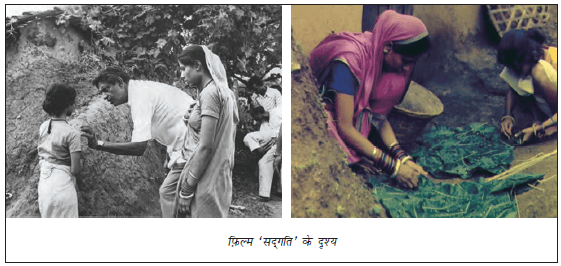
सामान्य-सी दिख रही घटना को कहानीकार की दृष्टि से ऐसा विस्तार मिलता है कि वह अर्थवान् हो उठती है। प्रेमचंद की कहानी 'सद्गति' बताती है कि जन्म से ही कोई बड़ा नहीं हो जाता। यहाँ दुखी की मृत्यु एक तरह से पंडित घासीराम के वजूद को बेमतलब साबित करते हुए चौंकाती खबर लाती है। प्रेमचंद का कथाकार भारतीय समाज पर सिर्फ़ प्रहार ही नहीं करता, गहरी करुणा और अवसाद भी उपजाता है।
सबकी अपनी कहानी
मान लौजिए, रोते हुए इस आदमी की कहानी को कोई दूसरा कहानीकार लिखता। वह इसे यह रूप भी तो दे सकता था कि इसके साथी इसे इसलिए छोड़ गए कि यह तो लुट-पिट चुका था, अब इसे साथ रखकर क्या करें? हो सकता है, स्टेशन पर उतरते ही उसका सारा सामान लेकर कोई चंपत हो गया हो। चलिए, यही मान लेते हैं कि दूसरा कहानीकार भी कहानी को इसी तरह आगे बढ़ाता जैसी यह सबसे पहले कहानीकार ने लिखी है। लेकिन वह अंत बदल देता। पैसे फेंककर चले गए लोगों के बाद एक पुलिस वाला आता और उसके पूरे पैसे बटोरकर चलता बनता। धमकाता अलग, कि भीख माँगना अपग़ध है। कोई भी कहानी हमारी सोच, समझ और अनुभवों के आधार पर अपना रूप बदल सकतीं है। क्या यह नहीं हो सकता कि भीड़ में से एक नौजवान उसे पहचानकर आगे बढ़े और रोते हुए व्यक्ति से कहे-' अरे जग्गू काका आप! चलिए मेरे साथ, अब आपको परेशान होने कौ कोई ज़रूरत नहीं।' ऐसे में यह कहानी दूसरा ही रूप ले लेती।
“कहानी के लिए वातावरण की पकड़ गहरी होनी चाहिए। सही चरित्र सही लोगों में मिलते हैं। सही लोगों की जड़ें गहरी होती हैं।"
- इस्माक सिंगार, अमेरिकी कथाकार
एक लेखक की सबसे बड़ी समस्या सजन के उचित क्षण या कण को पहचानना ही है। अपने आप वे ख़ास क्षण हमें प्रेरित करते हैं। हम कथा-वस्तु की तलाश में नहीं धटकते। दशा और दिशा के प्रति जागरूकता ही हमारे अतर्मन को उद्वेलित करती है। कहती है-“लो... यही बह क्षण है। छोड़ना मत... इसे थाम लो।” -
एम. टी. वाम्म॒देवत तायर, (मलयालम कथाकार) एक साक्षात्कार में
कहानी का उद्देश्य और असर
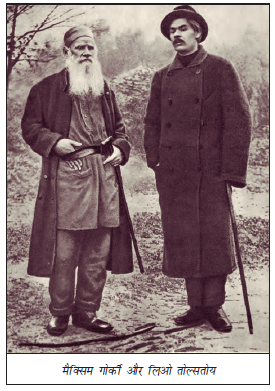
और उन्हें ऐसी तरतीब दे कि कम-से-कस शब्दों में बहुत कुछ व्यक्त हो जाए, कि शब्दों में किफ़ायत कौ जाए और चितन को बड़े विस्तार में निकल जाने दिया जाए, कि शब्दों के माध्यम से सर्जाव चित्रों की रचना की जाए और संक्षिप्त तथा सुदर रूप से एक पात्र की युख्य विशेषताओं की व्याख्या की जाए ..,। शब्दों के माध्यम से लोगों और वस्तुओं में 'रंग भरना ' एक बात है और उन्हों सर्जीब बनाकर; मानो तीनों आयामों में चित्रित करना, इस प्रकार कि वे शारीरिक रूप से दर्शनीय हो जाएँ जैसे कि वोल्सतोय के बुद्ध और शांति' के पात्र हैँ; बिल्कुल दूसरी बात है... ” हर कहानीकार की हर कहानी अच्छी और प्रभावशाली ही हो, यह ज़रूरी नहीं | ज़रा यह छोटी कहानी पढ़ कर देखें।
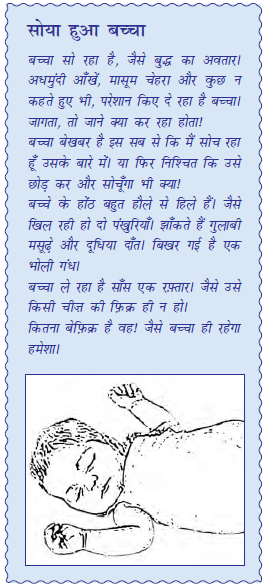
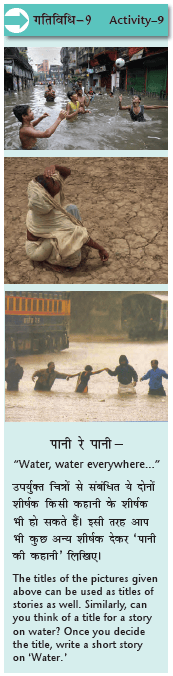
यह कहानी आकार में छोटी ज़रूर हैं, लेकिन हर पाठक इसका आनंद कहानी की तरह नहीं उठा सकता। उसे इसमें कहानीपन खोया हुआ नज़र आएगा। उसे लग सकता है कि यह कहानी है या कविता? सोते हुए बच्चे को देख कर लिखा गया एक चित्र है यह। लेखक ने इसमें भोले बच्चे कौ बेफ़िक्री पर अपने अनुभव को रख भर दिया है। इसमें उसकी यह चिंता भी साथ चली आई है कि बड़े होने पर यह बेफ़िक्रो नदारद हो जाएगी। पाठक इस उलझन में पड़ जाएगा कि बच्चा ही क्यों रहेगा बह! बड़े होकर क्यों वह सहज और निश्चित जीवन नहीं जी सकता! ऐसी रचनाएँ सहज दिखते हुए भी जटिल होती हैं। शैली तो रचना का अलंकार है। जहाँ कोई अनुभूति तीत्र होती है, चहां शिल्प खुद बनता चला जाएगा। तकनीक और कथ्य घुल-मिलकर ही एक अच्छी कहानी बनाते हैं। कहानी से आप क्या और कैसे कहना चाहते हैं, यह विचार धैर्यपूर्वक करना चाहिए। दरअसल, जो कहना है बही रचना में करना भी होता है।
यदि हम इसी रोते हुए आदमी की कहानी की बात करें, तो कहना चाहने वाली यह बात ज़्यादा आसानी से समझी जा सकती है। इस कहानी का एक रूप यह भी हो सकता था कि पार्क में वह लूटेरा ग्रामीणों को बहकाकर निकल जाता। कहानीकार अपनी सारी क्षमता इसी दृश्य को प्रभावी बना देने में लगा देता था। ऐसे में यह एक घटना का विवरण भर होकर रह जाता। कहानी में किसी अनुभव का शामिल होना सार्थक तब होता है जब वह निजी से सार्वजनिक में बदल जाए। गौर कौजिए, रोते हुए व्यक्ति को देख कुछ व्यक्ति तो ऐसे भी थे जो वहाँ खड़ा होना तक मुनासिब नहीं समझ रहे थे। उन्हें लग रहा था कि यह तो वक्त की बर्बादी है। दरअसल, ये ऐसे लोग थे जो किसी दूसरे या अपरिचित के दुःख-दर्द में शामिल होना वक्त को बर्बादी समझते हैं। जयराम ऐसे लोगों में से नहीं है। वह आगे बढुकर रोते हुए आदमी से पूछता है-“कैसे लुट गई सारी जमा-पूँजी, भाई?" उसका यह प्रश्न पूछना ही उसके दुःख के साथ जुड़ना है।
उसे जुड़ता देख भीड़ में से कई और अपरिचित चेहरे भी उसमें दिलचस्पी लेने लगते हैं। जानना चाहते हैं कि जो कुछ हुआ, वह आखिर हुआ कैसे! रोते हुए आदमी से उसकी दुःखभरी कथा सुनने के बाद जयराम ही वह पहला आदमी है जो उसकी मदद करने के लिए दस रुपये का नोट देता है। सच पूछें तो कहानी तभी सार्थक बनती है जब किसी को किसी से जोड़े। यहाँ जयराम के रूप में पहले आदमी की तलाश ही कहानी को बड़ा बनाती है। यदि वह चाहता तो सीख देने वाली उस महिला की तरह ही दो-चार शब्द कहकर रोते हुए आदमी को कुछ समझाता और चलता बनता। लेकिन उसने ऐसा नहीं किया। चलिए, अब जरा एक दूसरे दृश्य की बातें करते हैं। यही जयराम साहब एक दिन बस से दिल्ली आर. के. पुरम् की बस में बैठे। देखते कया हैं कि बड़ी-सी पगड़ी पहने एक आदमी पहली सीट के पास आकर खड़ा हो गया है। अच्छे-खासे डील-डोल और भारी आवाज़ में मूँछों वाला असरदार चेहरा देखकर हर कोई उसकी बात सुनने लगा। वह स्वर को कुछ करुण बनाकर कह रहा था कि मेरा सारा परिवार नीचे खड़ा है। हम लोग कल रात ही बाहर से शहर दिल्ली पहुँचे थे। सारा सामान हमारे साथ है, बस पैसे वाला थैला कोई लेकर चंपत हो गया। मैं अच्छे घर-बार का आदमी हूँ। अगर आप लोग मुझे परिवार सहित लौटने का किराया दे दो तो आपका किया जन्म भर नहीं भूलूँगा। पता दे दोगे तो आपका पैसा पहुँचते ही मनीआर्डर से भेज दूँगा। जयराम ने उसे पहली बार देखा होता तो शायद उसकी प्रतिक्रिया कुछ और होती। उसने फ़ौरन पहचान लिया, यह तो वही आदमी है जो परसों भी इसी तरह लोगों से पैसे माँग रहा था। क्या यह दृश्य लेखक से पहले जैसी कहानी लिखवा सकता है? नहीं।
यह कहानी एक अलग ही रूप ले लेगी। यहाँ जयराम जैसा चरित्र लोगों को मूर्ख बनाने वालों का भंडाफोड़ करने के काम आ सकता है। हो सकता है, वह तुरंत खड़ा हो जाए और बस में बैठे लोगों से कहे कि इसकी बातों में मत आना। यह इसी तरह पैसे ऐंठता है। यह भी हो सकता है कि कंडक्टर से कहकर उसे बस से उतरवा दे। यानी लेखक दृश्य के भीतर की सच्चाई को पहले परखता है और फिर उसे अपनी कहानी की विषयवस्तु बनाता है। इस काम में उसकी मानव मनोविज्ञान की समझ, सहज ज्ञान, जीवन-अनुभव और सबसे ऊपर विवेक सहायक बनता है। कहानी सच को सच की तरह तो कहती है, झूठ को भी सच की तरह कह सकती है।
कहानी का शीर्षक
प्राय: नए कहानीकार इस गफ़लत में पड़ जाते हैं कि कहानी का शीर्षक कैसे रचें! पहले कहानी लिखें या शीर्षक? अच्छा यही है कि पहले कहानी लिखी जाए। लिखे जाने के दौरान यदि कहानी का शीर्षक आपके साथ-साथ चलता रहा तो कहानी पूर्बनिर्धारित अंत की तरफ़ बहने लगेगी। पूर्वनिर्धारित अंत उन्हीं कहानियों का होता है जो गढ़ी जाती हैं। सायास गढ़ी जाने वाली कहानियाँ अपने साथ लेखक के पूर्वाग्रह लेकर आती हैं। कहानी निजी अनुभूति होते हुए भी ऐसी विधा है जो समाज का अनुभव बनने की क्षमता रखती है। यदि यह सर्वेक्षण किया जाए कि दुनिया के ज़्यादातर अच्छे कहानीकारों ने कहानी पहले लिखी या शीर्षक तो परिणाम यहीं सामने आएगा कि शीर्षक बाद में लिखे गए।
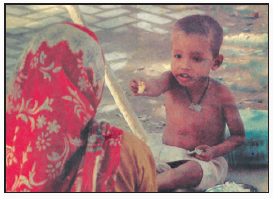
इस तसवीर को एक अच्छा सा शीर्षक दें
शीर्षक कहानी के लिए पहला आकर्षण बनता है। उसमें समृची कथा का मर्म आ जाए तो वह सार्थक हो जाता है। प्रेमचंद कौ “पंच-परमेश्वर' कहानी का शीर्षक इससे बेहतर क्या हो सकता था। रोते हुए इस बालक की कहानी का एक शीर्षक आप भी सोचिए।
कहानी की भाषा
कहानी का कथ्य अपने साथ एक भाषा-संकेत लेकर आता है। वह बताता है कि शब्दों कौ इस कला को साधा कैसे जाए! शब्द अपने स्राथ ध्वनियाँ भी लाते हैं। इनके सहयोग से ही अनुभूति व संबेदना कौ प्रस्तुति होती है। रचना के मर्म को पूरी तरह जाहिर करने कौ हमारी तैयारी ही भाषा को संबवारती है। किसी भी लेखक के लिए यह जानना ज़रूरी है कि जब तक हम अपनी कथा-भाषा के महत्त्व को नहीं समझेंगे तब तक पठनीय रचना कर पाना संभव नहीं। हमें अपने प्रत्येक शब्द, सृक्ष्मतम मनोभाव और भाषा को अर्थवान् बनाने वाले तत्त्वों के प्रति जागरूक होना होगा ताकि रचना में उसका प्रवाह सहज और पठनीय हो सके।
-छी-ई-ई-छक्क ' गाड़ी हिली। हिरामन ने अपने
दाहिने पैर के अगृठे को बाएं पैर की एड़ी से
कुचल दिया। कलेजे की धड़कन ठीक हो गई
. हीराबाई हाथ की बँगनी साफ़ी से हाथ
पॉँछती है। साफ़ी हिलाकर इशारा करती हैँ ...
अब जाओ...। आखिरी डिब्बा गुजरा, प्लेटफ़ार्स
खाली ... सब खाली ... खोखले ... मालगाड़ी
के डिब्बे! दुनिया ही खाली हो गई मानो! हिरासन
अपनी गाड़ी के पास लौट आबा।”
-फण्णाशवर नाथ रेण् (तौँमरी कम्मम, उर्फ़ मारे गए गुलफ़ाम)
भाषा की रवानी बनती है उसके मुहावरों, व्यंजना रूपों, लय और संगीत से। इसका कथ्य के साथ घुल-मिलकर आना ही भाषा में रचना का बनना हैं। यह रचना की माँग के अनुरूप संकेतों में स्पष्ट, अभिधात्मक या व्यंजना प्रधान हो सकतीं है। रोते हुए आदमी की कहानी को यदि चार लेखक अपने-अपने अंदाज़ में प्रस्तुत करेंगे तो भाषा के चार रूप हमारे सामने होंगे। इसमें समय, स्थान, स्थिति और चरित्रों का सम्यक् ध्यान न रखने वाला कथाकार अच्छी कथा-भाषा नहीं दे सकता।
भाषा मेँ बहुत चीज़ें देखनी पड़ती हैँ! सबसे बड़ी चौज् जो मैं महसृस॒ करता हूँ, वह यह है कि मेरी भाषा में 'रिंअलाइज्ड टूथ' की, मेरी संवेदना को पूरी मानस्रिक प्रक्रिया से कही हुई भाषा है या सिर्फ़ जानी, सौखी और सनी हुई भाषा है? इन दो चीज़ों में अंतर करना बहुत ज़रूरी है, क्योंकि भाषा को इस समय भ्रष्ट करने वाले बहुत से तत्त्व हमारे चारों तरफ़ हैँ... रचनाकर्मी का भाषा के प्रति क्या “एटीट्यूड' होना चाहिए, संकेदना की प्रक्रिया से गुज़्र कर एक लेखक का शब्द किस तरहा निकलता है, इसका एक उदाहरण मेँ मार्खेज का देता हो मार्खेज ने एक जगह बातचौत में कहा है कि में उपन्यास लिख रहा था। लिखते-लिखते अचानक “अमरूद ' शब्द मैंने लिखा और रुक गया। हम लाग रोज़ तरह-तरह के शब्द लिखते हैं! लेकिन उन्होंने आगे जो बात कहीं, बह ज़्यादा महत्त्वपूर्ण है कि मुझे ऐसा लगा कि मेँ "अमरूद ' शब्द लिख तो रहा हूँ पर "अमरूद ' का स्वाद और गंध मुझे अपने भीतर से आ नहीं रही है। मैं सिर्फ़ उस शब्द को लिख रहा हूँ जब तक मेँ उस चौज़-' अमरूद ' को महसूस न करूँ खाते हुए यूझे कैसा लगा था, अमरूद का स्वाद क्या था, अमरूद की गंध क्या थी, ये चीज़ जब तक अपने भीतर मैं जगा नहीं सकता, तब तक मेरी रचना में दम कहाँ से आएगा।
- राजेंद्र यादव, कहानी-अनुभव और अभिव्यक्ति
रचना के स्तर पर कहानी कहीं अधिक सुगठित विधा है। विचारों की एकता, संवेदगा की एक लक्ष्यता, भाषा की कृपणता-सब कुछ भला कैसे सँभले? यही वह कसोंटी है जिस पर कोई-कोर्ड रचना ही खरी उतरती है।
- श्रीपतराय
सभी लिख सकते हैं कहानी
आमतौर पर यह धारणा है कि कहानी लिखने के लिए विशेष किस्म का व्यक्ति होना अनिवार्य है। कुछ लोग तो यह भी कहते हैं कि कहानीकार जन्मजात होते हैं। यह दोनों ही बातें सौ प्रतिशत सही नहीं हैं। कोई भी व्यक्ति कहानीकार बन सकता है। इसके लिए ज़रूरी है आस-पास को बारीक नज़र से देखना, जिनसे कहानी का चित्र बनता है। जितनी मेहनत से यह काम किया जाएगा, कहानी उतनी ही प्रामाणिक और प्रभावशाली बन पाएगी। याद कीजिए आपने अपने आपको माँ या अध्यापक की डाँट/सज़ा से बचाने के लिए कितनी ही झूठी कहानियाँ गढ़ी होंगी। यानी आपके पास वह कला पहले से मौजूद है। अब उसे एक अच्छी कहानी का रूप देकर देखिए। आप पाएँगे कि झूठी कहानी गढ़ने के लिए भी आपको कुछ सच्चे अनुभव, कुछ देखे-सुने दृश्य, कुछ कहानियों को पढ़कर जानी बातें, कुछ कहानी कहने के अलग-अलग तरीके और इसे अपनी भाषा में पिरोने की कला की ज़रूरत होगी। ज़ाहिर है इससे आप भाषा संबंधी अनेक बारीकियाँ भी सीखेंगे।
कहानी में संवाद का बड़ा महत्त्व होता है। नीचे दिए गए
संवादों को पढ़ें। कल्पना कीजिए कि ये पशु, पक्षियों,
पेड़-पौधे के बीच हो रहे संवाद हैं। उन्हें लिखिए। अब
इन संवादों को आधार बनाकर एक कहानी लिखिए।
(दृश्य दो बच्चों के बीच किताब पढ़ने को लेकर लड़ाई
चल रही है)
मीना - बड़ी मुश्किल से यह किताब मेरे हाथ लगी
है; इसे भी तुमने ले लिया?
शीना - हर बार कोई किताब पहले तुम्हीं क्यों पढ़ोगी?
मीना - क्योंकि मुझे पढ़ना आता है।
शीना - अच्छा! मुझे भी पढ़ना आता है।
मीना - चलो, पढ़ो तो।
शीना - एक कंप्यूटर है। इस पर दो बच्चे बैठे हैं।
दोनों एक साथ कार्टून देख रहे हैं।
मीना - तुमने कैसे पढ़ा? कल वाली किताब तो हुम
नहीं पढ़ पाईं थीं।
शीना - इसमें चित्र जो है। मैंने अनुमान से पढ़ लिया।
मीना - अच्छा चलो, हम मिलकर पढ़ते हैं।
यहाँ दो बच्चों की बातचीत आपने पढ़ी, अगर दो पेड़
या दो पशु आपस में बात करें तो।
Dialogues form a very important part of a short
story. Read the following dialogue between two
girls. Now, imagine a world where animals and
birds can talk. Write a short story with birds and
animals as characters and use the given dialogue
in their conversation.
Meena: I got this book with great difficulty
and now you have taken it away?
Sheena: Why should you always get to read
every book first?
Meena: Because I know how to read.
Sheena: Well, I too can read.
Meena: Oh, can you? Go ahead and read!
Sheena: There is a computer. There are two
children watching some cartoons.
Meena: Hey! How did you read that? You
couldn’t read the book yesterday!
Sheena: That’s because there are pictures in this
book. I guessed what was written!
मान लीजिए, आप अपने स्कुल के पास बैठे एक चाटवाले को आधार बनाकर एक कहानी लिखने कौ सोच रहे हैं। तो इसके लिए सबसे पहले तो यह देखना होगा कि कहानी में वह चाटवाला कैसे एक चरित्र के रूप में खड़ा हों सकता है। उस्तकी एक-एक हरकत, बच्चों के स्राथ उसका बर्ताव, चाट बनाते वक्त हाथों की तेज़ों, मसाला मिलाने के समय की लयात्मकता, पैसे लेना और बकाया लौटाना या ग्राहक को आकर्षित करने के उसके तौर-तरींके क्या हैं! उसकी बोलीं और वाणी कैसी है? आपके भीतर जब यह चरित्र कहानी में खड़ा होने लायक बन जाएगा तब आप उसकी कहानी कह सकते हैं। कहीं चरित्र तो कहीं माहौल बनाती है कहानी। प्रेमचंद की कहानी “ईदगाह' को गौर से पढ़िए। देखिए कि कैसे कथाकार ने ईदगाह का जीवंत माहौल कहानी में उतारकर रख दिया है। कहीं यह विवरण में है तो कहीँ संवादों में। देखिए तो ज़रा -
“उसने दुकानदार से पूछा - “बह चिसय कितने का है?!
दुकानदार ने उसकी ओर देखा और कोई आदमी
साथ न देखकर कहा, 'वह तुम्हारे काम का नहीं
है जी।'
“बिकाऊ हैँ कि नहीं?"
“बिकाऊ क्यों नहीं है। और यहाँ क्यों लाद लाए हैँ
“तो बताते क्यों नहाँ, कै पैसे का है?"
'छी पैसे लगेंगे।
हामिंद का दिल बैठ गया।
'ठीक-ठीक पाँच पैसे लगेंगे, लेना हो तो लो,
नहीं चलते बनो।'
हामिद ने कलेजा मज़बूत करके कहा - “तीन
पैसे लोगे?' यह कहता हुआ वह आगे बढ़ गया
कि दुकानदार की मुड़कियाँ न सुने!
लेकिन दुकानदार ने घुड़कियाँ नहीाँ दौं। बुलाकर
चिसटा दे दिया। हामिद ने उसे इस तरह कंधे पर
रखा, मानों बदुक है और शान से अकड़ता हुआ
संगियों के साथ आया।”
जैसा दृश्य, वैसी भाषा। यह दृश्य संवादों में बना है।
हर कहानी के लिए यह ज़रूरी नहीं। कहीं-कहीं आपको कथा के लिए माहौल तैयार करना होगा। यह भाषा से दृश्य बनाने का ऐसा काम है जिसमें रस होना बहुत ज़रूरी है। सूखे दृश्य में आकर्षण नहीं होता। लेकिन दृश्य भी कहानी की कथावस्तु के अनुरूप ही बनेगा। बनेगा तभी जब कहानीकार की नज़र पहले उसे पकडेगी। दृश्य का यह पकड्ना ही बारीकियों की पकड़ करना कहलाता है। बड़ा कहानीकार वही बन सकता है जो चरित्रों को खड़ा करने के साथ कथा के परिवेश को भी दृश्य में बदल दे। पाठक को यह दृश्य ही कथा की स्मृत्ति कराते हैं। लेकिन इसका यह अर्थ नहीं कि कहानीकार की भाषा अपना सारा ज़ोर दृश्यात्मकता में ही लगा दे।
कहानी के मर्म तक पहुँचाने के लिए भी भाषा की महत्वपूर्ण भूमिका है। कभी यह संबादों में आती है तो कभी मनःस्थितियों को खोलने में। इसका संयत और आकर्षक प्रयोग ही कहानी को पहली नज़र में पठनौय बनाता है। यह काम हममें से कोई भी कर सकता है। चाहिए बस एक संवेदनशील नज़्र। संवेदनशीलता हममें से हर किसी में है। ज़रूरत उसे व्यवहार में लाने की है। इसी से उसका रचनात्मक विकास होता है।
तो फिर तैयार हो जाइए, आपको लिखनी हैं एक नयी कहानी। इसकी शुरुआत आप कहीं से भी कर सकते हैं क्यों न “पंचतंत्र' की कोई कहानी लें और उसे आज के समय के हिसाब से ढाल दें।
यह तो शायद शुरू से ही निश्चय था एक तरह से कि लेखक बनूँगा। बचपन में ही कुछ शब्दों का आकर्षण तो था ही। कुछ शब्दों से खिलवाड़ करने की प्रवृत्ति भी थी और कुछ तुकबन्दियाँ भी की थीं। तब यह तो नहीं कह सकता था कि तभी ऐसा सोचा था कि लेखक बनूँगा लेकिन उधर एक झुकाव था। बहुत जल्दी ही यानी कॉलेज जाने से पहले जान लिया था कि लिखूँगा।
( पृ० 77, कवि नायक अज्ञेय)
जब मेरी गिरफ़्तारी हुई थी उस के बाद पहले जिस तरह के आरोप मुझ पर लगे थे उससे यह संभावना बनती थी कि काफ़ी बड़ी सज्ञा या फौँसी की सज्ञा भी हो सकती थी। और जिस तरह के झूठे गवाह तैयार किये गये थे, जैसी शिनाख्त करवायी की गयी थी उससे भी ऐसी संभावना बनती थी। मैं तब 9 वर्ष का था। 19 वर्ष के जवान के लिए यह सवाल ज़रूर बनता है कि अगर 20 वाँ वर्ष पूरा होने तक उस को फाँसी हो जाती है तो मेरे जीवन का अस्तित्व क्या है, भले ही क्रोतिकारी रहा हो या जो भी रहा हो। उस दौरान मैंने इसी प्रश्न को लेकर बहुत कुछ सोचा और एक तरह से 'शेखस- एक जीवनी' जो है वह इसी सवाल का जवाब है। हवालात से जेल पहुँचते ही जब लिखने की सामग्री मिली और जब मुकदमा शुरू होने लगा तो मैंने सबसे पहले यही काम भी किया कि 3-4 दिन-रात जैसे-तैसे पेंसिल या पुरानी घिसी हुई कॉपी में एक मसविदा लिख डाला जो कि अनन्तर 'शेखर - एक जीवनी' का पूर्ण रूप बना। बल्कि उस समय जो लिखा तो खिचड़ी भाषा में लिखा। तो बात जैसी मन में आयी अंग्रेज़ी में, हिंदी में या मिली-जुली भाषा में वैसा ही लिखता गया। क्योंकि तब उद्देश्य यह था कि जल्दी-से-जल्दी इस चीज़ को, इस तपे हुए लोहे को, पिघले हुए लोहे को जमने से पहले मैं एक आकार में ढाल दूँ।
( पृ० 87-82, कवि नायक अज्ञेय)
“नदी के द्वीप' में तो कई जगह ज़िक्र आता है। घटनास्थल ही कुमाऊँ प्रदेश से जुड़ा हुआ है और कविताओं में मसलन “असाध्य वीणा' में प्रियंबद जो ध्वनियाँ याद करता है वह बहुत कुछ कुमाऊँ से जुड़ी ध्वनियाँ हैं। कुमाऊँ का नाम लिया गया है लेकिन वे आवाज़ें अधिकतर तो यहाँ सुनी गयी हैं चाहे वह पर्वतीय गाँव के ढोलक की आवाज़ हो, चाहे झरने की धार की आवाज्ञ हो, चाहे पहाड़ों के टूट कर गिरने की आवाज्ञ हो, चाहे बिजली की गड़गड़ाहट हो।
(पृ० 93, कवि नायक अज्ञेय)
कहानी का अंत
कहानी लिखना शुरू करते वक्त ही यदि आपने कहानी लिखने के बाद कहानी लिखना एक बात है और उसका संपादन एक उसका अंत सोच या तय कर लिया तो वह एकरेखीय अलग बात। लिखने के बाद, कहानी को कुछ रोज़ के हो सकती है। कहानी का अंत जितना खुला होगा लिए रख दें। फिर एक दिन उसे इस तरह पढ़ें, जैसे उतना ही अच्छा रहेगा। कभी-कभी तो आप पाठक के वह किसी और की लिखी हो। हो सकता है, उसमें लिए भी इस काम को छोड़ सकते हैं। इससे उसकी कल्पनाओं का तो विस्तार होगा ही, वह कहानी से बहुत कुछ ऐसा नज़र आए जिसकी ज़रूरत ही न हो। ऐसे में आप उसे संपादित कर सकते हैं। यदि कहानी गहरे में जुडेगा भी। ऐसे में आपकी लिखी कहानी में उसका भी रचनात्मक योगदान हो सकेगा। दुनिया के अनेक कहानीकारों के अनुभव इस दिशा में एक दिलचस्प अध्ययन का विषय हो सकते हैं।
जब कोई विचार पूरी तरह से मन को आक्रांत कर लेता है तभी ऐसा लिखने लगता हूँ। उपन्यास में आने वाले कथानक को मैंने कई बार एक कहानी के रूप में लिखा है।
- जयकांतन, तमिल रचनाकार
सात वर्ष की उम्र से ही मैं विभिन्न कोणों से सोचती रहती थी। मैं मानती हूँ कि क्यों और क्या है | जैसे प्रश्न ही एक लेखक का सृजन करते हैं।
- वासिरेंड्री सीतादेवी, तेलुगु रचनाकार
मैंने देखा है ओर जानता हूँ कि पृथ्वी पर जीने की अपनी क्षमता बनाए रखते हुए लोग बहुत अच्छे और सुखी-सौभाग्यशाली हो सकते हैं। में इस बात पर विश्वास करना नहीं चाहता और कर भी नहीं सकता कि बुराई लोगों के जीवन की सामान्य स्थिति है।
-फ़्योदोर दोस्तोएव्स्की की कहानी “एक हास्यास्पद व्यक्ति का सपना से
कहानी लिखने के बाद
कहानी लिखना एक बात है और उसका संपादन एक अलग बात। लिखने के बाद, कहानी को कुछ रोज़ के लिए रख दें। फिर एक दिन उसे इस तरह पढ़ें, जैसे वह किसी और की लिखी हो। हो सकता है, उसमें बहुत कुछ ऐसा नज़र आए जिसकी ज़रूरत हो न हो। ऐसे में आप उसे संपादित कर सकते हैं। यदि कहानी दोबारा पढ़ने पर भी अच्छी लगे तो समझ लें कि उसमें रचना की शक्ति है। दुनिया के अनेक प्रसिद्ध रचनाकारों का कहना है कि उन्होंने काफ्का की *मेटामार्फोसिस ' कई-कई बार पढ़ी हैं। कई कहानियाँ फिर-फिर पढ़ी जाने को आमंत्रित करती हैं। कई बार ऐसा भी लगता है कि कहानी तो पढ़ ली, लेकिन वह खत्म नहीं हुई। बल्कि हमारे भीतर फिर से शुरू हो गई। यही अच्छी कहानी की असल पहचान है। किसी भी नए लेखक को सबसे पहले यह समझना ज़रूरी है कि पहली बार लिख लीं गई कहानी ही उसका अंतिम ड्राफ़्ट नहीं होती। क्या आपने 'उर्दू-पंजाबी' के कथाकार राजेंद्र सिंह बेदी का किस्सा सुना है? बेदी साहब ने उर्दू में अपनी पहली कहानी सन् 936 में लिखी थी। “महारानी का तोहफ़ा' शीर्षक यह कहानी तब वर्ष की सर्वश्रेष्ठ कहानी के रूप में पुरस्कृत भी हुई थी। फिर भी उन्होंने इस कहानी को अपने किसी संग्रह में शामिल नहीं किया। बेदी साहब कहते हैं-“यह इस बात का सबूत हैं कि मेरे होशोहवास शुरू से ही कायम थे।” कहानीकार को किसी कहानी की प्रशंसा से फूलकर क़ुप्पा नहीं हो जाना चाहिए। ऐसा होने पर आगे लिखने का सिलसिला थम जाता है।सही उठान अगर ले कहानी तो चाहे वह पचास पेज की हो, चाहे वह दो पेज की हो और उस उठान को आप ठीक अंत तक ले जाएँ। जिसको निर्वाह करना कहते हैं।
- नामवर सिंह (एक साक्षात्कार में)
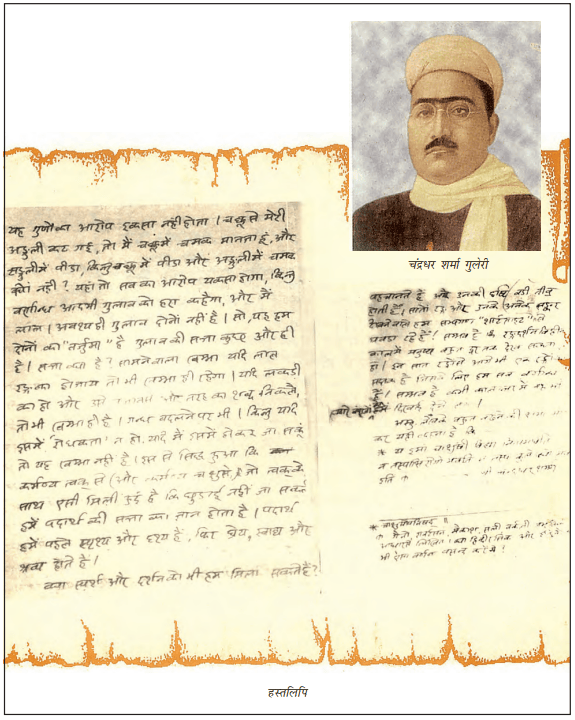
हर कहानी को अपने-आप में एक मुकम्मल कृति मानकर पहले देखे कि कहानी क्या कहती है | फिर देखे कि कहानी जो कुछ कहती है, क्या ऐसी बात कहती है जिसकी और औरो का ध्यान नहीं गया था? पहली बार क्या लेखक ने एक नए सच की ओर इशारा किया है? और फिर देखें कि यह नया सच जो है वह इतिहास के संदर्भ में कोई बड़ी बात है या एक छोटा-सा, खाली एक खिलवाड़ है? मज़ा लेने के लिए यानी चिकोटी काटने वाली बात है या उस चिकोटी में गहरा दर्द है? और वह एक-एक बहुत बड़े संदर्भ को आलोकित करता है। यदि केवल वह फुलज्ड़ी नहीं है बल्कि उससे एक रोशनी मिलती है अपनी ज़िंदगी के आज के किसी बड़े सच को देखने की, तब लगेगा कि एक बड़ी कहानी है।
- नामवर सिंह
अच्छी रचनाएँ पढ़ें
पढ़ने से अधिक रचनात्मक कुछ नहीं। दरअसल, रचना का संसार इसी से खुलता है। आप रेणु, प्रेमचंद, मोपांसा, तोल्सतोय, चेखव, मंटो या राजेंद्र सिंह बेदी, कृष्णा सोबती की कोई कहानी पढ़ते-पढ़ते पाएँगे कि एक नयी दुनिया ही आपके भीतर खुलती जा रही है। लगेगा जैसे बहुत कुछ अपने अनुभव जगत में से भी ऐसा है जो उस रचना को पढ़ने से अनायास स्मरण आने लगा है। ऐसा तो अपने साथ भी हुआ था न! बस, यहीं से शुरू होता है आपकी रचना का एक नया रास्ता।
कहानी का एक रास्ता यह भी है कि अपने साथियों को गौर से देखिए! देखिए कि वह किस तरह अपने झूठ को सच बताने के लिए अनंत किस्से गढ़ते हैं। झूठ को कलात्मक अंदाज़ में सामने रखने वाला क्लास में ही नहीं, घर पर भी अपना सिक्का जमा लेता है। लेकिन गौर से देखें तो आप पाएँगे कि झूठ बोलने में ज़रा-सी चूक हुई नहीं कि आप पकड़े गए। क्लास में टीचर और घर पर माँ आपको फ़ौरन पकड़ लेंगी। आपके बहुत से दोस्त होंगे जो मनगढ़ंत कहानियाँ सुनाकर अपने-आपको बचा ले जाते होंगे। उस समय उनका आत्मविश्वास देखने लायक होता होगा। क्योंकि तब वह अपनी सारी ऊर्जा उसी में लगा देते होंगे। कहानीकार को भी अपनी बात कहने में पूरी ताकत लगा देनी होती है। लेकिन यह ध्यान रखना ज़रूरी है कि पात्र खुद बोलें, कहानीकार नहीं। पात्रों के बोलने पर ही कहानी असरदार होती है।
प्रेमचंद जैसे कथाकार ने भी ब्रिटेन के चार्ल्स डिकेंस और रूस के लेव तोल्सतोय की रचनाएँ पढ़ी थीं। कन्नड् रचनाकार शिवराम कारंत ने एक साक्षात्कार में कहा- “जब कभी कोई अच्छी कहानी या निबंध पढ़ता, तो लिखने का मन करता। जब मैं विद्यार्थी था, तभी से लिखने लगा था।”
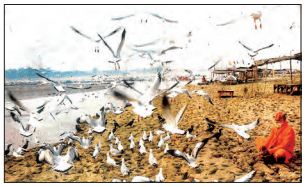
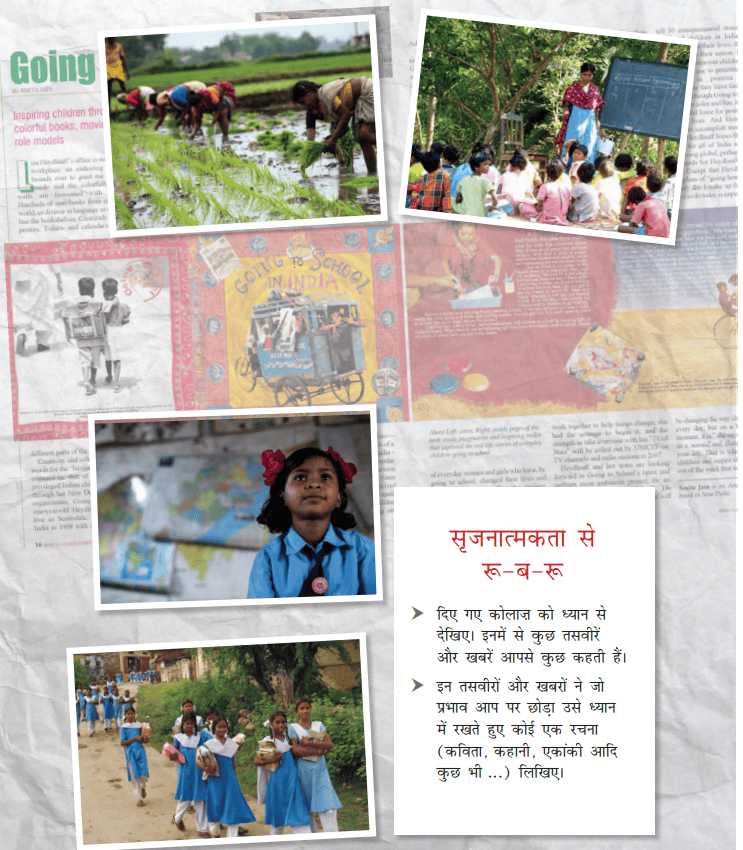
चित्र को देखकर कहानी के बिंदुओं पर कक्षा में चर्चा करें |
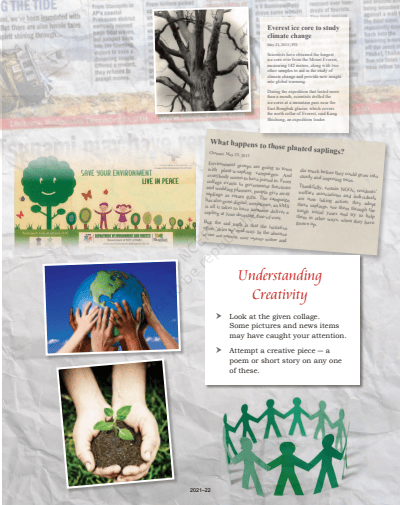
Understanding Creativity
>> Look at the given collage. Some pictures and news items may have caught your attention.
>> Attempt a creative piece ― a poem or short story on any one of these.
I. An Idea and Its Development
When you are standing alone on a mountain staring at millions of stars in the middle of the night or are observing something as small as ants carrying specs of sugar tirelessly one by one rhythmically, or if your friend has hurt you, the experience makes you pause and reflect amidst everyday activity. There is some murmuring at first and then some kind of knocking at one’s consciousness deep within, as if seeking some outlet for expression. The sound, the feeling, the pain or the joy demands attention and articulation. This is where the seed of the “urge to express creatively” lies. Many a time we suppress, ignore or dismiss these experiences. If one pauses and meditates upon such an experience, it begins to take shape. The sounds acquire a rhythm and the process of creative expression may trigger off at this moment. The desire to express, to communicate, takes over! But then, one may ask, how does one express oneself? The nature of the experience usually becomes the nature of expression. If the medium of expression is to be “words” and the expression finds itself in narrating a sequence of events, usually a story is born in which characters emerge; a description of the experience or the scene, felt or imagined, can become an essay or a report. But it becomes a poem if the nature of the experience, in a way, is more like a revelation or an insight. The flow of emotion felt at this time finds expression through some rhythm, not necessarily through the use of any rhyme scheme or specific form of poetry. ‘Inspiration’ takes over and you may write a line or two around which the poem grows. This is your own specific experience and your authentic perception of it will be unique, as unique as you are! The style and form most appropriate for one’s expression generally manifests itself during the very process of writing. In this unit we will discuss about poetry and short story writing
II. Writing Poetry
Poetry has been intrinsic in our oral tradition for long and all our folk songs were sung/recited before they were written. The question is what makes a poet write. In Letters to a Young Poet, the poet Rainer Maria Rilke, offers deep insights into this question. To begin with, in the most silent hour of the night, he says, ask yourself: must I write? If you want to write a poem, then try to say what you see and feel and love and lose.
This may sound very simple but we must understand that we fail to write good poetry because we do not attend to our experiences honestly and genuinely. First, we may not be able to sensitively feel or really explore the truth of a situation, and if we do, we hasten to distract ourselves. We need to stay with the experience to recognise what truly stirs one’s heart or mind. One must listen, feel, see and perceive, and identify.
Writing a poem is all about observing the world within you and also around you. You can write about anything from describing an emotion to the concerns
about the environment. Write down your thoughts as they come to you. Sometimes it is just an image. It could be a hurt, an experience of beauty or may be a thought or an idea that might inspire one to write. In other words, one is stirred or moved into saying something, which ordinary expression may not be able to communicate. The same stimulus can stir the emotions of different people at different times; therefore, the renderings also vary. For example, Subramania Bharati and P.B. Shelley have both written poems on the subject ‘Wind’. See how their inspiration has taken form.
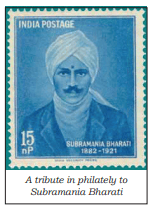
Read the following excerpt from the poem ‘Wind’ by Subramania Bharati translated from Tamil by A.K. Ramanujan. Wind, come softly. Don’t break the shutters of the windows. Don’t scatter the papers. Don’t throw down the books on the shelf. There, look what you did – you threw them all down. You tore the pages of the books. You brought rain again …
Subramania Bharati has percieved wind as a destructive force when it blows strongly and causes harm. The same wind can be turned into a friend if we become as strong as the wind, according to the poet. In the poem ‘Ode to the West Wind’, P.B. Shelley sees the wind as a powerful force that functions as both destroyer and preserver. He appreciates the fact that the wind which is a harbinger of autumn, also heralds the spring and the beauty and rebirth associated with it. Here is an excerpt─ O wild West Wind, thou breath of Autumn’s being, Thou, from whose unseen presence the leaves dead Are driven, like ghosts from an enchanter fleeing, ... Wild Spirit, which art moving everywhere; Destroyer and preserver; hear, O hear!
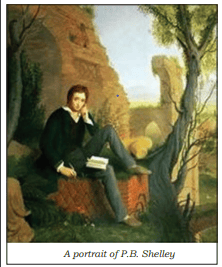
Shelley has also recorded how he was inspired to write the poem
The poem was conceived and chiefly written in a wood that skirts the Arno, near Florence, on a day when that tempestuous wind, whose temperature is at once mild and animating, was collecting the vapours to pour down the autumnal rains. They begin, as I foresaw, at sunset, with a violent tempest of hail and rain, attended by that magnificent thunder and lightning peculiar to the Cisalpine regions. – Shelley, 239
The poem was conceived and chiefly written in a wood that skirts the Arno, near Florence, on a day when that tempestuous wind, whose temperature is at once mild and animating, was collecting the vapours to pour down the autumnal rains. They begin, as I foresaw, at sunset, with a violent tempest of hail and rain, attended by that magnificent thunder and lightning peculiar to the Cisalpine regions. – Shelley, 239
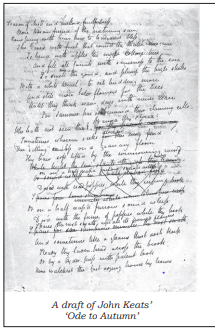
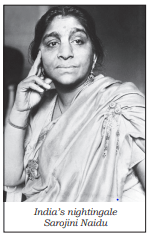
Similarly you will find that ‘Autumn’ has been the subject for many poets. For example, John Keats’ poem ‘Ode to Autumn’ and Sarojini Naidu’s ‘On Autumn’ have been developed in accordance with the poets’ perception of the things around them.
Read poems written on the same topic/theme by different poets and add them to your portfolio.
A poem may be born out of an idea or just a line that suddenly occurs to you. That is what is usually called inspiration. Once you have that beginning, you need to flesh it out and build the rest of the poem around it. If you want to write about a specific object or idea, write down all the words and phrases that come to your mind when you think of the object or idea. Allow yourself to put all your thoughts into words. Write them down as quickly as possible and when you’re done, go through the list and look for connections and images that will aid your creativity.
According to John Keats, ‘The poetry of the earth is never dead’. Pay attention to the world around you―what you see, hear, taste, smell or feel. Use your imagination, your own way of looking at things and write. There is an abundance of ideas around us.
Words as a Medium of Poetry
It’s been said that if a novel is “words in the best order,” then a poem is “the best words in the best order.” Words are like a jigsaw puzzle. While writing a poem you will find that some words fit and some don’t. Choose your words carefully as the differences between similar meaning words or synonyms can lead to interesting word play. Use only those words that are necessary; those that enhance the meaning of the poem.
Words acquire a strange power in a poem. Each word, if carefully chosen, presents the sense, the colour and the feel of the experience. While a poem may leave one wonder-struck with insights otherwise inaccessible, strangely, the experience presented also appears familiar!
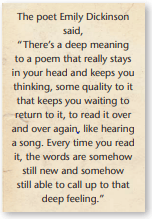
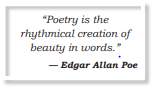
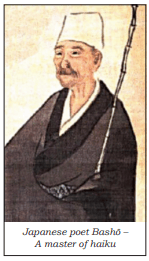
The Japanese poet Bashô composed the following Gloss Haiku during the planting season, when he heard the field workers singing as they planted rice in their fields he wrote:
beginnings of Poetry–the rice planting songs of the interior
(Translated by Shirane)
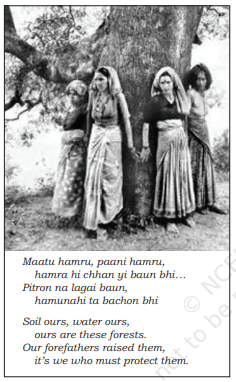
You too must have observed farmers singing folk songs while working in the fields. The same ethos has been captured by Bashô. There is something about poetry that seems indefinable but attractive and almost magical in the way it affects us. A good poem functions at multiple levels of meaning and experience. While there may be surface meanings, the poem also yields meanings that lie beneath the literal meaning. In our folk heritage many songs and poems have been written that express the sentiments of the people. The following song expresses the people’s desire to save trees. This is the song that travels through the valleys of Garhwal, beyond the legendary villages of Reni and Lata in Henwalghati, the place where the first epic Chipko (Hug the Trees) Movement was born.
“Ba ba black sheep, have you any wool, yes sir, yes sir, three bags full ...”. We respond to all those rhymes and lullabies easily and cheerfully even if we do not understand them. Such rhymes and rhythms come as naturally to all of us as the chirping of the birds or the whistling of the breeze. It is as if there is a poet in each one of us.
If we are willing to respond to life experiences sensitively and with alertness, the sense of wonder in us remains as alive as that of a child. Life has endless possibilities from within and without, in relating to the other and to one’s own self!
Writing poetry is one of the ways of exploring the world around you. You will notice that a poem does not lead to any finality of meaning, nor does it offer merely one single meaning. Words and expressions are used in such a way that
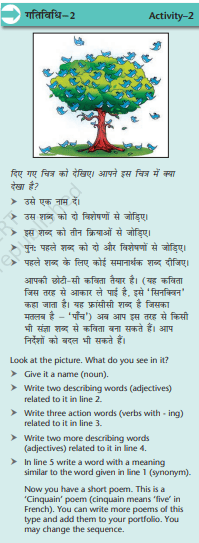
How do words in a poem acquire power or magic?
As the Konkani poet, M. L. Sardesai puts it: “Poetry is born when words start dancing.” Words, when strung together in the form of poetry, acquire life and dynamism. They present visuals in the form of images, make music through rhyme and rhythm and yield sense in a variety of ways. As infants, we are brought up on simple jingles and nursery rhymes such as ─ “Machli jal ki rani hai, jeevan uska pani hai, haath lagao dar jayegi, bahar nikalo mar jayegi ” or

they are open to varied meanings. General ambiguity of expression is considered to Ü be a flaw, however in poetry and in some prose forms it is used as a literary device. These layers of meanings lend a scope for multiple interpretations. This is not to say that a poem becomes a riddle. In fact, it opens up varied dimensions of the same experience to varied minds in presenting multiple shades of meaning.
To be able to create such a poem, it is helpful to build up a rich resource of vocabulary along with studying the etymology (origin and history) and usage of as many words as possible. Familiarity with words gradually leads to a deeper bonding with them; one learns to play with them, juggle them and sometimes even give them new meanings through skillful and creative usage. Jibanananda Das’s ‘Windy Night’ is one such example. In this poem, the poet has used words and expressions that are commonly used by everyone. He has strung them into a poem. Here is an excerpt.
Last night it was an intensely windy night―a night of countless stars;
An expansive wind played around my
mosquito net;
At times billowing it like the belly of a
monsoon sea,
At times tearing it off the bed as if to
cast to the stars;
Sometimes I felt―may be in half-sleep―
that there was no net on my bed,
That it was drifting like a white heron
in an ocean of blue winds alongside
the Swati star. It was such a wonderful night, last
night― …
(Translated from Bangla by Faizul Latif Chowdhary)
Devices Used in Writing Poetry
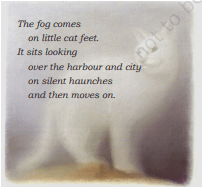
Poets use some figures of speech frequently to make their poems more effective. For instance, metaphors are extremely useful in poetry. They evoke a sense of many meanings and sometimes also present a concrete visual experience to express abstract ideas; for example, the expression “silent as stone” or “fierce as tiger”. Such expressions help in condensing language. A metaphor in itself stands for something else. Also, the whole poem could be a metaphor to represent a certain experience or feeling. In the following poem ‘Fog’, Carl Sandburg compares the fog to a cat. The poem is an example of a long metaphor. A metaphor campares two things by transfering a feature of one thing to the other.
Similes too help in adding meaning to a poem, if used skillfully. Love, happiness, hate etc., are all abstract concepts. While writing poetry you can use concrete images to describe abstract emotions, and also describe them vividly. For example, Robert Burn’s well-known simile comparing love to “a red, red rose” describes the sentiment it evokes through the richness of the image used.
Images, whether as metaphors, similes or literally as images, are very useful since they help in visualising thought or emotion in a poem. Images have a photographic power in representing reality. While it is important to consciously avoid cliché (oftrepeated) images, we must understand that it is through effective use of imagery that a distinct atmosphere and mood can be created. For a new world to be created in a poem, fresh imagery has to be used.
Poets also use irony to evolve “meaning between the lines”. In that the poet skillfully uses language to create an effect that might mean the opposite of what may be expected. For instance, the famous lines from S.T. Coleridge’s poem ‘The Ancient Mariner’—Water, water everywhere,/Not a drop to drink. The first line produces an expectation quite contrary to the second line! Such use of language can be developed through practice. Such a felicity of expression can also be acquired by reading a lot of poetry. The originality evolves from making a conscious effort in avoiding images, words and expressions that are commonplace. Finally indeed, it is the thematic content and intent, which ultimately dictate the use of certain devices for their articulation.
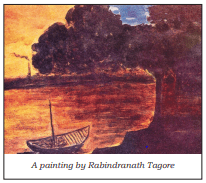
The beauty of a poem sometimes comes from the symbols woven into it. Again, symbols too must be new and refreshing. The pleasure they yield depends on how they are used. See how Rabindranath
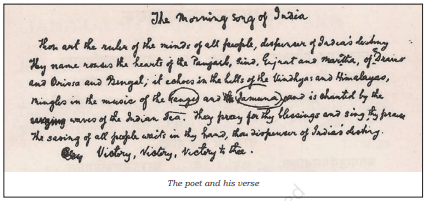
Tagore uses the symbol in the poem ‘Golden Boat’.
No room, no room, the boat is too small.
Loaded with my gold paddy, the boat is full.
Across the rain-sky clouds heave to and fro,
On the bare river-bank, I remain alone—
What I had has gone: the golden boat
took it all.
The golden boat is a metaphor for the ephemeral nature of life and achievement. Nothing is permanent, neither our achievements nor our conditions or fates.
You will find that in an allegorical poem a lot of symbols are used. The allegorical form is popular because it allows meanings to be flexible and somewhat free.
Adrienne Rich’s poem ‘ The Trees’ is one such example. The poet is suggesting that plants and trees are used in the interiors of homes in cities while forests are cut down. Imprisoned in these houses, the trees need to come out. Read the excerpt, ...
All night the roots work to disengage
themselves from the cracks in the
veranda floor.
The leaves strain toward the glass
Small twigs stiff with exertion
Long-cramped boughs shuffling under
the roof
Half-dazed, moving to the clinic doors ...
Personification is another poetic device wherein human-like qualities are given to inanimate objects. In the following lines ‘dandelions’ are given the qualities of young people—
Some young and saucy dandelions
Stood laughing in the sun;
They were brimming full of happiness,
And running over with fun …
Alliteration and rhyme lend rhythm to the poem. Alliteration is the use of similar sounding words. This enhances the musical quality of the poem as well as lays emphasis on the idea. Here is an example of both alliteration and rhyme from Ogden Nash’s poem ‘The Tale of Custard the Dragon’—
Belinda was as brave as a barrel full of
bears
And Ink and Blink chased lions down
the stairs,
Mustard was as brave as a tiger in a rage,
But Custard cried for a nice safe cage ...
Underline the words that are used for
alliteration and as rhyming words. The rhyme
scheme is presented as a-a-b-b. It changes
as per the use of words.
Be careful not to allow the rhyme to
cover your message or even change it. A
good thesaurus will help you chose the
right word.
Writing a poem is not only about
receiving new experiences or being open
to new ideas, but it also requires the ability
to nourish them. You can keep noting
down ideas in your diary. According to
Sylvia Plath, an American poet, one must
keep writing regularly as an exercise in “flow”: What may seem spontaneous is
actually the result of emotional, intellectual
and linguistic resources built over time,
which comes with regular reading and the
desire to express oneself.
“Poetry is the music of the soul, and,
above all, of great and feeling souls.”
—Voltaire
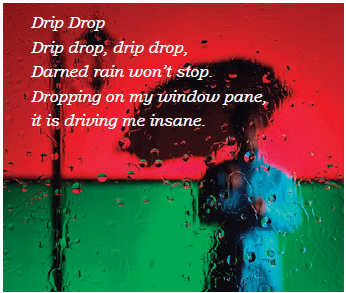
Writing as an Exercise in Flow Sylvia Plath would everyday no matter what, as soon as breakfast was over and no matter where she was in the world, sit down with her notebook and just start to write—about absolutely anything at all. As she explains, this was NOT in order to create a wondrous new poem, but ONLY in order to keep the channels open, keep in the flow. It wasn’t about practising either, but simply an exercise in FLOW—and she was very adamant about doing this, put it before many others if not all other things because she considered it so very important because if a good idea came along or an insight at any time of the day which was to come afterwards, the channels would be open and a super poem would just simply glide out and through and become, there and then. So she would write about anything whatsoever, no holds barred—a shadow on the windowsill, a bit of lettuce, an old mushroom she’d found on a walk and brought back to her room. About the table cloth, about her hands, about a little pool of light on the carpet or about her feelings of having nothing whatsoever new to say—and just let it go from there for her “morning exercise”— no expectations of it other than knowing the ACT of doing it was what did the trick. One of the best ways of seeing whether the poem is reading well or not is to read the poem aloud after having written it. Philip Larkin, the English poet, stressed on the importance of the auditory aspect of poetry when in an interview he said, on reading the poem “the reader should ‘hear’ it just as clearly as if you were in the room saying it to him”. The sound of the words always adds an inner meaning to the poem. Earlier, we talked about how words ‘dance’. In fact, they also make music! Words, then, have to be carefully chosen to suit the mood, atmosphere and tone of the poem being written. Alliteration, repetition and assonance too are devices used to enhance the music of the poem. Here is a poem about ‘Rain’ by Bruce Lansky. The poet has used what is called “onomatopoeia”, i.e., when the sound of the word itself projects its meaning.
Poetry is not just about an individual situation but is also a tool/medium to creatively explore socio-political dynamics. In his poem ‘Old Woman’, Arun Kolatkar narrates a tourist’s encounter with an old woman. Though one expects the young man to have more authority, it is the old beggar whose will prevails. The poem forces one to rethink how we perceive those who aren’t as privileged as us.
When you hear her say,
‘What else can an old woman do
on hills as wretched as these?’
You look right at the sky.
Clear through the bullet holes
she has for her eyes.
And as you look on,
the cracks that begin around her
eyes spread beyond her skin.
And the hills crack.
And the temples crack,
And the sky falls
With a plate-glass clatter
Around the shatterproof crone
who stands alone
And you are reduced
to so much small change
in her hand.
Did you observe how the poet is able to create a visual image of the old woman? It is no wonder that poetry is described as painting with words.
Spanish poet Pablo Neruda too explores the beauty and wonder in everyday objects that we often tend to overlook. ‘Odes to Common Things’ is a collection of poems that was written toward the end of Neruda’s life. In these poems common things like a table, a chair, flowers, socks, and even soap are transformed and elevated to metaphors and vehicles for greater questions.
Given below is an excerpt form ‘Ode to a Soap’ by Pablo Neruda.
This is what
you are,
soap: you are pure delight,
the passing fragrance
that slithers
and sinks like a
blind fish
to the bottom of the bathtub ...
Talking about subjective poetry, one thinks of an elegy, which is reflective and sad, written in memory of someone who has passed away. There are many such poems in English literature. For instance, the famous English poet, Alfred Tennyson’s poem ‘In Memorium A.H.H.’, or John Milton’s poem ‘Lysidas’, or even the American poet, Walt Whitman’s poem ‘O Captain, O Captain!’ to name a few. An idyll, on the other hand, is a rather idealised presentation of the countryside, like a pastoral song written in appreciation of the harmony and peace of the non-city environs and landscape. Sonnet is a lyric poem of fourteen lines with a rhyme scheme. Shakespeare’s sonnets written for “a dark lady” are also well known.
You can write the poem in any way you like and it may be categorised as a ballad, sonnet, dramatic monologue etc. While a ballad narrates a story with a repeated refrain and is self-contained, a dramatic monologue is a type of poem, spoken as though to a listener. An epic too is a serious long poem that narrates the story about a heroic figure. The most well known Indian examples of epics are the Mahabharata and the Ramayana. Chorus also comes in the category of poetry.
Haiku is a form of poetry which originated in Japan and has become popular worldwide. Written in 3 unrhymed lines, known for its condensed form and poignant images, haikus are now written in many languages, in India and many other countries. The popularity of another essentially non- English form, the ghazal, too, must be mentioned here. This lyrical form emerged from Urdu and Persian, has five to fifteen couplets and is usually connected with themes of love and separation. One of the most well known Urdu poets who wrote ghazals is Mirza Ghalib. In Hindi the traditional forms of poetry have been doha and pada.
Here is an example of a doha.
गुरु कुम्हार शिष्य कुम्भ है , गढ़ी - गढ़ी काढै खोट |
भीतर हाथ सहार दे , बाहर मारे चोट
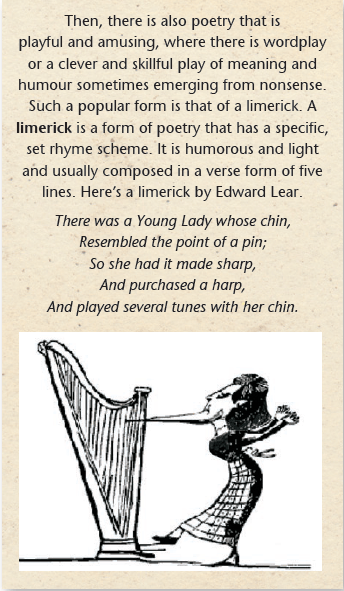
Since a poem is also seen and read as much as heard and felt, to many poets then, one of the significant elements of poetry is the visual. What does the poem look like? e. e. cummings felt that the pattern given to the words of a poem is important because the pattern itself can add to the meaning of the poem. For instance, the message of his poem ‘A Leaf Falls’ is conveyed visually in the way the letters of the words are placed on the page. Different poets in fact use different ways of using space around the words of the poems to make the poem “look” in harmony with what it may be saying. Poets exercise individual choices in this matter and are not bound by any rules or conventions in this regard. e. e. cumming’s many poems are written in a different manner
.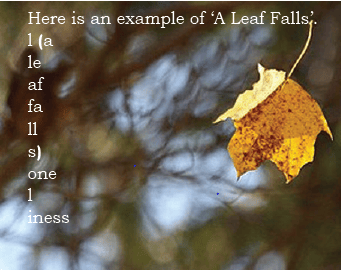
This unique poem has ‘loneliness’ with a parentheses saying ‘a leaf falls’. It is a metaphorical reflection on isolation and the bittersweet sadness in autumn when leaves fall. One is also reminded of the visual imagery of a leaf falling down when one reads the poem. In modern times however, the poets use blank verse. Free verse became the most popular form of poetic expression. However, a good sense of rhythm and sound are still considered to enhance the beauty of poetry. Look at the poem below which is an example of free verse. The poem ‘My Mother at Sixty-six’ written by Kamala Das is about the feelings of a daughter for her mother.
Driving from my parent’s home to Cochin
last Friday morning, I saw my mother,
beside me,
doze, open mouthed, her face
ashen like that
of a corpse and realised with
pain
that she that thought away, and looked
but soon
put that thought away, and
looked out at young
trees sprinting, the merry children
spilling out of their homes, but after the
airport’s security check, standing a
few yards
away, I looked again at her, wan,
pale
as a late winter’s moon and felt that
old
familiar ache, my childhood’s fear,
but all I said was, see you soon,
Amma,
all I did was smile and smile and
smile...
This whole poem is in a single sentence, punctuated by commas. It indicates a single thread of thought interspersed with observations of the real world around and the way these are connected to the main idea. A. K. Ramanujan has written a poem On the ‘Death of a Poem’. The poet puns on the word “sentence”. Once a sentence is formed and a semblance of a poem is achieved, the creative process too comes to an end. Read the poem below:
Images consult
one
another
a consciencestricken
jury,
and come
slowly
to a sentence
When a poem comes out of a deep dialogue, as it were, between an individual self and the poem-in-the-making, it becomes a workshop: the theme looks for the right form and the form in turn modulates the subject. The poem begins to take some shape. The structure begins to emerge through lines, rhythm, diction, stanzas etc. Metaphors, images and sounds are conjured up from various levels of consciousness and memory and association of ideas play a great role. The poem becomes a lyric, sometimes after a number of rounds of editing and rewriting. A poem can also be a meditation expressed as a narrative. Here is an example of the poem ‘Song in Space’ by Adrian Mitchell—
When man first flew beyond the sky
He looked back into the world’s blue
eye.
Man said: What makes your eye so
blue?
Earth said: The tears in the ocean do.
Why are the seas so full of tears?
Because I’ve wept so many thousand
years.
Why do you weep as you dance through
space?
Because I am the mother of the human
race.
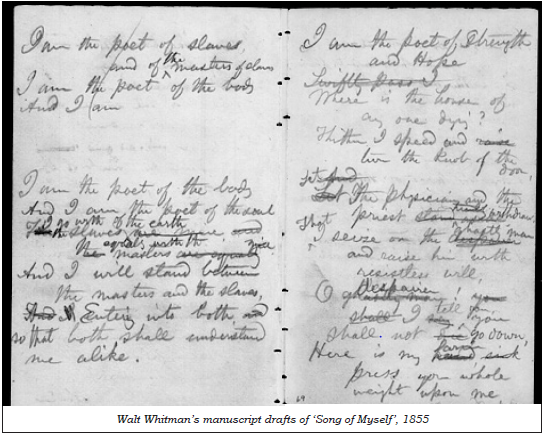
What makes a poem a good poem? Indeed, one that comes out of sincerity, emotion, imagination and thought, and most importantly, a good grasp of the medium of expression i.e., words, along with an engagement with reality. It is not an escape into some unreal realm of imagination. Only then does it come together as “special knowledge about life-experience”. A number of revisions/editing may happen before the poem is completed. You only have to see the original manuscripts of some famous poets to realise how much writing and rewriting can happen before the poem takes its final shape. There is indeed no formula to decide when the poem gets to be “final” and each poem is really an act of discovery! Look at Whitman’s engagement with the creative process while he wrote his famous poem ‘Songs of Myself’: You can see how much labour and diligence went into the making of that beautiful poem. Large portions of the poem were written and then slashed; words and sometimes lines too, were changed. Notice how on the page above the “ghastly man” is interchanged with “despairer”, thus changing both the rhythm of the lines as well as the meaning. One can learn by observing, writing, rewriting, editing and the deletions that go into the making of a poem. Usually, it is difficult to get access to the making of these poems. But efforts are made by researchers and scholars to locate drafts and manuscripts of poems by famous poets, if only to understand the creative process that evolved good poems. That is why drafts of the works of great poets are procured by libraries and various institutions and preserved as valuable documents. They reveal the deliberations of the poets. A poet picks every word or phrase finally used, very consciously. To understand how and why those choices are made also help reveal the deeper meanings of the poems. Editing one’s own poem sometimes can lead to a complete rewriting of the poem. The first draft may get totally transformed into another poem by the end of the process. Genesis of a Poem Question: How do you start writing a poem? W.H. Auden: At any given time, I have two things on my mind: a theme that interests me and a problem of verbal form, meter, diction, etc. The theme looks for the right form, the form looks for the right theme. When the two come together, I am able to start writing. Question: Do you start your poems at the beginning? Auden: Usually of course one starts at the beginning and works through to the end. Sometimes, though, one starts with a certain line in mind, perhaps a last line. One starts, I think, with a certain idea of thematic organisation but this usually alters during the process of writing.
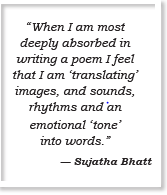
Between the first draft and the final one there are other versions as well, and Esther Morgan, a contemporary British poet, points out on her website: “It was an important stage for me in my development as a writer to realise that poems don’t just land on the page, word perfect first time.” Some poems may arrive at their final form faster than others, but usually, after the initial spurt of inspiration when thoughts and images flow quickly, the poet gets down to work on the poem as a “wordsmith”. There may be several drafts of the poem before the poet is satisfied. The first attempt at a poem to the finished poem may be long journey.
Poets on Poetry
Let us look at the renowned Malayalam poet Ayyappa Panniker’s comment... “Every good poem makes a new departure”. This statement stresses on the uniqueness of each good poem. This is a pointer to the power of the individual poet’s creativity. In this context, the Noble laureate Lithuanian poet Czeslaw Milosz brings one’s attention to the peculiar fusion of the individual and the historical when he points out how events burdening a whole community are perceived by a poet as touching him in a most personal manner. Read the poem ‘Encounter’ by him— We were riding through frozen fields in a wagon at dawn. A red wing rose in the darkness. And suddenly a hare ran across the road. One of us pointed to it with his hand. That was long ago. Today neither of them is alive, Not the hare, nor the man who made the gesture. O my love, where are they, where are they going The flash of a hand, streak of movement, rustle of pebbles. I ask not out of sorrow, but in wonder. William Wordsworth described poetry as a “spontaneous overflow of powerful feelings and emotions recollected in tranquility”. Usually the last part of this statement, “recollected in tranquility” is overlooked and the emphasis in defining poetry falls on “spontaneity” and “overflow of feelings”. The poem within a poet suffers the danger of neglect when overpowered by routine matters of living. In the words of Gulzar: Thousands of routine, mundane matters With sharp pointed swords Come chasing the poor little poem Into deserted spaces of my scattered mind The beloved princess of dastaans Dressed in tattered apparel – the helpless one – comes huffing and puffing seeking refuge with me Here, the poor thing’s honour And there, countless Occupational matters.
Read the poem ‘Encounter’ by him—
We were riding through frozen fields in a
wagon at dawn.
A red wing rose in the darkness.
And suddenly a hare ran across the
road.
One of us pointed to it with his hand.
That was long ago. Today neither of
them is alive,
Not the hare, nor the man who made the
gesture.
O my love, where are they, where are
they going
The flash of a hand, streak of
movement, rustle of pebbles.
I ask not out of sorrow, but in wonder.
William Wordsworth described poetry as a “spontaneous overflow of powerful feelings and emotions recollected in tranquility”. Usually the last part of this statement, “recollected in tranquility” is overlooked and the emphasis in defining poetry falls on “spontaneity” and “overflow of feelings”.
Points to Ponder
■ A poem emerges from a deep human impulse to express and share what the poet may have experienced in actuality or in imagination.
■ The essential elements that go into the making of poetry are observation emotion, thought, imagination and appropriate words.
■ Allow yourself to get into a reverie, free yourself from routine thinking and let your imagination soar, you will discover “unknown pastures” within yourself.
■ For the poem to have an inner life of its own, emotions need to synthesise with thought.
■ The poem in itself is an experience with its own dynamism without any finality of meaning, revealing something that may have otherwise been always hidden.
■ The process/poem should offer some sort of pleasure or joy. This is what is called aesthetic pleasure.
■ For language to contain and express something fresh, new expressions have to be created by the poet. In this the poet is facilitated in having what has come to be known as a poetic license, that is, freedom to change language, create fresh words and new idiom. Poets help us discover the power words are capable of. called aesthetic pleasure.
■ For language to contain and express something fresh, new expressions have to be created by the poet. In this the poet is facilitated in having what has come to be known as a poetic license, that is, freedom to change language, create fresh words and new idiom. Poets help us discover the power words are capable of.
III. Writing a Short Story
Latin American writer Gabrial Garcia Marquez’s autobiography titled ‘Living to Tell the Tale’ echoes the fact that we are all storytellers in one way or the other. Storytelling is natural to human beings. We use stories as a way of understanding ourselves, be it in a narrative, history, philosophy or even day-to-day gossip. Storytelling has been practiced ever since human beings became articulate. Every country in the world has its culture of storytelling. In the accounts of travellers trying to relieve the boredom of a tedious journey; people conveying their ideas as allegories like fables, as well as warriors reliving old battles and celebrating heroes on the strings of lutes, harps or ektaras, stories have flowered. They have often been models of what a society has cherished. You must have heard stories from your grandparents and parents. The stories that we have grown up with have their own stories. Many of them existed on the lips of generations of people before they were eventually written down.
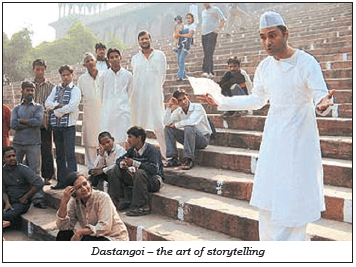
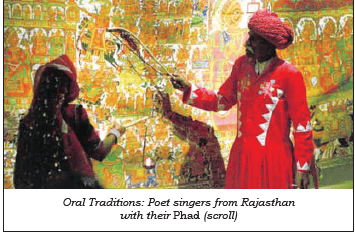
Actually, you tell stories every day. Often, when you share with someone things that you have experienced or that you have seen or read about, you are telling the story of ‘what happened’, you have created a story! Now you must also be able to write it down. A story is a string of connected happenings. Stories draw upon experiences, adventures, achievements, observations and imagination. In the process of telling stories, storytellers establish a connection with their audience, however temporary that connection might be. This is why we like hearing stories. They help us share the storyteller’s experience and imagination through words. When you read stories, keep a journal that records what you like or dislike in the stories you have read. What features do you see appearing again and again in these stories? What do you feel makes these stories powerful and interesting or uninteresting and ineffective?
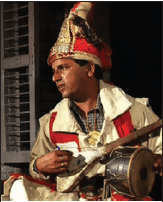
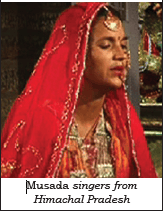
Preparing Ourselves to Write
If you look around, you will find how everything has a story— people, places, trees, animals and emotions. The world does seem to be a very rich and promising place, full of stories waiting to be understood, sorted out and told. There is so much that we can observe, imagine; so much that is interesting, enjoyable and enlightening. The wide world is a treasure trove of stories waiting to be written. Any sensitive and reflective person can write stories. A writer may or may not be born with a gift for writing but it is quite certain that effort and training are important. Expose yourself to the sights and sounds and flavours around you and do it all with great attention. Be conscious. Enjoy the finer nuances of language and what it can do and practice converting what you see and hear and experience into words. Start writing small passages that capture these experiences or aspects
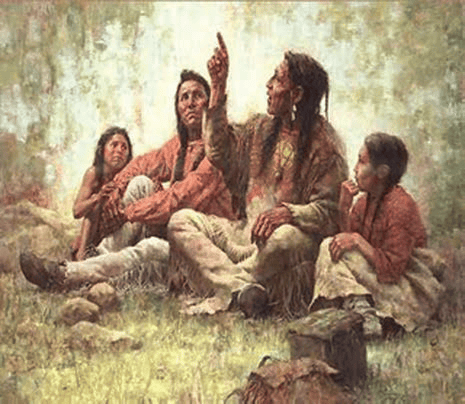
Storytelling binds generations of them. A writer is a writer full-time, not just when he or she formally sits down to write. Tune the mind to regard the world with a writer’s eye. Be alert and receptive to the narratives of others. Observe things as a storyteller or a narrator and organise what you perceive in patterns if you can see any. Read good stories written by other writers. Think about human situations and issues. Articulate what you have learnt, preferably in your diary. And always question yourself and the world you see. Do not hesitate to speak about what seems to be simple. When you write a story all of this self-preparation will help you write.
Dawn of an Idea
How does a short story originate in the mind? A short story starts when a sensitised mind notices something promising or disturbing or thought-provoking in the environment. Even things read or heard can initiate the creative process. You will find that stories are a combination of the
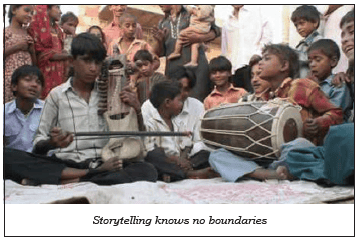
real and the imagined put together to form something new. When a seed is sown in the ground, it is only a tiny, round, pebble-like thing. But even at that instant, the gardener can visualise the massive tree that will sprout from the tiny seed. He/she does not know the exact height of the trunk or the curve and arch of the branches or the density of the foliage, but his/her imagination creates an imagined tree different from the real tree that will later physically emerge. The soil in which the seed is planted, that is the mind of the writer, must be fertile, by which we mean, be open, receptive, sensitive, reflective and also capable of empathising and identifying with others. Also, develop the ability to see the lighter side of situations. Once in a while, a story just explodes into being, in an instant. However, often there is a period of creative waiting which appears to be passive but which is unconsciously very active as the idea develops. Meditate on the idea for short spells of time and let it go, only to return to it later. Don’t be in a hurry to write it down. Give it time to grow. You will find that situations, characters and episodes are constructed by memory and imagination. A story is often unified and centered around a single situation, anecdote or episode. It can be self-sufficient, or a ‘slice of life’. Like a cinema shot, it must deal in quick images rather than extended treatment, ‘the swift glance rather than the slow stare’
Looking at the elements of a story Let us analyse the story ‘Vanka’ by Anton Chekhov.
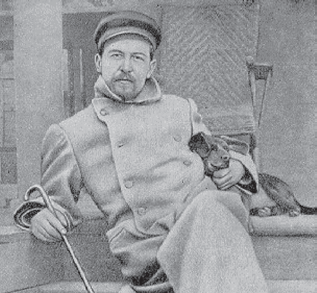
Anton Chekhov
Vanka is the name of a nine-year-old child who has been sent away from his village to Moscow to be apprenticed to a shoemaker. As the story unfolds, we learn that Vanka is an orphan, the child of a maid servant who used to work at the house of a wealthy family in the country. Now that she is no more, Vanka’s only living relative is his grandfather who works as a night watchman for the same family. It is obvious that this grandfather has no special love for Vanka and aimlessly whiles away his time. He also has made no effort to keep the orphaned child in his protection. But he is Vanka’s only hope. In the shoemaker’s household, Vanka is beaten, underfed and overworked. His misery is so great that he constantly longs to return to his village. He learns from hearsay that letters can be written and put in postboxes and that these letters reach the people they are sent to. So he manages to find paper and pen and with great caution and secrecy, writes an emotional letter to his grandfather, describing his wretched existence, the cruelty of his masters, his hunger and terror. He makes pathetic appeals to his grandfather to come and take him back, promising to be a good child who would love him and pray for him. Having written this childish letter, he addresses it to his grandfather At this point comes the principal catch in the story and one that tugs at the reader’s heart strings: Vanka does not know the name of his village, nor the fact that there are such things as postal addresses, being young and rustic. He posts the letter, hopeful and happy, dreaming of home. But we, who read the story, know that the letter will never reach. This helpless child will remain a captive of his circumstances, a labourer in an unfeeling household. Even in the village, no one had really cared for him. His grandfather was self-centered and indifferent. One of the ladies of the rich household had pampered him for a while as a whim, then forgotten about him when his mother died. Vanka is a lost soul in an uncaring world; a little life doomed to a dark future. We picture him waiting, endlessly waiting, for the protective figure of the grandfather to come and take him away. We know that this will never happen. At the back of our minds is the uncomfortable thought that all over the world, in every age, nameless,numberless such children have suffered, and all those who accepted the system have been equally responsible for it. The large issues of child-labour, poverty, illiteracy and sheer human callousness are all themes of the story. Our reaction to the situation is an emotional response first and a social protest later. This is exactly how a wouldbe story dawns in the mind—as an emotional response to a moving situation and an intellectual working-out later. Chekhov picked up a common situation, imagined beyond the observed into the possible background facts. He threw himself into the child’s place, summoned up the resources of his memory of people and landscapes and his knowledge of human nature and asked himself what would happen to the child’s cry for help. He shared his compassion and his troubled heart with the reader in the form of this story. It is as if he diverts Vanka’s cry for help to us. This story was written in 1886 but more than a hundred years later Vanka’s innocent letter moves us. Do we wake up to the existence of all the Vankas who surround us and feel for them? If we do, then Chekhov’s story has moved you. You must have also read Guy de Maupassant’s story ‘The Necklace’. He leaves the reader to take a deep breath and grasp the many meanings of this story: One is that if we mistake false things for real, we may have to pay a very heavy price. If we are greedy, we might lose even the good things we own. Often human beings do not appreciate the treasures they possess. What Matilda just did not notice at the start of the events was her husband’s kind and accommodating nature. Despite being a modest clerk, he did not resent his wife buying an expensive dress. He wanted her to go out and enjoy herself the way she had dreamt of doing. Not once did he blame her for losing the necklace or putting him through so much trouble—the sacrifice of all his inheritance and the long hours of hardwork to repay their debt. He is a gentleman. This seems to be something his silly wife did not realise. But the author leaves a little window open for another possibility: Matilda too does not complain but pays the price bravely. She accepts her fall in social status, her hours of exhausting toil as well as the loss of youth and beauty with inner strength. Maybe, in her silence lies a new respect for her husband. All these things are hinted at, never overtly stated. In literature, as in life, an understanding of truths comes from inference, not in readymade instant statements. The best stories do this. As a writer, we must learn to look beneath the surface of things and ask the deeper questions.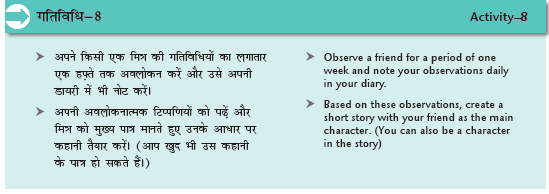
Plot and Story
Before you start writing, make a mental map of the story. This is a sort of blueprint, a frame or outline of events and forces that contribute to the story’s dramatic essence. In conventional terms, it is called a plot—the skeletal outline that we shall proceed to flesh out as we write. The plot is a clear spelling out of causal connections between beginning, middle and end. Within the borders of this mental map, there is an enormous margin of freedom. The map is only an initial creative tool. Once you start writing, the story gets a direction, scene by scene and episode by episode. Once it has gathered momentum, the writer can enjoy the freedom of breaking out of the pre-decided map and allow the story to shape itself. The operative words here are ‘direction’ and ‘momentum’. The short story must not lose sight of the direction in which it is proceeding and it must not waste time and space in digressing or wandering away along irrelevant channels. In Chekhov’s story ‘Vanka’, there is a simple plot. If we take the story apart and break it up into its component parts, what are the links in the chain of events?
■ A child writes to his grandfather,sending a distress call to come and take him home.
■ He does not know the name of his native village and does not know how to address letters.
■ He posts the letter.
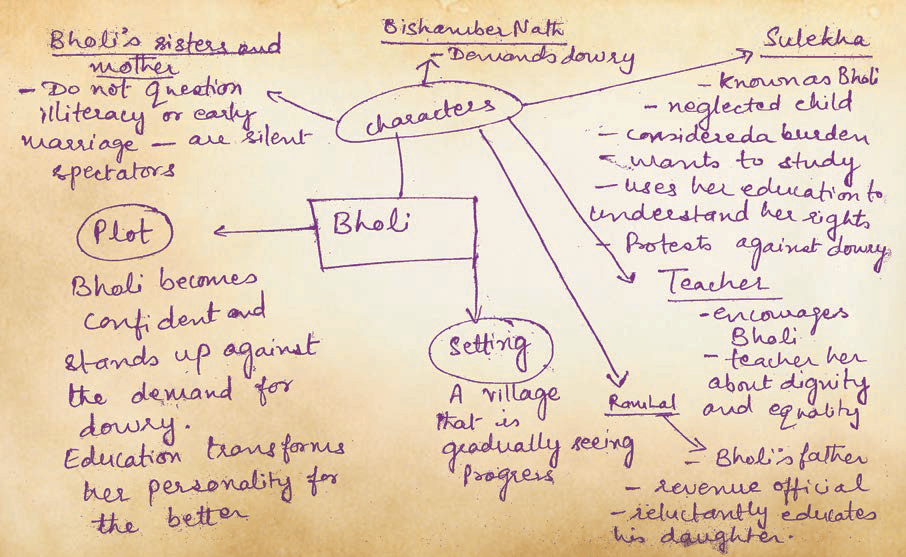
These are the facts on the face of it. But if we look for connectivity between the links of the chain, a different sequence emerges.
■ A child is left orphaned when his mother dies.
■ He is sent to Moscow as an apprentice to a shoemaker.
■ He is ill-treated and is miserable.
■ He learns that there are such things as letters.
■ He writes a letter.
■ But the letter goes astray because he does not know the name of his village.
This is the structural map or diagram of Chekhov’s story. Once we have a situation to write about, we must carefully put it into logical sequences, a cause-and effect layout and then proceed to flesh it out. Maupassant’s story has a straight plot: A silly young woman borrows a necklace of imitation diamonds, thinking it to be real. She loses it. She and her husband then borrow the money to replace the necklace. They lose many precious years of their life, toiling to repay their debts. Then, when the debt is repaid, they discover that the necklace was false and that they had bought and returned a necklace of real diamonds in place of a false one. Viewed like this, the event-links in the chain depend on a certain logical continuity of happenings and this is the plot. The classic example of the difference between story and plot is: The King died. The Queen died. This simple narrative is a story and does not state the cause and effect relationship. But if we say: The King died and therefore the Queen died of grief, we have discovered a scheme, a logical connection. This is known as the plot because it states the cause and effect relationship. So, before we write the story we have to create a general design that clearly states the cause and effect and this design is the plot.
Structuring a Story
How does a writer develop a story episode by episode? The best way to do this is to trust one’s own imagination completely, listen to the story in one’s heart and watch one’s mind gradually spin all the details one by one out of its stored reserves. There is really no theoretical way to develop a story except to let one’s imagination go far and beyond. Relax and wait and constantly revisit the story and keep track of all the possible ideas coming up. A lot of impractical ideas will come up and also a lot of possibilities that one might reject. Out of these multiple choices offered by the mind, the writer is called upon to make a creative choice. A humorous story will have a different line of development, a detective story a different one, a socially committed story a different one. Here, the writer has to choose a point of view or perspective, which will be most effective in telling the story. Suppose Chekhov’s Vanka had been caught writing his letter by his master. Suppose his master had read it and been moved and sent the child back. Suppose he had been enraged and beaten the child to death. Suppose somebody saw Vanka trying to post an unaddressed letter and stopped him from posting it, questioned him and found out the name of the village. The story could have taken many different turns. Perhaps Chekhov chose this direction because this made Vanka’s plight universal, whereas any of the other alternatives would have made it just a story of a particular child. You have to know exactly what you want your story to convey and what effects alternative versions could have. The core ideas behind a story are its themes. Each story has its own energy centre both in terms of structure and theme. Its organisation is determined by the writer’s internal urge to give expression to his/her feelings and ideas. What could be the central energy zone of this story? The fulcrum lies at the point at which the child writes down the name of his grandfather and adds ‘The Village, full stop’. This is where the reader’s pulse quickens. This is the central point on which the story turns. The climax of the story and the resolution of the complication forms another energy centre. Chekhov’s story seems to locate itself towards the close of its plot. The child’s history lies in the past. Only the fact of his distress call comprises the present, and the future of the letter, is implied in silence.
When you read stories analyse them and keep records of this in your journal. Notice the sequence of these elements

Character
Since we are here talking of sharing other people’s lives, we come to an important item on our story writing agenda called character. As individuals we may or may not be social by nature but when we write fiction, we must be deeply interested in other people. We must watch and store mental pictures/portraits of people. We must observe faces, gait, dress, voices, mannerisms and moods. Our memories must be trained to hold minute details about others and if we are lucky to have a good visual and auditory memory, that will amount to having an in-built movie camera in one’s head—a great creative aid for the writer. What is the place of ‘character’ in a story? A story founded on an original ‘situation’ will need the creation of suitable characters. There are characteroriented stories in which our interest is in a special sort of human being and here the situation is woven around the character. The central character of the story is known as the protagonist. The personality or character telling the story is called a narrator. Since we are human beings, our interest, as writers and as readers, lies in human characters. Even the non-human characters that our inventive faculty may create are given human characteristics and their situations are such that human beings can relate to and identify with them. In the creation of characters memory and imagination once again work together. There may be actual persons we may choose to write about and for these we have to delve into our memories. Our reading and exposure to films, TV programmes and even photographs help us to make these combinations. Finally, as with energy centres in our stories, our created characters too acquire their own energy. Our characters must grow with the story and this growth is revealed through actions and dialogues. As we visualise our characters, we must be able to hear their voices, keep them company in their inner lives and enter their minds. Our past observations of heard voices and known persons, whether actual or in art, will help us in this and very soon the final miracle will take place—the characters in all their rounded psychological fullness will take over. The better our characters, the less apparent will be our own intervention in the story. When the personality of the writer becomes unnoticeable and the personalities of the characters come alive completely empowered, we can say that we have succeeded in creating real characters on the page. How did Chekhov visualise and bring to life his characters? Let us go back to the story. This is how Chekhov describes Vanka’s grandfather: “He was a small, lean old man about sixty-five, but remarkably lively and agile, with a smiling face and eyes bleary with drink. In the day-time he either slept in the back kitchen, or sat joking with the cook and the kitchen-maids, and in the night, wrapped in a great sheepskin coat, he walked round and round the estate, sounding his rattle... Granddad was probably standing at the gate at this moment, screwing up his eyes to look at the bright red light coming from the church windows, or stomping about in his felt boots, fooling with the servants. His rattle would be fastened to his belt. He would be throwing out his arms and hugging himself against the cold, or, with his old man’s titter, pinching one of the cooks ...” Notice the pictorial nature of this sketch. There is a line of description and after that, it is not how he looks but what he keeps doing that conveys the nature of the man for us. This is not still photography but a moving, soul-revealing image.
Find and analyse such extracts from stories that introduce and build up a character. What makes them effective?
Dialogue
It is not just how characters look and what they do, but how they speak that defines the human beings that they are. Dialogues must be true to the characters we are portraying. The way in which members of different ethnicities, regions, religious categories and social classes speak must be as close to reality as possible, but we must be careful not to use words and phrases that have become too common or stereotyped. In other words, clichés must be avoided. It is always better to do some practical homework, seek out real models and pay careful attention to their style of speaking. There is no replacement for reality and nowhere is this truth more evident than in the writing of dialogue. The language of dialogue need not follow grammatical rules and slang is often a great enrichment. Regional and folk characteristics are also very attractive and make the narration come alive. Here is a small extract from John Galsworthy’s story ‘Quality’ where the shoemaker is describing his thought about the Industrial Revolution due to which, the crafts and arts were dying. “Dey get id all,” he said, “dey get id by advertisement, nod by work. Dey take id away from us, who lofe our books. Id gomes to dis—bresently I haf no work. Every year id gets less. You will see.” And looking at his lined face I saw things I had never noticed before, bitter things and bitter struggle and what a lot of grey hairs there seemed suddenly in his red beard!
The writer has replicated an exact tone of voice and manner of speaking. Normally, when we write dialogue, our sentences must be short and must follow the thought pauses, rush and stumble of natural speech. A stage comes when our characters begin chattering in our heads fulltime, even when we are not engaged in writing, and we have to constantly stop and trap their words on the page. A writer must always carry a notebook because so much of writing happens round the clock even when one is doing other things. A lot of good writing is done when one is multi-tasking and one must be ready for those wonderful inspirational flashes, which come like gifts out of the air, for the writer. Often dialogue is also a great aid for narrating events, which may seem too flat if written in reported speech. In Maupassant’s ‘The Necklace’ the dialogues given at the end are powerful. “Yes, I have had some hard days since I saw you; and some miserable ones - and all because of you ....” “Because of me? How is that?” “You recall the diamond necklace that you loaned me to wear to the Minister’s ball?” “Yes, very well.” “Well, I lost it.” “How is that, since you returned it to me?” “I returned another to you exactly like it. And it has taken us ten years to pay for it. You can understand that it was not easy for us who have nothing. But it is finished and I am dencengly content.” Mme. Forestier stopped short. She said, “You say that you bought a diamond necklace to replace mine?” “Yes. You did not perceive it then? They were just alike.” And she smiled with proud and simple joy. Mme. Forestier was touched and took both her hands as she replied, “Oh! My poor Matilda! Mine were false. They were not worth over five hundred francs!” The story ends there. We have come to know that Matilda had lost her necklace. She didn’t know that she toiled hard to repay for an imitation. The end captures the past and the present, and the implications of it.
Make notes in your journal about dialogues that have impressed you or that you felt needed improvement.
Atmosphere
In writing a short story, we must also learn how to create an atmosphere. A story must have its atmosphere and general mood, which is useful for fixing the story in place and time. It serves as a capsule holding the story together. How is atmosphere to be created? First, a bit of essential homework is needed. The location must be studied, the period in which the story is to be framed, the extra events, which might serve as markers of time; for example, the moon-landing might give readers an idea that 1969 is meant. All these things must be explored in great detail. When we actually write the story we may not use all the material we have collected. Ambience can be generated by using elements such as:
■ an incidental but telling detail.
■ a phrase
■ visual effect
■ a reference to a specific period
■ local nuances.
Find examples of the use of each of these features. What features have you come across that help build up ambience?
‘Those were the days when a single breadwinner supported a horde of children, a wife or two, some odd brothers and sisters and frequently half a dozen cousins and mates of the village, all on a salary of forty or fifty rupees a month. All were welcome and all were accommodated, for did not milk then sell at a paisa a seer (and that included a crust of cream, onefinger- thick) and silk at a rupee a yard, and a pair of the finest Flex shoes at five rupees a pair? Did I say ‘welcome’? Forgive me, in our house there were some that were not. For when Bade Chacha Imam Bux came to stay, quite without notice and for months at a stretch, it was only the children who rejoiced.’ What is the picture that rises before the mind’s eye? That of a poor, crowded quarter of a city—wet alleys, chickens, dogs and mouldy surfaces. The mother is a brisk, emotional housewife, energetically preparing meals and aggressively airing her views. The guest is a small-built, assertive man, dressed in unwashed and torn clothes. And the age is about a century ago. The salary, the size of households, the cost of goods and even the Flex shoes, tell us that this is some time in the early-twentieth century when the British presence was dimly felt but did not penetrate the enclosed world of the lanes and courtyards of Old Delhi or Lucknow or Aligarh or any U.P. town. In short, this was the atmosphere of a modest home in North India a century ago. Many little details have gone into the creation of this ambience in this story called ‘Grey Pigeon’ by Neelam Saran Gaur in the 1980s, when, obviously the world described no longer existed. Nor had it been a world to which the author personally belonged. It had been created by empathetic observation and the selection of telling or striking details. Atmosphere must never appear to be consciously created. It must be built up in tune with the background of the characters and plot.
Style
We now come to style. Stories, which are deeply felt, bring their own style with them. The language most natural to the atmosphere, characters and situation must be used. Ruskin Bond has used simple sentences in ‘The Thief’s Story’ yet it brings home the message that despite knowing about the theft Anil does not let it show. I awoke late next morning to find that Anil had already made the tea. He stretched out his hand towards me. There was a fifty-rupee note between his fingers. My heart sank. I thought I had been discovered.“I made some money yesterday,” he explained. “Now you’ll be paid regularly.” My spirits rose. But when I took the note, I saw it was still wet from the night’s rain. “Today we’ll start writing sentences,” he said. He knew. But neither his lips nor his eyes showed anything. I smile at Anil in my most appearing way. And the smile came by itself, without any effort. Deeply felt stories find their own style, if we sink our minds into the world about which we are writing and if we become alert to the usage of language. For this we must read, listen and observe. Clarity and brevity are time-tested qualities. There should be no unnecessary self-indulgence in language. In short, for stories ‘less is more’. Also, the writer must not waste time and effort expressing his or her personal theories and opinions. Whatever these happen to be, they must appear indirectly, if at all, and not directly as a moral principle uttered by the writer. Where necessary or considered valuable, they may be thrown in as a sentence or two but never in a didactic manner.
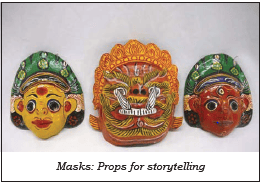
Theme: Meaning and Message Stories have always been used as vehicles of education and moral instruction, for example, in parables and myths. However, in the case of the modern short story, the hidden message of the story must make its impact on the reader not only as truth but also as an appeal to head and heart. The abstract ideas around which a story revolves are called its themes. They are central to the meaning and message of the story. Let us take the example of—‘Idgah’ by Munshi Premchand. I am sure that most of you have read this story. How would you express the meaning embedded in the story? It is a story with many meanings. The first one that suggests itself is the self restraint of a poor child, who bought a pair of iron tongs for his old grandmother. This had powerful consequences as compared to the selfish choices of his friends. It is a moral signal but the author does not attempt to preach or teach. There are other embedded meanings; for example, the idea that the clay toys bought by the child’s friends are temporary attractions;that the sipahi, the vakil and the other symbols of social authority too are ultimately powerless, even a bit ridiculous; that ordinary people tend to do what they see others doing, but are quick to change their loyalties and opinions as soon as someone with the courage of his convictions stands up to them. There can be other possible interpretations as well. The greatness of the story lies in the way fun and compassion mingle; the fun so enjoyable and the pathos so dignified and controlled. Language and Humour There is a special point to consider now. Since those who are studying this chapter probably wish to write in English, we have to come to terms with the fact that most of us in India are bilingual, if not multilingual. How should we use the English language to yield best results? There have been writers like Raja Rao, who successfully gave English a Kannada and even a Sanskrit rhythm when he wished. The passage from ‘Grey Pigeon’ gave English a whiff of Urdu. This is one way to adapt English creatively to Indian requirements. English can quite adequately receive and communicate the echos of other languages. But there is another way out, the approach that writers like R.K. Narayan and Ruskin Bond took and that is to choose a cultureneutral, transparent, functional English. This choice works very well too as we shall see.
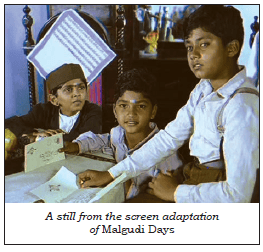
Let us analyse one of Narayan’s stories, ‘Lawley Road’. This is a story in which Narayan displays his gentle, underplayed sense of humour to best effect, using a light, matter-of-fact language. ‘For years people were not aware of the existence of a Municipality in Malgudi.’ Narayan tells us, tongue-incheek. ‘The town was none the worse for it. Diseases, if they started, ran their course and disappeared, for even diseases must end someday. Dust and rubbish were blown away by the wind out of sight ...’ Observe the soft irony of it. Narayan is telling us that all the arrangements for the maintenance of hygiene in the city were neglected, that the city was filthy and polluted, but he is doing it with a wink at the reader. He is portraying the carelessness of Malgudi’s civic institutions and their fitful, crazy bursts of misjudged action. The Municipality of Malgudi emerged from oblivion to demonstrate its joyful participation in the country’s independence. Streets were swept, drains cleaned, and flags hoisted. The Municipal Chairman surveyed the scene and declared with satisfaction that Malgudi had contributed to the grandeur of the occasion. Narayan tells us something about this Municipal Chairman. ‘He was a man who had done well for himself as a supplier of blankets to the army during the war, later spending a great deal of his gains in securing the chairmanship.’ In other words, the Chairman is corrupt. Narayan has cast an airy glance at filth and corruption. Although he has done it with a twinkle in his eye, he has not condoned it. He shows us the sheer absurdity of many large issues as we go on reading the story. The Chairman soon begins to feel that Malgudi has not done enough, so he has all the street names changed. Members of the Municipal Council almost come to blows because several people claim the names of the same national leaders for their own streets. We can observe Narayan having a hearty laugh.
‘Mahatma Gandhi Road was the most sought-after title. Eight different councillors were after it. There were six others who wanted to call the roads in front of their houses Nehru Road or Netaji Subhash Bose Road .... There came a point when, I believe, the Council just went mad. It decided to give the same name to four different streets. Well, sir, even in the most democratic or patriotic town it is not feasible to have two roads bearing the same name ...’
Title
Quite often the writer wonders whether he/she should write the story or should think of a title first and then proceed. Sometimes the writer’s experience may be the experience of many people. The story becomes a medium to express the experiences and feelings of people. The title is an important part of a story. The title is effective, if it can capture and hold the attention of the reader, thus luring him/her to read on. It can be the other way also. You may start with the title, which becomes the seed from which the story develops. The title is often linked to central ideas in the story, e.g., ‘Vanka’ is the name of the protagonist or the central character in the story. The title of Maupassant’s story indicates that it revolves around a necklace.
Points to Remember
Preparing yourself to write:
■ The world is vibrant with happenings around us. You just have to observe this. Look around and you will find so much that can be told. Paying attention to the world around you is the first step in developing ideas.
■ Read the works of great writers. The more you read the better it is.
■ Listen to others carefully. This will help you become a better writer because when you start writing, the words or ideas that you have gathered will fall in place and make a story.
■ Make a note when you see something interesting or when something happens. Your notes will help you develop a story from ideas.
संवाद / Excercise
1. अपने आस-पास की आवाज़ों को ध्यान से सुनिए तथा उसके लिए अपनी समझ से शब्द भी
दीजिए। उदाहरण के लिए- स्र..... सर... , टिप..... टिप...., डि्र....डिर्र...। ऐसे हो कुछ शब्द
हवा, पानी और यातायात की आवाज़ से संबंधित बने हुए।
We hear many sounds around us and use different words to express these sounds.
For example, we say pitter – patter, vroom – vroom, whoosh – whoosh. Write a few
words that convey the sound of water, wind and modes of transportation.
2. दिए गए लयात्मक शब्दों पर ध्यान दें-
अंत-बसंत, इच्छा-परीक्षा, आशा-बताशा, फूल-शूल, काश-पाश , हॉल-बॉल,
गली-कली , कंप्यूटर-स्कूटर, शान-मान, हज़ूर -खज़ूर, डाली-मालो , पूना-लुना
इनमें से कम-से-कम तीन जोड़े लेकर कुछ काव्यात्मक पंक्तियाँ लिखिए।
Look at the following pairs of rhyming words—
sing – ring, moon – boon, sun – fun, well – shell, matter – scatter,
dread – spread, crop – drop, cherry – merry, mouse – house, mind – kind,
Select at least three pairs of rhyming words from above and write
verses using these pairs.
3. दिए गए चित्रों को देखकर आपको किसी पढ़ी या सुनी कविता की पंक्ति याद आ रही
होगी, उसे लिखें। न याद आ रही हो तो स्वयं कोई पंक्ति बनाएँ।
Look at the pictures. Are you reminded of any lines/verses from a poem?
If you do not recall any lines, write a few lines yourself.

4, कवि से ताल मिलाएँ।
(क) बहुत दिनों के बाद
(ख) बादल को घिरते देखा है
(ग) अभी न होगा मेरा अंत
(घ) बड़ा हुआ तो क्या हुआ जैसे पेड़ खजुर
(डा) दूध जलेबी जग्गगा
(च) अक्कड़ बक्कड़ बंबे बो ...
ऊपर कुछ कविताओं की एक-एक पंक्ति दी गई है, उनकी अगली पंक्ति अपनी कल्पना से
आप खुद बनाएं और कवि के साथ ताल मिलाएं।
Read the following lines from some poems.
(a) Twinkle, twinkle little star ---
(b) Tiger tiger burning bright ---
(c) I wandered lonely as a cloud ---
(d) All things great and small ---
(e) Trees are for birds ---
(f) Woods are lovely dark and deep ---
(g) Beauty is seen in the sunlight
Using your imagination, rhyme with the poet write a succeeding line for each of
the above and the line/lines you have added should be in sync with the ones given.
5. नीचे दी गई स्थितियों को ध्यान में रखकर कहानी लिखें-
(क) कल्पना कीजिए कि एक आदमी पेड़ पर चढ़ा है।
(ख) किन्हीं कारणों से वह पेड़ पर से नहीं उतर पा रहा है।
(ग) उसका समाधान ढूँढें और नीचे उतरने में उसको सहायता करें।
Write a story using the following prompts—
(a) imagine a man is climbing a tree
(b) due to some reasons he is unable to climb down
(c) find a solution to help him come down.
6. दिए गए चित्रों को ध्यान में रखकर एक रचना (कहानी या कविता) की रूपरेखा तैयार करें।
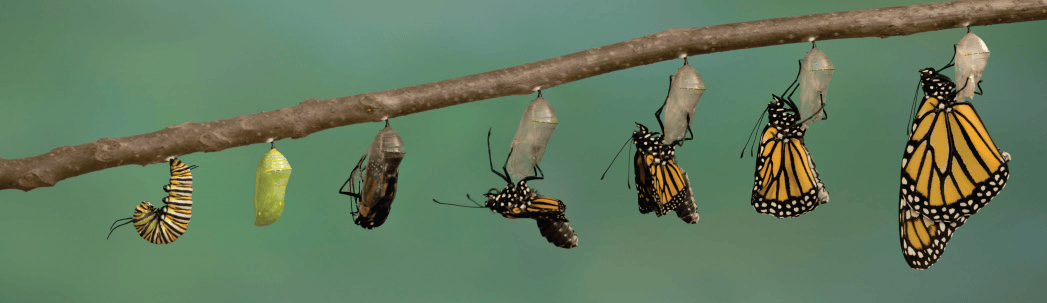
Look at the pictures. Think of an outline for a creative piece (short story or
poem) linking these pictures.
7. आपने अक्सर यह स्लोगन पढ़ा होगा कि-जल बचाओ, पेड़ बचाओ। अगर आपको कभी “कविता बचाओ' जैसे विषय पर कुछ लिखना पड़े तो वह कैसा होगा? लिखकर देखिए।
You must have come across many slogans, advertisements and poems on
the topics ‘Save the Trees’ and ‘Save the Tiger’. Write a short poem entitled
‘Save Poetry’.
8. जागो ग्राहक जायो!- दो बूँद जिंदगी की इनमें से किसी एक पर कोई एक कहानी लिखनी
हो तो आप क्या-क्या तैयारियाँ करेंगे।
Jaago Grahak Jaago!/Do Boond Zindagi ki
What steps would you follow in order to develop a short story on any one of
the above.
9. कोई दस ऐसे शीर्षक लिखें जिन पर आप छोटी-छोटी कहानियाँ लिखना चाहेंगे।
Think of any ten titles which you would like to develop into short stories.