4 संपादन
Editing

4. संपादन (अपनी रचना को जानना )
I. संपादन को जानना
II. प्रूफ रीडिंग और संपादन
4. Editing (Assess your own work)
I. Understanding Editing
II. Proofreading and Editing

संपादन से रू-ब-रू
रचनाकार अपनी रचना छपवाने से पहले कई तरह से संपादित करता है।
आप देखेंगे कि रचनाकारों द्वारा अपनी रचना में किए गए संपादन के कई पृष्ठ इस किताब में दिए गए हैं। और इस पृष्ठ पर भी उसके कुछ नमूने आपको मिलेंगे। उसे ध्यान से देखें।

आपने पहली इकाई में दिए गए कोलाज़ को ध्यान में रखकर कुछ रचनाएँ लिखी होंगी। कुछ महीनों के अंतराल के बाद जब आप उन्हीं रचनाओं को पढेंगे तो आप इन्हें ज़रूर कुछ संपादित करना चाहेंगे।
अपनी उन्हीं रचनाओं को संपादित करके यह बताते हुए कक्षा में प्रस्तुत करें कि आपने ये परिवर्तन क्यों किए ?
1 संपादन को जानना
रचनाकार जब अपनी रचना को छपने के लिए प्रकाशक के पास भेजता है तो उसे पूर्ण मानकर देता है परंतु एक दो माह के बाद जब टाइप होकर रचना उसके पास आती है तो उसमें कई बार कई तरह के बदलाव की ज़रूरत महसूस होती है। ऐसा दो कारणों से होता है। एक तो यह कि रचना को टाइप करने वाले लोग कुछ अंशों को छोड देते हैं या गलत टाइप कर देते हैं। दूसी ओर लेखक को खुद ही कुछ अंशों के शब्दों में बदलाव की ज़रूरत महसूस होती है और इसके अनुरूप वह रचना में परिवर्तन, संशोधन या संपादन करता है। सामान्यत: संपादन का अर्थ भाषा-सुधार और कुछ त्रुटियों कोसुधारने से लिया जाता है परंतु यह इससे कहीं बड़ी ज़िम्मेदारी है। अगर हम संपादन शब्द के मूल पर नज़र डालें तो यह बात और स्पष्ट हो जाएगी। संपादन (सम्-पद्-णिच-ल्युट) शब्द मूलतः पद् धातु से बना है, जिसका अर्थ होता है-पूर्ण करना, पूर्ति करना या तैयार करना। इसी “पद” धातु से संपत्ति, पदार्थ और संपन्न जैसे शब्द बनते हैं। पद शब्द बहुअर्थी है जिसके भीतर गमन (पैर) से लेकर प्रतिष्ठा तक की ध्वनि समाहित है। संपादन सिर्फ़ शब्दों का सुधार नहीं है। यदि ऐसा होता तो इसका नाम संशाब्दन जैसा कुछ होता। पदों के साथ संदर्भ जुड़े होते हैं जो उसे तमाम अर्थों से जोड़ते हैं।जब हम सृजनात्मक लेखन के संपादन की बात करते हैं तो इसे वृहत्तर अर्थ में देखना उचित होगा। मूलतः संपादन अर्थ से जुड़ता है और इसीलिए किसी भी रचना के संपादन का मतलब उसके अर्थ और प्रभाव में बढ़ोतरी करना होता है। संपादन को हम दो स्तरों पर देख सकते हैं-(क) शब्द एवं भाषा के स्तर पर और (ख) कथ्य एवं प्रस्तुति के स्तर पर
शब्द एवं भाषा के स्तर पर
किसी भी रचना में सबसे महत्वपूर्ण चीज़ होती है-शब्द। इसलिए कविता या कहानी को जानने से पहले हमें शब्द को जानना चाहिए। शब्द का मतलब “ध्वनि' होता है। इसीलिए कान को “शब्दग्रह' यानी ध्वनि को ग्रहण करने वाला कहा जाता है। आवाज्ञ को सुनकर चलाए गए बाण को “शब्दभेदी बाण” कहने के पीछे भी शब्द का यही अर्थ काम कर रहा होता है। शब्द कोई रटने की चीज़ नहीं है। ये आप लोगों के दोस्त हैं, आपके हमसफ़र। इनकी तरफ़ ज़रा एक बार दोस्ती का हाथ बढ़ाकर देखिए। एक शब्द से आप दोस्ती करेंगे तो वह कई और शब्दों से आप लोगों को मिला देगा।
अभ्यास
दिन - दिनकर, दिनोज, दिनमान, दिनेश, दिनांक सर (फ़ारसी)- सरगना, सरताज, सरपंच, सरपरस्त, सरफ़रोश, सरहद

सर (संस्कृत)- सरोवर, सरोज, सरोजिनी
जन -जनपद, जनमत, जनादेश, जनहित, जनगणना
ऐसे ही 10 शब्द और बताइए।
इसी प्रकार कई शब्द पहले बहुत छोटे से घर में रहते थे परंतु अब वे शानदार बंगले में रहते हैं। प्रवीण, तेल, कुशल शब्द क्रमश: वीणा, तिल और कुश से बने हैं परंतु आज इनका इन चीजों से कितना संबंध बचा है? आप खुद बताइए।
रचना में शब्द
रचना प्रक्रिया में शब्द, वाक्य, मुहावरे, परंपरा, मिथक आदि के ज्ञान की बड़ी भूमिका होती है। इसलिए जहाँ तक हो सके, इनसे जुड़ने की कोशिश करनी चाहिए। सृजनात्मक लेखन में किसी भी शब्द का कोई पर्यायवाची नहीं होता। हर शब्द की अपनी स्वतंत्र सत्ता होती है, उपसर्ग-प्रत्यय से भी शब्दों के अर्थ में बहुत अंतर आ जाता है। एक उदाहरण लें-सुर, लय और ताल के संयोग से संगीत का जन्म होता हे पंरतु इन्हीं शब्दों में उपसर्ग जोड़ दें तो ये क्रमश: असुर, प्रलय और बेताल में बदल जाते हैं। अगर ये आपस में जुड़ें तो कैसा संगीत पैदा होगा? ज़्यादातर शब्दों के साथ सैकड़ों साल पुराने संस्कार जुड़े होते हें, शब्द भी बच्चे, जवान और बूढ़े होते हैं और अलग-अलग समय में अलग-अलग प्रभाव पैदा करते हैं।
तुक और लय
लय-“जगत है सच्चा तनिक न कच्चा समझो बच्चा इसका भेद' को हम यूं भी लिख सकते हेैं-'जगत है सच्चा तनिक न कच्चा इसका भेद समझो बच्चा'
इसी तरह-
“नव गति नव लय ताल छंद नव' को
“नवल कंठ नव जलद मंद्र रव” को अगर हम
“नव लय नव गति छंद ताल नव
नव जलद नवल कंठ मंद्र रव'
लिखें तो क्या अंतर आएगा?
शब्द क्रीड़ा
हमने देखा कि शब्दों की एक अलग हो दुनिया होती है। ये कई बार मनोरंजक रूप ग्रहण करते हैं। जैसे-
“खिड़की दरवाज़ों के परदे जब फट जाएँ
तो परदेसी परदे सी की हॉक लगाएँ”
“दरजी प्रेमी हों तो कृप्या ध्यान दें
फ़टी-फ़टी आँखों से उसे न देखें
कल्पना के क्षेत्र में भी दर्जी अभागा
पौ फ़टती देखी कि सीने को भागा
स्वयं को प्रभा में न लाना है
स्वयं में प्रभा को लाना है!
संपादन में भाषा के स्तर पर किए गए कार्यों की बड़ी भूमिका होती है। भाषा हमारी अभिव्यक्ति की सबसे बड़ी माध्यम है। चूँकि सब कुछ भाषा से व्यक्त होता है। अत: इसमें एक खास ढंग की ज़रूरत होती है। हम बोलचाल की भाषा में छूट ले सकते हैं और तमाम क्षेत्रों के लोग अलग-अलग ढंग से भाषा का इस्तेमाल कर सकते हैं, परंतु लिखते और पढ़ते समय एक अलग शैली एवं शिल्प के बावजूद हम भाषा के एक खास ढंग की अपेक्षा रखते हैं। इसी अपेक्षा और एकरूपता की ज़रूरत से व्याकरण का जन्म होता है। व्याकरण संविधान जैसी कोई चीज़ नहीं होती है जिसका पालन भाषा प्रयोग करने वाले को करना होता है, बल्कि इसी भाषा की सामान्य प्रवृत्तियों से व्याकरण का जन्म होता है और यह बहुत ही लोचदार होता है। सृजनात्मक लेखन से जुड़े लोग कई बार व्याकरण से छूट लेते हैं। परंतु इसका अधिकार उन्हें तभी मिलता है जब वे व्याकरण की अच्छी जानकारी प्राप्त कर चुके होते हैं। यहाँ हम व्याकरण की जटिलताओं में न जाकर भाषा की उन विशेषताओं पर एक नज़र डालेंगे जो सही संप्रेषण के लिए ज़रूरी होती हैं और संपादन का संबंध इसी से है- ।. वर्तनी, 2. विराम चिह्न और 3. वाक्य संरचना
वर्तनी -
हम एक शब्द को कई तरह से लिख सकते हैं। आमतौर पर होता यह है कि हम जैसा बोलते हैं वैसा ही लिखते भी हैं और जिस लिपि में उच्चारण के अनुरूप लिखे जाने का गुण सबसे अधिक होता है उसे विकसित माना जाता है। हिंदी इस मामले में काफी वैज्ञानिक हे। हालाँकि इसकी भी अपनी सीमाएँ हैं मसलन-“किताब' में मात्रा का पहले आना, पर उच्चारण बाद में होना या फिर 'र! का चार तरह (राम, कर्म, क्रम, राष्ट्र) से लिखा जाना। दरअसल बोली युगानुसार बदलती रहती है परंतु लिपि कागज़ और स्याही के बंधन में (और अब कंप्यूटर में) बंधे होने के कारण खुद को समय अनुसार नहीं बदल पाती। आपने अंग्रेजी के कई शब्दों को देखा होगा। जिनकी वर्तनी कुछ अजीब-सी होती है - Knife, Pneumonia, Half, Calm आदि। इन शब्दों में कभी उन अक्षरों का भी उच्चारण होता था जिनका अब नहीं होता। इन शब्दों की वर्तनी में कोई गलती नहीं है। बस! हुआ यह है कि सैकड़ों वर्षों के दौरान इन शब्दों के उच्चारण बदल गए और वर्तनी वही रह गई। इसी प्रकार हिंदी में ऋ, लू, ड. आदि ध्वनियों का व्यवहार लगभग समाप्त हो जाने के बावजूद लिपि में इनका मौजूद होना इसी बात का प्रमाण है। प्रत्येक भाषा के शब्द को लिखने का एक खास ढंग होता हे और वह परंपरा से सिद्ध होने के कारण एक खास ढंग से ही लिखा जाता है। इसीलिए जब कोई शब्द विशेष को उसी तरह से नहीं लिखता तो हम उसे गलत कहते हैं। कई शब्दों में थोड़े से हेर-फेर से अर्थ बदल जाते हैं। जेसे-दिन-दीन, कुल-कूल, प्रसाद-प्रासाद, अंस-अंश
अभ्यास
नीचे दिए गए उदाहरण को देखें “सानिया मिर्जा! ने ऐसी सर्विस की कि अन्ना कोर्निकोवा देखती रह गई। अगर “की कि' का परस्पर स्थान परिवर्तन हो जाए तो वाक्य में क्या अंतर आएगा?
विराम चिह्न -
ये चिह्न पहले बहुत कम होते थे और साहित्य में (1 ) और (2 ) का प्रयोग होता था। पहले के लोग वाक्य के अर्थ के अनुसार खुद ही विराम का प्रयोग कर लेते थे; ठीक वैसे ही जैसे संस्कृत के वाक्यों का उच्चारण करते समय संधि के अनुसार पाठक खुद ही शब्दों को तोड़ लेते हैं। लेकिन 9 वीं सदी के आरम्भ में जब पुस्तकें छपनी शुरू हुई तब आधुनिक विराम चिह्नों का उपयोग किया जाने लगा। जो आज हिंदी में भी लगभग उसी रूप में स्वीकृत हैं। इन चिह्नों की जानकारी से हम भाषा का सही उच्चारण कर पाते हैं। हम लिखे वाक्यों को खास ढंग से पढ़ते हैं और पढ़ने के ही अंदाज पर अर्थ निर्भरकरता है। लेखक की तरह अन्य लोग भी वाक्यो को पढ़ें; इसके लिए चिह्नों का प्रयोग किया जाता है।
जैसे-
“उसने कहा, रुको मत भागों! अलग-अलग लेखकों की भाषिक संरचना भिन्न होती है, जिसमें चिह्रों के प्रयोग से पाठक को आसानी होती है। अंग्रेज़ी की तर्ज़ पर हिंदी में भी पूर्णविराम (।),
अर्द्धवेराम (;), विस्मयादिबोधक (!), प्रश्नवाचक (?) आदि चिह्ढों का प्रयोग किया जाता है। रचना को ठीक से पढ़ना होता है और इससे पाठक और रचनाकार में तादात्म्य बनता हे।
अभ्यास
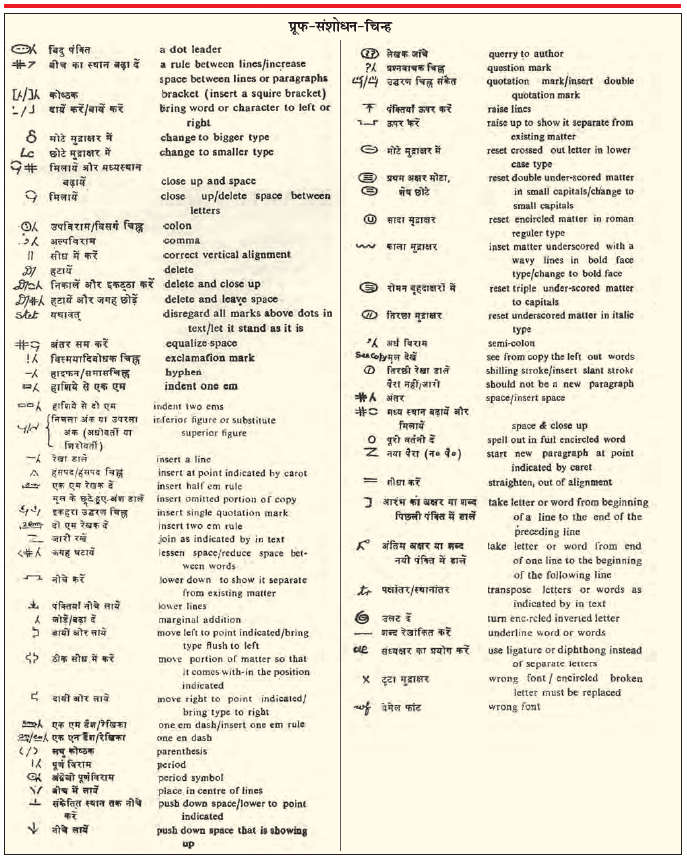
भाषा सुधार हेतु दिए गए चित्र में कई तरह के चिहों का प्रयोग किया गया है। आप भी इनका इस्तेमाल करें और अगले पृष्ठ पर दिए गए संकेतों के अर्थ बताएँ।
विराम चिह्न
अलबर्तो मैनगुएल ने येल युनिवर्सिटी प्रेस द्वारा इसी वर्ष प्रकाशित उनकी पुस्तक 'ए रीडर आन रीडिग!' में एक छोटा-सा अध्याय पूर्ण विराम पर है। वे बताते हैं कि हम आगे चलने को अक्सर इतनां
उत्सुक रहते हैं कि हमें शुरुआत का संकेत देने की कोई ज़रूरत नहीं पड़ती, पर हमें यह जानने की ज़रूरत पड़ती हे कि कब रुकना चाहिए। पूर्ण विराम का छोटा-सा बिंदु हमें याद दिलाता है कि सब
कुछ पर, जिसमें हम भी शामिल हैं, एक दिन विराम लग जाएगा। पूर्ण विराम का पश्चिम में इतिहास बहुत .पुराना नहीं है- किसी वाक्य के समापन के लिए बिंदु का इस्तेमाल इतालवी पुनर्जागरण तक
स्थिर नहीं हुआ था। पहली इसवीं सदी में स्पेनिश लेखक 'किवंतीलियन' ने यह कहा था कि “किसी वाक्य को, एक पूरे विचार को व्यक्त करने के अलावा, एक साँस में कहे जाने में समर्थ होना चाहिए।”
वाक्य के समापन के लिए लेखक कई विधियाँ और चिह्न अपनाते थे। पाँचवी सदी के आरंभ में संत जेरोम ने, जो बाइबिल के अनुवादक थे, यह व्यवस्था विकसित की कि हर नया वाक्य शुरू होने से पहले उसका एक शब्द हाशिए से बाहर रखा जाए। उसके तीन सदियों बाद बिंदु का इस्तेमाल वाक्य में यति और विराम दोनों के लिए किया जाता रहा। यह गड़बड़झाला सदियों तक चलता रहा। फिर 1566 में एलडस मैन्यूशियस ने लैटिन भाषा में एक पुस्तक लिखी जो दरअसल टाइपोग्राफ़रों के लिए एक सर. हता थी। उसमें पूर्ण विराम की वर्तमान व्यवस्था प्रस्तावित की गई। यह साहित्य के भविष्य में पाठकों के लिए अनूठा उपहार था- साहित्य के बोध और संगीत दोनों का आनंद पाने के लिए। “इज़ाक बेबेल' ने कहा, कि “कोई लोहा दिल को उस बरछी की तरह ज़ोर से नहीं छेदता, जितना कि सही जगह पर लगाया गया पूर्ण विराम।” “मैंगुएल' जोड़ते हैं कि “यह छोटा-सा बिंदु शब्द की शक्ति और उसकी बेचारगी दोनों का स्वीकार है।” पता नहीं कि देवनागरी लिपि में पूर्ण विराम का उपयोग कब और कैसे शुरू हुआ। यह सोच कर आप अचंभे में पड़ सकते हैं कि अगर विराम चिह्न न होते तो हम, हमारी भाषा और हमारा साहित्य किसी गड़बड़झाले और उलझनों में फँसा होता।
- अशोक वाजपेयी, जनसत्ता से साभार
2 प्रूफ रीडिंग और संपादन
वाक्य संरचना -
हर भाषा की अपनी संरचना होती है और रचनाकार से उम्मीद की जाती है कि वह इस नियम का पालन करेगा। जैसे-अंग्रेज़ी में कर्त्ता-क्रिया-कर्म की संरचना होती है। इसलिए इसका पालन न होने पर अटपटा-सा लगता है। जेैसे-राम जा रहा है विद्यालय बस के द्वारा। आमतौर पर कविता के अलावा सभी विधाओं में इस संरचना का पालन नहीं किया जाता है। चूँकि रचना करते समय मुहावरों, कहावतों, लोकोक्तियों और मिथकों आदि की बड़ी भूमिका होती है। इसलिए संपादन में भी इनका ध्यान रखा जाता हे वरना अर्थ का अनर्थ होने का खतरा रहता हे। हिंदी में कई मुहावरा एवं लोकोक्ति कोशों का निर्माण किया गया हे। उन्हें देखने का प्रयास करें। उदाहरण - बच्चे के कारण मेरी नाक कट गई, बच्चे के कारण मेरी नाक छिल गई। शब्दकोश, संदर्भकोश, थिसॉरस और विश्वकोश की ज़रूरत इस तरह के तमाम शब्दों की जानकारी हमें जिस किताब से मिलती है, उसे शब्दकोश कहते हें। चूँकि हमारी भाषा के शब्द बहुत सारी भाषाओं से आए हैं। इसलिए हमें अपने पास कई शब्दकोश रखने चाहिए। कम-से-कम हिंदी, संस्कृत, उर्दू और अंग्रेज़ी शब्दकोश तो होना ही चाहिए। परंतु शब्दकोशों की एक सीमा यह होती है कि वे हमें सिर्फ़ शब्द की जानकारी देते हैं जबकि पद या शब्द हमारे जीवन में या दिमाग में अकेले नहीं आते, वे अपने साथ भाव और विचार भी लाते हें। इन शब्दों का एक खास संदर्भ होता है। मसलन जब हम “गिरिधर' या “द्रोपदी' या 'अकबर' कहते हैं तो ये सिर्फ़ नाम नहीं होते, इनके कई सारे दूसरे संदर्भ भी होते हें। इनकी जानकारी के लिए हमें “संदर्भकोश ' और “थिसॉरस' आदि की सहायता लेनी पड़ती है। कई रचनाओं में आपको बिलकुल नए शब्द मिलेंगे। जैसे नीचे की पंक्ति देखें -
यहाँ आए इब्नबतूता शब्द से आपके मन में कुछ सवाल उठ रहे हैं? यह शब्द अजीब तरह का क्यों है? यह किस भाषा का शब्द हे? इसका अर्थ क्या है? अगर यह नाम है तो किसका नाम है, इसका इतिहास क्या है आदि। आपके ऐसे प्रश्नों का उत्तर जिस किताब में मिलता है उसे विश्वकोश कहते हें।
अभ्यास
कथ्य एवं प्रस्तुति के स्तर
पर संपादन
संपादन का एक अर्थ कार्य की सम्यक पूर्ति है यानी रचना का जो उद्देश्य है वह सही तरह से पूरा हो। इसके लिए कथ्य और भाव के स्तर पर रचना को प्रभावी बनाना और उसे विभिन्न तरह की त्रुटियों से मुक्त करना ज़रूरी होता है। केवल सृजनात्मक लेख न ही नहीं, बल्कि हर तरह के लेखन में कथ्य और प्रस्तुति की बड़ी भूमिका होती है। सिर्फ़ थोड़े से फ़ेर-बदल से कोई लेखन बहुत अच्छा या खराब हो जाता है। संपादक बातों को प्रभावी बनाने के लिए उसमें ज़रूरी फ़ेर-बदल करता है। खासतौर से सामाजिक विषयों के संपादन में आँकड़ा, तथ्यों की क्रमागत प्रस्तुति, विद्वानों के कथन, प्रामाणिक उद्धरण और सारणी आदि की भी भूमिका होती है और कई बार संपादक इन्हें नए ढंग से प्रस्तुत करता हे। हर रचना के विस्तार की एक सीमा होती है। कई बार कुछ रचनाएँ ज़रूरत से छोटी या बड़ी होती हैं। ऐसी हालत में उनके कथ्य में बिना कोई परिवर्तन किए उसे छोटा करना होता है या फिर छोटी रचना में उसी तरह की बातों को जोड़कर उसे ज़रूरी आकार देना होता है। हालाँकि यह काम सृजनात्मक लेखन में कम होता है परंतु संपादक को इन बातों के लिए तैयार रहना चाहिए। एक रचनाकार सामान्यतः भाषा के प्रचलित स्वरूप और उसके व्याकरणिक नियमों से वाकिफ़ होता है, इसीलिए उसके लिए संपादन का मतलब रचना को त्रुटिमुक्त करना और अधिकतम प्रभावी बनाना होता है। इस प्रक्रिया में वह कुछ शब्दों को निकालता है और कुछ को बदल कर उनकी जगह पर नए शब्दों को जोड़ता है। साथ ही वाक्यों की सरंचना में बदलाव करता है। इसी अर्थ में संपादन, रिव्यू और पुनलेखन भी होता है।
अभ्यास
क्या आपको भी अपनी पहले की लिखी किसी रचना को पढ़ते समय उसमें कुछ जोड़ने या घटाने की ज़रूरत महसूस होती है? अपना अनुभव बताएँ।
Background: T. S. Eliot's 'The Waste Land' edited by Ezra Pound

Sample of edited page (left) and final printed page (above)
Understanding Editing
In the preceding units you have written some creative pieces based on collages.
Now, revisit your creative pieces.Read them again. You may have come across some sections where you feel editing would improve the piece.
Edit your works, analyse them and present them in the class.
Edited versions of a few creative writings of some writers have been given in the textbook. You'll also find a sample on this page.
I. Understanding Editing
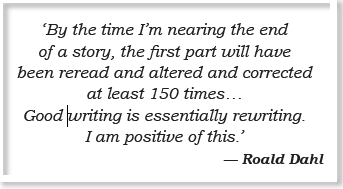
In the sections before this, you have seen examples of how writers rewrite and edit their work before finalising it. We will discuss some things that will help you edit your work. Very rarely does a piece of writing come out as a finished product in one go. Revising and editing your work becomes an integral part of the creative process.
Be prepared to take a break after you have written something, so you are able to come back to it with fresh perspectives. As you finalise your work, pay attention
to spelling, punctuation, grammar, formatting and presentation. You may share your work with others to seek their views and feedback. This will give you insight
into how others see your piece. It may also reveal certain aspects that you had not thought of before. On the basis of this feedback and your own analysis of your writing, you can rework and polish your work for a better finish.
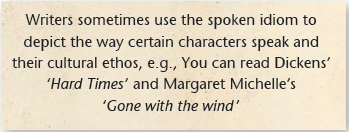
You must have noticed that with SMS and chat lingo becoming fairly popular, many people have become very casual about spelling, punctuation and grammar. This may work largely in informal settings like SMS, chat session, email or blog, so long as the people you are communicating with are tolerant of inaccuracies or accept them as part of the communication environment. It may also work very well in a piece of creative writing which deliberately plays with language rules or mimics familiar deviations and inaccuracies.
Here are some examples of this kind of writing:
Tina: True. Oh, Mia. I’m sorry. I’ve g2g, my dad says I’ve reached my limit in text messages this month – ttyl!
Meg Cabot. The Princess Diaries: After Eight. London: Macmillan Children’s Books, 2007, p.156 .
I live in Lahore. In a big fat kothi with a big, fat garden in Gulberg, which is where all the khandani, khaata-peeta types live. And don’t listen to the newly rich cheapsters who live in Defence vaghera and say that, ‘No, no Defence is Lahore’s best locality,’ because they are liars. They are just jay—jealous, bhai! Honestly, do you know anything? No offence, but you tau seem like a total paindu pastry to me.
Moni Mohsin. The Diary of a Social Butterfly.Noida: Random House India, 2009, p.vii.
The Patriot
non-violence.
Why world is fighting fighting
Why all people of world
Are not following Mahatma Gandhi,
I am simply not understanding.
Ancient Indian Wisdom is 100% correct.
I should say even 200% correct.
But modern generation is neglecting-
Too much going for fashion and foreign
thing ...
— Nissim Ezekiel
IRC chat room CyberHotMyst
axe: Hey budi, so you are on my team? Oh, we seem to have another person here!
karly20: Just followed you from your blog, Axe, cool name you got for it. D’you have something against all ladies or just ‘old’ ones?
axe: Hey Karly. I’d better be careful, right? No, I have nothing against women; just old grand-aunties in general, and mine in particular. A/s/l? Do you want to join my team? With Budi?
lil buddha: I have not said I’ll join, yet. What is this ‘team’ about, anyway?
karly20: Glad that’s clear on the ladies. I’m Katherine Liner, live in Boston and study in junior high. And I’m 13 btw, so with you guys, I get seniority, OK? And yes, what’s this team?
Deeptha Khanna. ‘Introducing the Inteers’ in Shockwave and Other Cyber Stories. New Delhi: Puffin, 2007, pp.78―9.
You have gone through different examples of writing that use language consciously in a less formal manner. Now, as a group choose one of the above pieces. Each member of the group should take some time to answer the first question on their own and produce a finalised version of the piece the group has chosen to work on. Then come together and share with the group your versions and discuss the second question together.
If you had been given this piece to give feedback on and finalise it, what kind of changes would you have made and why?
What effect do the changes you suggest make to the meaning and impact of the piece? Repeat the above exercise with the other extracts and pieces.
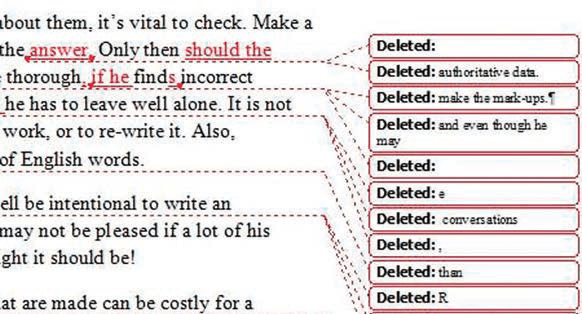
This first set of exercises may have given you some idea about how deviations in spelling, punctuation, grammar and usage can be deliberate and fruitful in the production of meaning. However, this is not always the case and that is where editing is useful. Editing, broadly speaking, can work at two major levels. The first entails proof reading to eliminate spelling, punctuation, grammar and formatting errors. The second involves a higher level editing of content that deals with stylistic and conceptual elements in the writing as well as with the effective organisation of information.
II. Proof Reading and Editing
Proof reading involves reading a piece of writing carefully to remove inaccuracies that were not consciously meant to be a part of the piece but were the result of either carelessness or lack of awareness of the norms of spelling, punctuation, grammar and language usage. Good dictionaries, thesaurus, as well as, grammar and usage guides are indispensable aids for proof reading. A dictionary can help you check for spellings, word meanings and, in some cases, may also provide usage hints. A thesaurus gives you a range of words with similar and opposite meanings. It can be a very useful tool for expanding your vocabulary so that you do not overuse familiar words. Grammar, punctuation and usage guides will familiarise you with the prevailing rules of expression. Some versions of these tools are available on the Internet as well. They can all help you make your writing accurate, effective and fresh. If you are working on a computer, most have wordprocessing programmes with tools that allow you to check spellings, punctuation and grammar, as well as use the computer’s thesaurus. Be careful, however, to not blindly accept every change the computer suggests mechanically. Appropriateness will depend heavily on contexts. Now form groups of three. Each member of the group should share with the group a printout of one piece of writing that they have produced and have already proof-read. Each member should then go over the given piece very carefully looking for language errors, which should not only be flagged but corrected. After doing this, the group should come together and go over the piece line by line discussing suggested changes with the writer.
Note: At this point the focus should be only on proofreading for spelling, punctuation, grammar and usage errors that mar the quality of the piece
Write a brief report for the pieces submitted incorporating the following information: Did the process yield errors that had slipped unnoticed by the writer? How many of each kind—spelling, punctuation and grammar or usage errors?
Were there points when the writer and proof readers could not agree if something was an error or not? Give details.
Repeat this process with other pieces in your portfolio that you feel you have proof-read and eliminated basic errors from. Keep copies of your drafts and the proofing reports to give you a feel of the kind of errors you tend to make or tend to overlook, if such patterns exist at all.
Of course, a prerequisite for proof reading is that one’s own spellings, punctuation and grammar are relatively strong, otherwise you, as a proof reader, will not notice errors in the piece you are proofing. Worse still, you may introduce some errors that were not there in the first place. It is often assumed that writers miss their own grammatical and spelling mistakes. If you train yourself to be a deliberate and careful reader, you
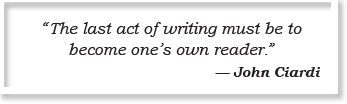
will develop an eye for errors. A writer has to be his/her own first editor as any form of creativity involves the critical faculties of selection, arrangement, revision and intense scrutiny of one’s own work. The words of the following section gives you some exercises you can use to assess your language skills. They are not meant to ‘teach’ you spelling, punctuation and grammar but, merely to alert you to problem areas and get you into the habit of being more aware and careful about them. Once you identify areas that you need to work on, turn to books and online resources that will help you do that.
Spelling
Below is a list of some words whose spelling can be confusing. Circle the correctly spelt words from the sets given below. Then look them up in the dictionary to see how many you got right.
■ aweful, awful, awfull
■ beleive, believe
■ cigerrete, cigarette, cigarete, ciggarrette
■ definite, definate, defanite
■ editting, editing
■ embarrasment, emabarassment, embarrassment
■ occassionally, ocasionally, ocassionally, occasionally
■ ocurred, occurred, occured
■ possession, posession, possesion
■ privelage, privilege, privelege, privilage
■ reccommend, recommend, recomend
■ receive, recieve
■ responsable, responsible, responseable
■ rhythmn, rythem, rhythm, rhythm
■ separate, seperate, seprate
Distinguish between the following words by using them correctly in sentences. Discuss your answers in groups of three. Wherever there is a disagreement about meaning or usage, check the dictionary to resolve it.
- affect/effect
- desert/dessert
- lose/ loose
- counsel/council/
- consul
- their/there/they’re
- fair/fare
- principle/principal stationary/ stationery
Now each of you can make such lists of your own. Choose a partner, exchange lists and see how both of you fare.
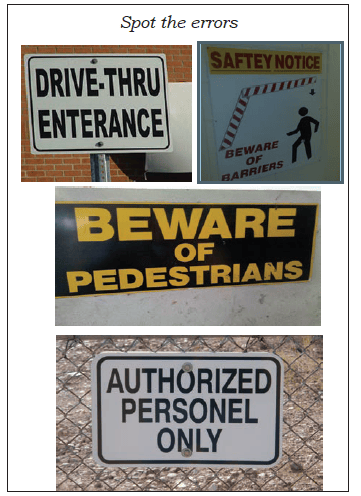
Punctuation
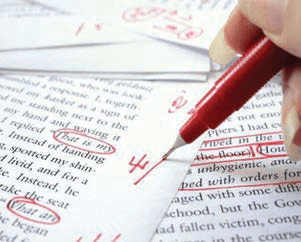
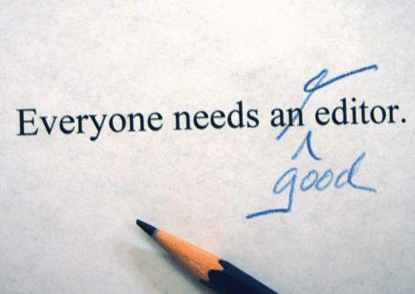
Proof reading in progress
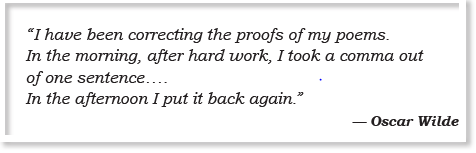
Observe, how punctuation changes the meaning in the sentences given below.
A panda walks into a café. He orders a sandwich, eats
it, then draws a gun and fires two shots in the air.
“Why?” asks the confused waiter, as the panda makes
towards the exit. The panda produces a badly punctuated
wildlife manual and tosses it over his shoulder.
I’m a panda,” he says, at the door. “Look it up.”
The waiter turns to the relevant entry and, sure enough,
finds an explanation.
“Panda. Large black-and-white bear-like mammal, native
to China. Eats, shoots and leaves.”
Lynne Truss’s Eats, Shoots & Leaves: The Zero Tolerance Approach to Punctuation
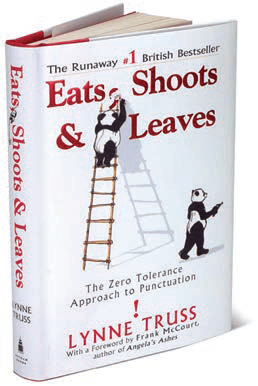
Can you come up with or find some examples of how punctuation might change the meaning of a sentence altogether?
Work in groups to make presentations with examples of how the following punctuation marks are used:
■ Commas
■ Colons
■ Semicolons
■ Hyphens
■ Quotation marks
■ Exclamation marks
■ Question Marks
■ Capitalisation
Here are some passages where you can add punctuation and capitalise where you feel it is required. These have been taken from published pieces, so that you can compare the choices you made and those available in the original published text. Discuss differences and the rationale for individual choices in groups of three. (See pg. 186 also)
Appendix
The Pot Maker
Ever since she became old enough to accompany her mother to the fields and forests she began to dream of becoming a pot maker like her mother and grandmother her mother tried to make her learn weaving a skill highly valued as an asset in any girl but she only wanted to make pots and lots of them of various sizes and shapes on days when she managed to stay at home while her parents and other elders went to the fields she sought out the women who were expert potters and asked to be taught their skill they were at first amused by the little girl’s insistence they thought she would soon outgrow her childish passion for the craft they told her it was back-breaking and often frustrating work especially when a sudden shower ruined weeks of labour and the pots drying in the sun were destroyed by the rain
— Temsula Ao
Bholi
well done the teacher patted her affectionately and said put the fear out of your heart and you will be able to speak like everyone else bholi looked up as if to ask really yes yes it will be very easy you just come to school everyday will you come bholi nodded no say it aloud ye-ye-yes and bholi herself was astonished that she had been able to say it. didn’t i tell you? now take this book the book was full of nice pictures and the pictures were in colour—dog cat goat horse parrot tiger and a cow just like lakshmi. and with every picture was a word in big black letters
— A.K. Abbas
On Killing A Tree
It takes much time to kill a tree Not a simple jab of the knife Will do it it has grown Slowly consuming the earth Rising out of it feeding Upon it’s crust absorbing Years of sunlight air water And out of its leperous hide Sprouting leaves So hack and chop But this alone wont do it Not so much pain will do it The bleeding bark will heal And from close to the ground Will rise curled green twigs Miniature boughs Which if unchecked will expand again To former size
— Gieve Patel
Grammar
These exercises also attempt to flag certain problem areas you should look out for. Choose the appropriate option from the ones given. Discuss your answers in groups of three and give your rationale for choices, if there is a difference of opinion.
Subject-Verb Agreement
■ Some of the apples [is, are] rotten.
■ Neither Akhil nor Rupali [stand, stands] to gain from this action.
■ Present at the press conference [was, were] Vinod Kalra, Samit Bhardwaj and Seema Saxena.
■ There [was, were] a series of festivals in the city in November.
■ The company president, along with two top managers, [is, are] under Suspicion.
Pronouns
■ [Us, We] students have a lot to learn over the next three weeks.
■ The teacher remarked sarcastically about [us, our] being late.
■ The librarian has been here much longer than [we, us].
■ She gave the books to [her and I, she and I, she and me, her and me]
■ He is a student [who, whom] they say deserves to get a university rank.
Pronoun—Antecedent Agreement
■ Each of the boys get [his, their] bags checked.
■ The jury delivered [its, their] verdict.
■ The cricket team lost [its, their winning edge] after Kaushik was forced off the field.
■ The couple decided to [its, their] separate ways.
■ The union, with a strength of two hundred workers, held [its, their] meeting to come to a quick decision.
Tenses
■ If he [were, was] the president he’d waive the punishment.
■ The child refused to admit he had [drank, drunk] the entire of orange juice.
■ The valley [lay, lied, laid] in front of the trekkers.
■ The mother told her son to [lay, lie] down quietly and go to sleep.
■ He [lay, lied, laid] the books on the table, before going in.
■ The boss insisted his employees [are, be] on time.
■ She [set, sat] the doll on the shelf next to the vase.
■ He would have liked to [see, have seen] the performance when it came to Chennai.
■ She missed the function because she had [tore, torn] her dress.
■ She wishes she [was, were] abroad.
Misplaced Sentence Segments
Rewrite each sentence to deal with any lack of clarity in its meaning.
■ Filled with petrol, Sameer said the SUV worked fine.
■ Kunal almost walks 10 kilometres a day.
■ Driving to college, the new billboards caught our attention.
■ Hungry and wounded, the forest rangers searched for the man-eater.
■ The child was taken to the dentist with bad toothache.
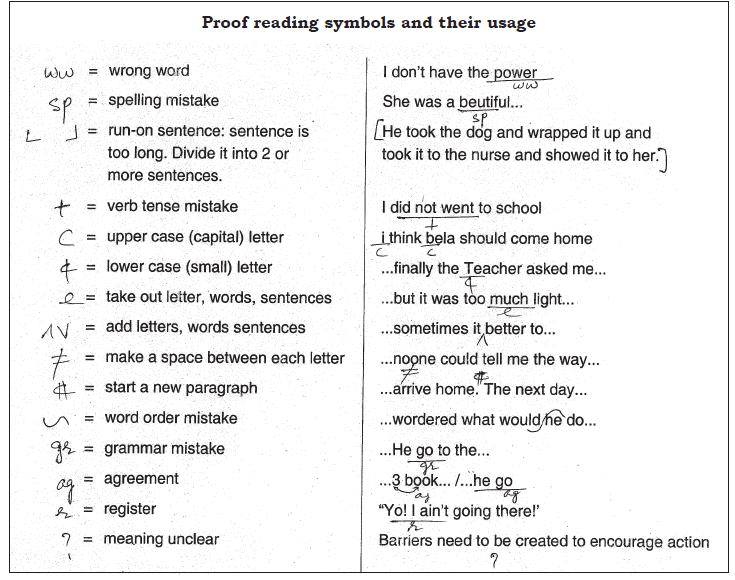
Proof reading is an essential skill for any writer and cannot be left only to professional editors, at least in the initial stages, as a badly proofed first draft or manuscript may not get considered for publication. Even when there are proof readers helping or making suggestions to the writer, it is the writer who needs to eventually correct the proofs. At this level, where an external proof reader or printer is involved, besides getting into the habit of becoming a careful reader, learning the editing symbols may also be useful for effective proof reading. See proof reading symbols on page 172.
Feedback
Most writers want to share their work with others. As writing is a mode of communication, it is important to figure out how others respond to your work. It is always a useful exercise to compare what you wanted to put across, with what others say the piece actually communicated to them. You will find that this exercise may highlight aspects of the work that you had not noticed before. If you find specific lapses in communication occurring consistently across readers or even in a one-off situation, you may want to try and understand what is causing these lapses and figure out if you wish to make any changes.
You may want to start the feedback process with sympathetic readers, friends and family. Eventually, choose a wide range of people to get feedback from. Ifyou are writing for a target audience, you could choose to focus on feedback from people who belong to that group. As a creative writer you will find numerous online communities that provide spacesfor sharing writing and getting and giving feedback. Even after a work has gone into print, feedback and self-analysis can yield fruitful insight that may help in future pieces.
Editing and Review as a Process
One of the biggest myths about editing is that it’s only about proofing. Content, organisation and style are the second level at which an editor needs to work. Try to use what you already have read in the previous units about reviewing, evaluating and revising your creative work to cut verbal flab. Work on effective paragraphing. Where required weed away biases, crosscheck facts and verify details. An eye for spelling and punctuation, an ear for diction that easily picks up faulty usage, quaint or incorrect expression and a questioning spirit are useful prerequisites for the editing process. Besides corrections in spelling, grammar and idiom; faulty sentences may need to be rephrased, repetitions cut down, ineffective expressions may need to be pruned, vague language may need to be sharpened, ambiguities and expressions that hinder effective communication have to be eliminated. You may need to tighten the text and ensure that it is paced for maximum impact to ensure the precision and accuracy in the presentation of the central ideas or theme of the piece.
In the case of an external editor, the cardinal rule remains that there should be no needless corrections. The editor should not meddle with the writer’s opinions or style. The editor’s domain is, by and large, limited to that of language and presentation; the goal being to heighten clarity, consistency, cogency, a sense of verbal economy and better focus in the work. David Davidar asserts, “A good editor, at his best, is a craftsman who polishes his author’s work to mirror finish without (and this is important) letting his craft show through in the final work.” This is something that you should keep in mind especially when you give feedback to other writers or edit their pieces. “Editing should be, especially in the case of old writers, a counselling rather than a collaborating task. The tendency of the writer-editor to collaborate is natural, but he should say to himself, “How can I help this writer to say it better in his own style?’’ and avoid “How can I show him how I would write it, if it were my piece?” affirms James Thurber.
The editing or review formats provided at the end of every section should give you a sense of the general mental checklist you should run through as you go over your work. Applying the editing and review formats to your own work may throw up questions and reveal areas that you would like to rework. Keep a revision-of work journal that allows you to see what changes you made and why. Make a note of the elements in your writing that challenge you. Consciously, look at the things that you read in terms of its components and record your opinions and observations. Use these ideas as you edit your own work to inspire you when you have writer’s block and to help you bring clarity to your writing. Form peer review groups to get practice in editing other people’s work, a process which should make you all the more conscious of your own writing and hone your skills.
What kind of a self-editor are you?
“There are three types of self-editors:
(1) Arrogant and blind:
You believe you are a master and masters only
commit very few and very minor errors.
Your worst miss steps remain hidden behind
your conceited idea of yourself and your
mistaken idea of what constitutes a master.
(2) Panicked and too timid or too aggressive:
You overestimate the problems of your
text and lose heart before you begin.
You edit too timidly (afraid to face
what’s wrong) or too aggressively
(convinced that everything is wrong).
(3) Pragmatic and cool:
You are possessed by the need to make your
writing function. You consider yourself neither
genius nor idiot. You edit like the French
recommend exacting revenge: coldly.”
Susan Bell, “The Artful Edit:
On The Practice of Editing Yourself”.
Appendix
Ever since she became old enough to accompany her mother to the fields and forests, she began to dream of becoming a pot maker like her mother and grandmother. Her mother tried to make her learn weaving, a skill highly valued as an asset in any girl but she only wanted to make pots, and lots of them of various sizes and shapes. On days when she managed to stay at home while her parents and other elders went to the fields she sought out the women who were expert potters and asked to be taught their skill. They were at first amused by the little girl’s insistence; they thought she would soon outgrow her childish passion for the craft. They told her it was back-breaking and often frustrating work, especially when a sudden shower ruined weeks of labour, and the pots drying in the sun were destroyed by the rain.
Ao, Temsula. ‘The Pot Maker’ in These Hills Called Home: Stories from War Zone. Delhi: Zubaan & Penguin, 2007, p. 57 .
“Well done.” The teacher patted her affectionately and said, “Put the fear out of your heart and you will be able to speak like everyone else.” Bholi looked up as if to ask, ‘Really?’ “Yes, yes, it will be very easy. You just come to school everyday. Will you come?”
Bholi nodded.
“No, say it aloud.” “Ye-Ye-Yes.” And Bholi herself was astonished that she had been able to say it. “Didn’t I tell you? Now take this book.” The book was full of nice pictures and the pictures were in colour—dog, cat, goat, horse, parrot, tiger and a cow just like Lakshmi. And with every picture was a word in big black letters.
Footprints without Feet, Supplementary Reader in English for Class X, NCERT, Delhi: Bholi, p. 57-58.
On Killing A Tree
It takes much time to kill a tree, Not a simple jab of the knife Will do it. It has grown Slowly consuming the earth, Rising out of it, feeding Upon it’s crust, absorbing Years of sunlight, air, water, And out of its leperous hide Sprouting leaves. So hack and chop But this alone won’t do it. Not so much pain will do it. The bleeding bark will heal And from close to the ground Will rise curled green twigs, Miniature boughs Which if unchecked will expand again To former size.
— Gieve Patel
संवाद /Exercises
1. किसी रचना का संपादन करते समय आप किन-किन बातों का ध्यान रखेंगे और क्यों? लिखिए।
What all should you keep in mind while editing a creative piece and why?
2. दिए गए अनुच्छेद को पढें-
कठपुतली
कठपुतली गुस्से से उबली बोली ये धागे क्यों हैं मेरे पीछे-आगे इन्हें तोड़ दो मुझे मेरे पाँवों पर छोड़ दो सुनकर बोलीं और और कठपुलियाँ कि हाँ बहुत दिन हुए हमें अपने मन के छंद छुए मगर... पहली कठपुतली सोचने लगी ये कैसी इच्छा मेरे मन में जगी
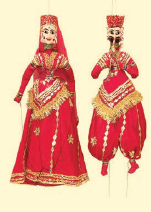
उपर्युक्त पंक्तियों को अर्थ की लय, विरामचिह्न तथा आरोह-अवरोह को ध्यान में रखते हुए कविता की तरह फिर से लिखिए।
Read the following extract.
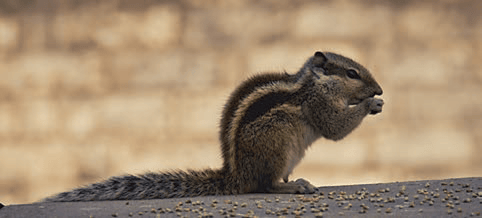
The Squirrel
He wore a question mark for tail an overcoat of gray he sat up straight to eat a nut he liked to tease and play and if we ran around his tree he went the other way.
Keeping in view the rhythm, pauses and stress, rewrite the stanza.
दिए गए कहानी के अनुच्छेद को इस तरह संपादित करें कि चरित्रों की बातचीत स्पष्ट हो सके।
उस अक्टूबर में मैं समिति के साथ वहाँ पूरा एक माह रुकी एक सुबह मोइना ने घोषणा की कि वह समिति वाली झोपड़ी में मेरे साथ रहेगी बिल्कुल नहीं खीरी ने कहा क्यों नहीं इतनी बड़ी झोपड़ी है एक बुढ़िया को कितनी जगह चाहिए तुम्हारे काम का क्या होगा काम के बाद आया करूँगी और वह एक जोड़ी कपड़े और एक नेवले का बच्चा लिए आ पहुँची ये बस जरा सा खाता है और बुरे साँपों को दूर भगा आता है उसने कहा अच्छे वाले साँपों को मैं पकड़ कर माँ को दे देती हूँ हमारी समिति की शिक्षिका मालती बोनाल ने मुझसे कहा आप तो तंग आ जाएँगी इसकी क्यों-क्यों सुनते हुए और वाकई वह अक्टूबर ऐसा बीता कि पूछो मत क्यों मुझे बाबू की बकरियाँ चरानी पड़ती हैं उसके लड़के खुद ही कर सकते है। मछलियाँ बोल क्यों नहीं पाती अगर कई सारे तारे सूरज से भी बड़े हैं तो वे इतने छोटे क्यों नजर आते हैं हर रात को तुम सोने से पहले किताबें क्यों पढ़ती हैं क्योंकि किताबों में तुम्हारी क्यों-क्यों को जवाब मिलते हैं
Edit the following passage from a story, so that the dialogues of the characters become clear.
Anil was watching a wrestling match when I approached him he was about 25 a tall lean fellow and he looked easy-going, kind and simple enough for my purpose I hadn't had much luck of late and thought I might be able to get into the young man's confidence you look a bit of a wrestler yourself I said a little flattery helps in making friends so do you he replied which put me off for a moment because at that time I was rather thin well I said modestly I do wrestle a bit whats your name Hari Singh I lied I took a new name every month that kept me ahead of the police and my former employers after this introduction
Anil talked about the well oiled wrestlers who were grunting, lifting and throwing each other about I didn't have much to say Anil walked away I followed casually hello again he said I gave him my most appealing smile I want to work for you I said but I can't pay you