Table of Contents

Chapter 11
Reproduction: How Life Continues
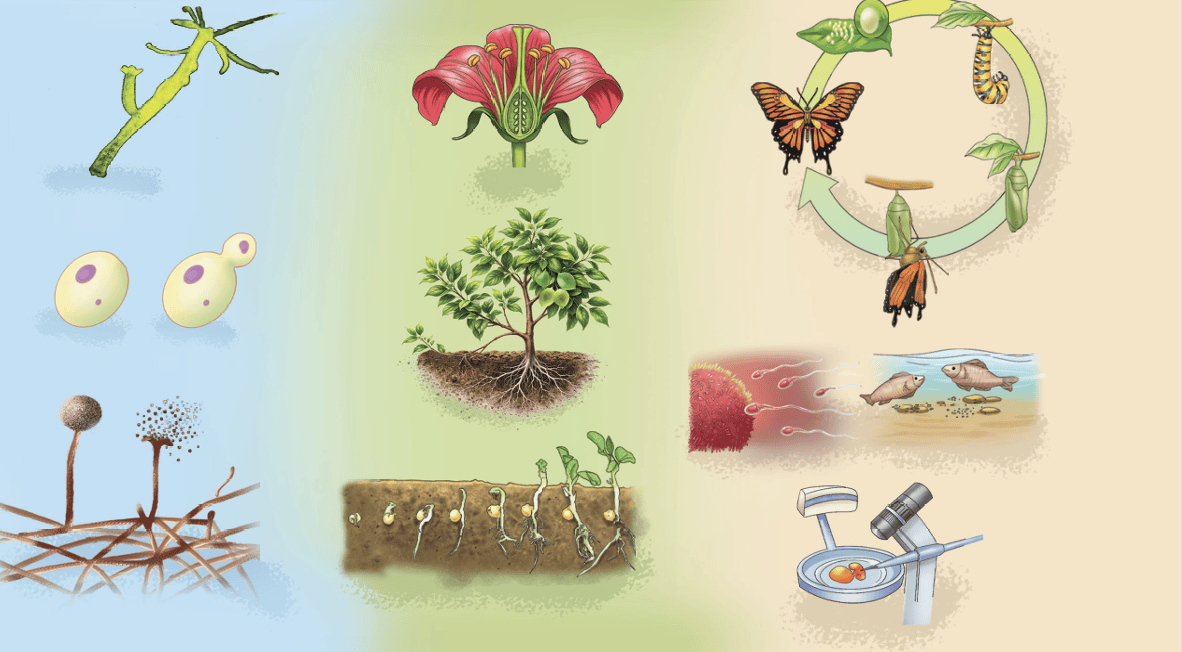
Think It Over
- When does a farmer prefer asexual or sexual methods of reproduction for crops production?
- Why do you think most complex animals and flowering plants use sexual reproduction, while many simple organisms, like yeast and hydra mainly reproduce asexually?
You have learnt that one of the important characteristics of living beings is that they reproduce. Every organism has a definite life span — it is born, grows, matures, reproduces and eventually dies. Reproduction is a biological process by which living beings produce new individuals of their own kind. This is how life on the Earth continues to exist. For example, a mango tree may grow old and die, but its seeds continue to grow as new mango plants. Similarly, cows give birth to calves, dogs to puppies, cats to kittens and humans to children.
You have also learnt that living beings reproduce in two main ways — asexually, where a single parent produces offspring that are almost exact copies of the parent and sexually, where offspring inherit a mix of characteristics from the two individuals. This mixing of characteristics may lead to the small differences between parents and their young ones. Accumulated over many generations, such differences help living beings adapt to changing environments, and sometimes even give rise to new kinds of species. In this chapter, we will explore how reproduction takes place in different organisms, including humans.
11.1 Asexual Reproduction
Asexual mode of reproduction is seen in many unicellular organisms like bacteria, amoeba, yeast and simple multicellular organisms (hydra, sponge). It is also seen in many plants. Recall the examples you studied in earlier grades.
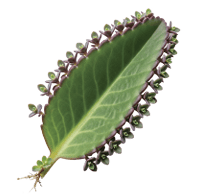
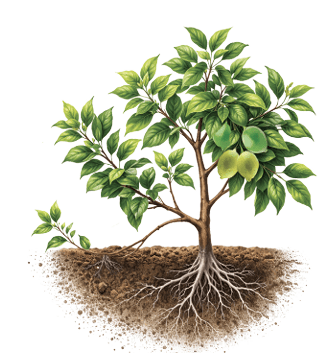
Many types of plants sprout new shoots and roots from their existing parts. For example, plants with fleshy underground stems, such as potato and ginger, sprout new plants without producing seeds. Money plant stem, sugarcane stem cuttings grow into a new plant, Bryophyllum (Fig. 11.1) leaves sprout tiny plantlets which eventually grow into new plants. All these are examples of vegetative propagation, which means that new plants arise from the vegetative parts, i.e., from growing parts of a plant. The key point about this type of reproduction is that it involves only one parent and hence, produces genetically identical individuals.
11.1.1 How is vegetative propagation in plants helpful in agriculture?
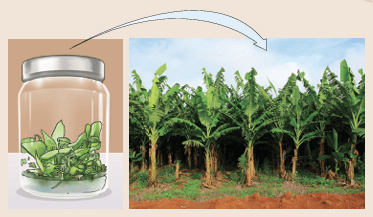
Asexual reproduction produces genetically identical individuals. This natural process has been adapted by scientists and horticulturists to develop several methods of vegetative propagation, such as cutting, grafting, layering and tissue culture for growing plants. These methods are widely used to efficiently propagate plants, and have significantly improved agricultural and horticultural practices. Such methods enable farmers to cultivate desirable crops on a large scale.
Activity 11.1: Let us explore
- Interact with gardeners working in your school garden or farmers working in a field.
- Observe the techniques of cutting, grafting and layering followed by them. Discuss these techniques with them and record your observations in your notebook.
Cutting
- Note the following points while observing the technique of cutting in the field.
- Does the gardener, scientist or horticulturist cut the overgrown branches of a plant at the end of its growing season? (Different plants have different growing seasons).
- Observe them prepare the cuttings from a plant for the purpose of growing new plants. Note the average length of the cuttings.
- Count the number of nodes and internodes on the cuttings.
- Collect the cuttings of the shoots in the morning for planting.
- Remove leaves from the lower half of each cutting.s
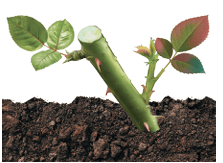
- Insert the cuttings up to approximately half of their length in the soil mixed with compost at an angle of about 45– 60° from the soil surface (Fig. 11.2).
- Water them regularly and observe the change, if any.
Bridging Science and Society
Grafting
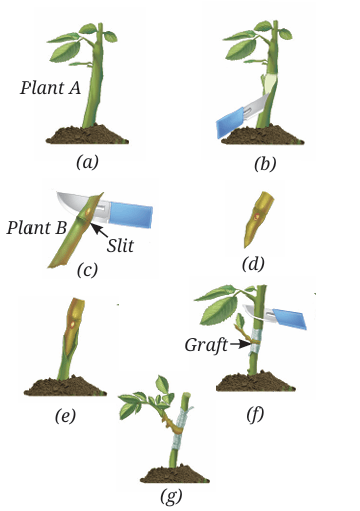
- For grafting, take a healthy rooted plant (Plant A) (Fig. 11.3a) (for example, a wild rose variety) and a healthy stem piece from another plant (Plant B) of other varieties (for example, a yellow rose plant and/or a pink rose plant) (Fig. 11.3c and Fig. 11.3d).
- Create a wound or a slit on a twig of Plant A (Fig. 11.3b).
- Insert and fit the cutting of stem of Plant B into the slit of stem of Plant A (Fig. 11.3e).
- Protect the wound or slit by using a cotton cloth or by wrapping f ilm to avoid pests entering the graft until it heals (Fig. 11.3f). Cut the other branches of Plant A.
- Water the plant regularly and observe the growth of Plant B along with Plant A.
Layering
- For layering, select a flexible, thin twig of a tree or a shrub, such as a lemon and bury the middle part of the twig under the soil surface (Fig. 11.4).
- Water it regularly and observe the growth of new leaves on the twig buried in the soil.
- After 10 – 15 days, the roots will develop from the area of the twig buried in the soil.
- Once roots have developed, cut the twig from the parent plant, so that it can grow as a new plant.
These are some of the methods of asexual reproduction through which different varieties of plants can be propagated.
Bridging Science and Society
You have learnt about various methods of vegetative propagation in plants. Let us examine asexual reproduction in other organisms.
Activity 11.2: Let us explores
- Take 20 mL of sugar solution (1 g in 10 mL) in a test tube.
- Add a pinch of yeast granules to it and then place a cotton plug on the mouth of the test tube.
- Keep it undisturbed in a warm place to allow the yeast to become active.
- After 1 – 2 hours, place a small drop of the yeast mixture from the test tube onto a glass slide and mount it with a coverslip.
- Observe the slide under a compound microscope at different magnifications and draw a diagram of what you observe.
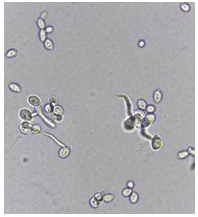
Do you observe any small, round outgrowths (buds) emerging from the parent yeast cells as shown in Fig. 11.6? Do these features indicate that the yeast is duplicating? How do these observations help you in understanding reproduction in yeast?
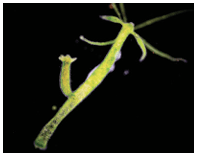
In organisms, such as hydra (a multicellular animal), repeated cell division at a specific site on the parent body produces a small outgrowth called a bud (Fig. 11.7). The bud enlarges and separates from the parent to live independently. This process is called budding. In hydra, one can often see many buds growing on the parent’s body at the same time.
Are there other methods of asexual reproduction in organisms? You have learnt that food like fruits get rotten by microbes (fungi). Where else do we find these microorganisms? You may have noticed that, if you leave cooked food on the kitchen counter for a day in warm weather, it starts to smell and may even grow fuzzy patches. Black patches are often seen on a damp wall. These are microorganisms. Where do these microorganisms come from? For long, people thought living things arose spontaneously from non-living matter. Experiments by Louis Pasteur proved that new life always comes from pre-existing life. He found the germ theory of disease, strengthened the cell theory (all cells arise from pre-existing cells), and led to practices like food and instrument sterilisation. We can explore how these microogranisms reproduce more closely by performing a simple activity that you can conduct at home or in school.
Activity 11.3: Let us experiment
- Take a small slice of bread or a roti and lightly moisten it with a few drops of water.
- Prepare a moist chamber using a plastic box or steel dabba. Place a thin layer of cotton in it, cover it with tissue paper and moisten it with pre-boiled water. Put the slice of bread or roti on the wet cotton bed covered with tissue paper.
- Keep the moist chamber in a warm and dark place, away from direct sunlight (if the bread or roti starts drying, add a few drops of water to keep it moist).
- Observe the bread or roti every day for any changes. Record your observations without touching it directly
- After three days, observe the surface of the bread or roti carefully using a magnifying glass. Do you notice the growth of mould?
- When enough mould grows and spreads on it, carefully take the box to the school laboratory.
- With the help of a needle, carefully transfer a little mould onto a microscope slide. Under the guidance of your teacher, add cotton blue stain — a coloured dye to help see it better.
- Observe the mould under the microscope and draw its diagram based on your observations.
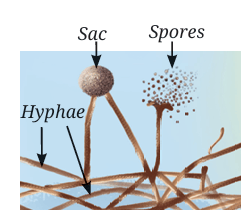
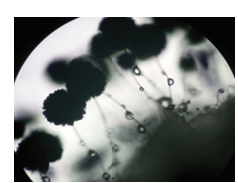
- Compare the diagram you have drawn with Fig. 11.8 and share your observations with your classmates.
Bridging Science and Society
Threads of Curiosity
Do you observe thread-like structures with a round sac at the tip? Do you also see tiny round structure (spores) inside the sac? Where did the mould on your bread slice come from? It was not present when the bread was fresh. You may have observed fungi growing on rotten fruits or while preparing manure. In these cases, fungi grew due to spores present in the air. Similarly, in the case of bread, the mould grew from the spores already present in the air, which settled on the moist bread and began reproducing rapidly. Spores are formed in a sac-like structure (Fig. 11.8a) or on a swollen vesicle on a long strip of fungal hyphae (Fig. 11.8b).
Spores are produced in huge numbers (millions from one mould colony). Spores are lightweight, usually single-celled and float easily through air currents, waiting for moisture and nutrients to germinate quickly into a new individual.
In all the organisms studied so far in this chapter, the central process behind asexual reproduction is mitosis, a type of cell division that produces two daughter cells, each having the same number of chromosomes identical to the parent cell. Because of this, the offspring produced are genetically identical to the parent and are called clones. This method is fast and helps organisms increase their population quickly, especially when environmental conditions are favourable.
11.2 Sexual Reproduction
Sexual reproduction involves two parents in the formation of a new individual. This means both parents contribute to the genetic material of the offspring. However, if each generation were to receive the full set of chromosomes from both the parents, the chromosome number would double in every generation. This biological problem is solved by a special type of cell division known as meiosis.
11.2.1 How does meiosis help create variations in sexual reproduction?
Each species has a fixed number of chromosomes in their cells. Chromosomes are thread-like structures present in the nucleus of a cell and they carry genetic information. Humans have 23 pairs of chromosomes, that means, each pair consists of one chromosome each from two different individuals — with a total of 46 chromosomes.
Meiosis is a special type of cell division that forms gametes. In meiosis, the chromosome number of a parent cell (diploid) is reduced to half (haploid) in daughter cells. The resulting haploid cells are used only for reproduction and are called gametes. In animals, male gametes are called sperm and female gametes are called eggs. You have learnt about them already. In plants, the pollen grain contains male gametes and delivers them to an ovule which contains the female gametes (eggs). During meiosis, the chromosomes of each pair separate so that each gamete receives only one chromosome from each pair. This means that every human gamete has 23 chromosomes, each carrying genetic information for many characters. How many combinations of characters can gametes carry?
Activity 11.4: Let us explore
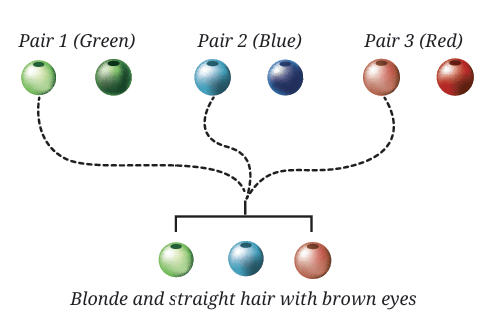
- Take three pairs of beads of different colours (Fig. 11.9), each pair representing two contrasting characters on different chromatids of different chromosomes, such as:
- Pair 1 (green): One light green bead and one dark green bead representing blonde and black hair colour, respectively on different chromatids of chromosome 1.
- Pair 2 (blue): One light blue bead and one dark blue bead representing straight and curly hair, respectively on different chromatids of chromosome 2.
- Pair 3 (red): One light red bead and one dark red bead representing brown and black eye colour, respectively on different chromatids of chromosome 3.
- Make a combination from it by randomly picking one bead from each pair.
- Write your combination as ‘light green, light blue, light red’.
- How many combinations can you make with just these three pairs of characters? Each time you make a combination using beads, you will get either the same combination or a different one. With just three pairs of characters, eight combinations are possible.
- Imagine how many combinations are possible with 23 pairs of chromosomes, each carrying genetic information for many characters.
This random mixing provides many combinations, making children genetically different from their parents and also from their siblings. Each of us receives a unique combination of chromosomes. This creates variation among individuals, which is important for the survival of a species. Variation helps some individuals adapt better to changing environments and over time, this process contributes to evolution. For example, some people can tolerate low oxygen levels at high altitudes, or digest milk in their adulthood.
11.2.2 Sexual reproduction in flowering plants
Flowering plants, also called angiosperms, are the most diverse group of plants on the Earth. Flowers serve as reproductive organs in angiosperms, however, non-flowering plants like pines also reproduce sexually. You will study them in the next chapter.
Look at the herbs, shrubs and trees in your surroundings. Their leaves perform photosynthesis, their roots absorb water and nutrients from the soil, and their stems provide strength to the plant, these are some of the functions of a plant. Flowers also enhance the aesthetics of the plants as they are coloured and/or fragrant. How are these features of flowers useful for reproduction?
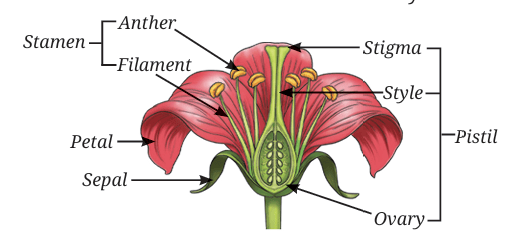
Explore flowers and their buds on some plants. Record your observations in your notebook. Do you observe thin, flat, green covering, and coloured projections present in both? In flower buds, the coloured projections are often covered by a green covering. In the bud stage, green covering around all the parts is the outermost whorl of the flower. This structure is called a sepal. Do you think that sepals protect flowers in the bud stage, along with other parts of the flower when it blooms? The coloured projections of flowers are called petals (Fig. 11.10). Do all flowers have these two parts? What are the other parts of a flower?
Activity 11.5: Let us explore
- Collect different types of flowers from your surroundings.
- Carefully observe each part of the flowers you have collected, starting from the outer whorl to the inner one.
- Record the presence of various floral parts in the different flowers that you collected in Table 11.1.
- Analyse the function of each part of the flower based on visible characters.
- Cut a transverse and a longitudinal section of the ovary (swollen base of the pistil) and observe it under a dissecting microscope.
- Record any other feature(s) in Table 11.1.
- Draw a diagram of the structure you observed under the microscope.
Table 11.1: Observation table to study the parts of a flower
| S. No. | Flower parts | Presence of floral parts in different flowers | Other feature(s) | Guess the function of flower part | |||
|---|---|---|---|---|---|---|---|
| A | B | C | D | ||||
| 1. | Sepal | Yes | |||||
| 2. | Petal | Yes | |||||
| 3. | Stamen | No | |||||
| 4. | Pistil | Yes | |||||
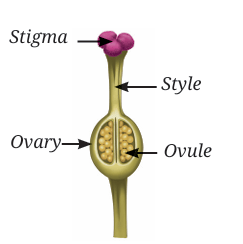
A complete flower has four parts — sepals, petals, stamens and pistil. You might have noticed that in some flowers both sepals and petals are fused. Can you guess the function of the most attractive part of a flower — the coloured petals? The stamen is the male part (Fig. 11.10). It consists of a filament and an anther, which produces pollen grains containing male gametes. The pistil is the female part that has three subparts — stigma, style and ovary (Fig. 11.11). The stigma is located at the tip, and may be flat and/ or sticky. The style is a thin long tube which connects the stigma to the ovary. The ovary contains ovules and each ovule has an egg cell (female gamete). You have learnt that the transfer of pollen from stamen to stigma is essential for the formation of fruits. How can you investigate it?
Activity 11.6: Let us investigate
- Identify sweet pea (matar) or garden pea plants in a garden or a nearby field.
- Select two juvenile (less developed) flower bud and three freshly blossomed flowers on the same pea plant.
- Carefully remove the stamens from one of the two selected flowers buds and one of the three selected flowers.
- Take muslin cloth bags and loosely wrap them around the flower bud, the flower bud of which stamens are removed, the flower of which stamens are removed and a freshly blossomed flower (Fig. 11.12).
- Leave one freshly blossomed flower uncovered (without muslin cloth bag).
- Observe them regularly and notice the development of fruits in place of the flowers that were not covered with muslin cloth. Allow them to grow for a few more days.
- Once the pods are fully developed in the flowers without muslin cloth, remove the muslin cloth from all the wrapped flowers and observe them.
- Note your observations in Table 11.2.
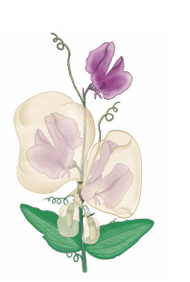
Table 11.2: Observation table to study pollination in a pea plant
| Treatments | Flower bud (wrapped with muslin cloth bag) | Flower bud with removed stamens (wrapped with muslin cloth bag) | Flower with removed stamens (wrapped with muslin cloth bag) | Flower (wrapped with muslin cloth bag) | Flower (without muslin cloth bag) |
|---|---|---|---|---|---|
| Fruit formation (Yes/No) |
11.2.3 How does the process of pollination occur in f lowers?
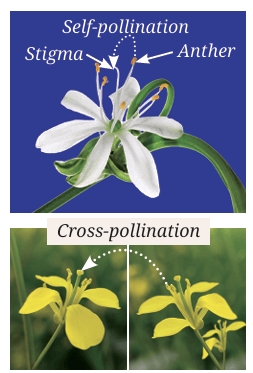
In the Activity 11.6, we stated that the process of pollination is the transfer of pollen to the stigma of a flower. The transfer of pollen occurs to the stigma of the same flower or another flower of the same plant, is called self-pollination (Fig. 11.13).
If the pollen is transferred from the anther of a flower of one plant to the stigma of a flower of another plant of the same type, the pollination is called cross-pollination (Fig. 11.13).
The transfer of the pollen grains to the stigma is important for the formation of fruits and seeds. Nature has provided plants with various strategies for pollination to occur. What do you think will happen if pollination does not occur?
11.2.4 Pollination strategies and reproductive success
Pollination depends on external agents called pollinators, such as wind, water, insects (bees, butterflies), or birds. Pollination by wind is seen in plants like wheat, maize and rice, where pollen grains are light and small, produced in large numbers, and the stigma is long and feathery to trap them. In aquatic plants, such as Vallisneria and Hydrilla, pollination occurs through water, with currents carrying the pollen from one flower to another. Many plants, including sunflower, hibiscus and marigold are pollinated by insects, such as bees and butterflies. Their flowers are often brightly coloured, produce nectar, and give off fragrance to attract pollinators. The pollen grains are large, sticky or spiny, so they can attach to the insect’s body and the stigma is also sticky to receive them. Some flowers like those of the coral tree and hibiscus plant, are pollinated by birds, such as Indian white-eye and sunbirds. Let us see how fruits and seeds are formed.
11.2.5 Fertilisation and seed formation
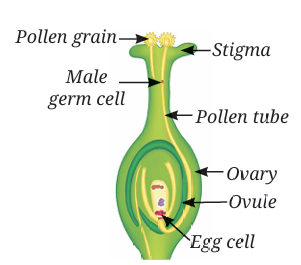
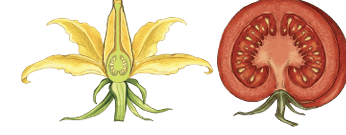
Once the pollen reaches a compatible stigma, a remarkable process begins. Pollen grains produce pollen tubes that grow down through the style into the ovary. The male gamete moves through this tube and arrives at the ovule, where it fuses with the egg cell (Fig. 11.14). This fusion of gametes is referred to as fertilisation and it marks the beginning of a new life. The fertilised egg is called a zygote, which later develops into an embryo. In the meantime, the ovary surrounding the ovules enlarges and develops into a fruit, while the ovules develop into seeds inside it (Fig. 11.15). Seed dispersal takes place by wind or water and animals.
When conditions like water, air and temperature are favourable, the seed germinates and grows into a new plant. Thus, sexual reproduction not only produces new plants but also creates variation, helping plant species survive and adapt to their environment.
What is the approximate success rate of the common strategies — wind pollination and insect pollination — with respect to the seed formation?
Activity 11.7: Let us find out
Studies of pollen production and seed formation by two different pollination strategies in different flowers show the following approximate trends (Table 11.3) —
Table 11.3: Pollen production and seed formation data
| Pollination strategy | Approximate pollen grains released per flower | Estimated average number of seeds formed |
|---|---|---|
| Wind-pollinated grasses (e.g., maize, wheat) | 5,00,000 –10,00,000 | 50 –200 |
| Insect-pollinated plants (e.g., sunflower) | 20,000 – 40,000 | 800 –1,000 |
- Compare and analyse the two strategies in terms of (Table 11.3) —
- Pollen to seed ratio
- Efficiency of pollination and seed formation
- Explain why producing a very large number of pollen grains can still be an effective pollination strategy.
Pause and Ponder
- In a china-rose (hibiscus or gudhal) plant, a pollen tube grows and continues through the style after pollen lands on the stigma. Which process is about to happen next?
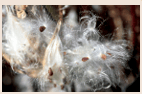
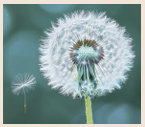
- Look at the pictures (Fig. 11.16) of calotropis (madar) seeds and dandelion seeds given below. Can you guess what kind of seed dispersal these seeds are adapted for?
- A farmer plants two varieties of maize side by side, but notices that seeds form only when pollen from one variety reaches the stigma of the other. What type of pollination is this?
Meet a Scientist
 P. Maheshwari, known as the ‘Father of Indian Embryology’, was a leading scientist in the f ield of embryology which is the study of plant reproductive organs. He developed the technique of in-vitro fertilisation in flowering plants by successfully fusing an egg and male gamete in a test tube to create new hybrid plants. He was also one of the first scientists to grow plant embryos on artificial nutrient media. His book, An Introduction to the Embryology of Angiosperms (1950), became a classic and is still widely used by scientists around the world.
Bridging Science and Society
11.3 Sexual Reproduction in Animals
Reproduction in animals takes place through asexual and/or sexual method(s). We have studied different methods of asexual reproduction in different organisms, such as budding and spore formation, earlier in this chapter.
In many aquatic animals exhibiting sexual reproduction, such as frogs and most fish, fertilisation occurs outside the body. The female releases eggs into the water, and the male releases sperm over eggs for fertilisation to take place. This method of fertilisation is called external fertilisation. Although a large number of eggs are laid, many are destroyed by water currents or eaten by other animals. In reptiles, birds and mammals, fertilisation takes place inside the body of the female. This is called internal fertilisation. Here, the chances of survival of the young ones are generally higher because the fertilised egg or embryo is protected more in internal fertilisation (Table 11.4).
Pause and Ponder
- Why do animals with external fertilisation generally produce more eggs than animals with internal fertilisation?
- In animals, which fertilisation method the gametes are more protected?
11.4 Variations in Reproduction in Animals
Animals show a wide variety of methods of sexual reproduction. However, all animals face the basic challenge of ensuring that the male and the female gametes meet, and that the young ones survive long enough to grow and reproduce. Study the information given in Table 11.4 for four categories of animals.
Table 11.4: Variation in reproductive strategies among animals
| Animal | Habitat | Mode of fertilisation | Number of eggs produced | Estimated survival of young ones |
|---|---|---|---|---|
| Fish | Water | External | 100s – 1000s at a time | Low |
| Frog | Water/land | External | 5,000 – 50,000 at a time | Low |
| Lizard | Land | Internal | 2 – 20 at a time | Moderate |
| Bird | Water/land | Internal | 1 – 15 at a time | Moderate to High |
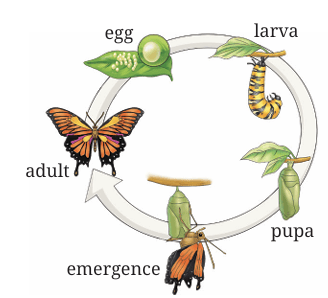
Fish, amphibians, and insects produce several hundred to several thousand eggs at a time with yolk, which contains nutritive substances to nourish the developing embryos. The mother’s body cannot provide such large quantities of yolk for so many eggs. The strategy these species adopt is that the yolk in the egg is just enough to produce a larva, which hatches from the egg. The larva, then gets nutrition by eating organic wastes like rotten food, manures and so on, and grows. This stage is an intermediate stage in its development, which is essentially a feeding stage. Once enough nutrition is accumulated, a transformation takes place and the adult body is formed — as seen in organisms, such as butterfly (Fig. 11.17) and frogs.
In contrast, reptiles and birds lay eggs, and each egg contains enough yolk to nourish the developing embryo until it hatches into a young one. In mammals, the zygote grows and develops inside the female body.
In some species, when the young ones are born, they are ready to find their own food, whereas in others an extended period of post-hatching or post-birth feeding and care is necessary. This broadly depends on how long the embryo develops inside an egg or inside the mother’s body. Mammals typically feed their young ones via breast milk for some duration after birth.
11.5 Reproduction in Human Beings
11.5.1 Reproductive maturity
You have learnt about the physical and emotional changes that take place as a child grows into an adult, when reproductive organs mature and begin producing gametes (sperm in male and egg in female).
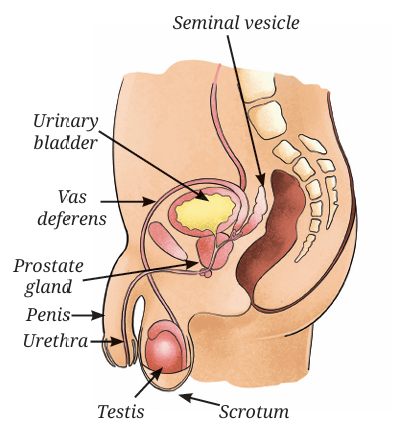
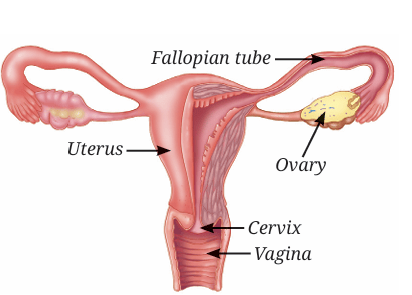
The human reproductive system consists of special organs (Fig. 11.18 and Fig. 11.19). When a sperm meets an egg inside the female body, they form a zygote that develops into an embryo and eventually into a foetus in the uterus. In this section, we will study how gametes form and meet, and how new life develops in human beings.
11.5.2 What are the parts of the male reproductive system?
The male reproductive system (Fig. 11.18) has organs that produce male germ cells called sperm and help them transfer to the female body. Sperm are produced in two oval-shaped organs called testes (testis singular), present in a pouch of skin called the scrotum. The scrotum keeps the testes slightly cooler than normal body temperature, which is necessary for sperm formation. The testes also produce a hormone (chemicals that regulate different functions), which controls sperm production and causes the physical changes seen in boys during puberty.
From the testes, sperm travel through a long tube called the vas deferens, which ultimately opens into the urethra, a common passage for the urine and the sperm. Glands like the seminal vesicles and the prostate add f luids to nourish the sperm, and help them remain active and move. Each sperm has a head containing genetic material and a long tail that helps it swim towards the egg.
11.5.3 What are the parts of the female reproductive system?
Look at the Fig. 11.19 and identify various parts of the female reproductive system. The female reproductive system has a pair of ovaries, oviducts (fallopian tubes), a uterus, and a vagina. The ovaries produce the female germ cells (eggs) and also release hormones.
The hormones bring about changes during puberty. The oviducts connect each ovary to the uterus. The uterus is a bag-like structure where a foetus develops. The uterus opens into the vagina through a narrow passage called the cervix.
Meet a Scientist
 In-vitro Fertilisation (IVF) is a medical technique in which an egg and a sperm are combined outside the female body, usually in a laboratory dish. The resultant fertilised egg is then implanted in the uterus to begin a possible pregnancy. A baby born through this method is commonly known as a test tube baby, although the process actually occurs in a culture dish, not in a test tube. India holds a significant place in the history of IVF. In 1978, Subhash Mukhopadhyay of Kolkata pioneered India’s f irst test tube baby, Kanupriya Agarwal (nicknamed Durga), through experimental IVF work.
 11.5.4 How are reproductive cells made?
The process of the formation of gametes is called gametogenesis. It takes place in the testes and the ovaries. You have learnt in Activity 11.4 that gametes are formed by meiosis, in which the number of chromosomes is reduced to half. In humans, cells have 46 chromosomes, but sperm and eggs have only 23. This is important so that when they combine, the zygote has the same number of chromosomes as parents to form an individual. In males, gametogenesis results in the production of numerous tiny motile (moving), active sperm. In females, gametogenesis results in the formation of a single large egg. In sexual reproduction, male and female gametes differ greatly in size, number and structure (Table 11.5).
Table 11.5: Structure, size, and number of male and female gametes
| Feature | Sperm | Egg |
|---|---|---|
| Size | Very small | Large |
| Number produced | Millions | Few |
| Stored nutrients | Absent | Present |
| Motility | Actively motile | Non-motile |
This asymmetry between the male and female gametes is seen across most of the animals.
11.5.5 What happens when a sperm meets an egg?
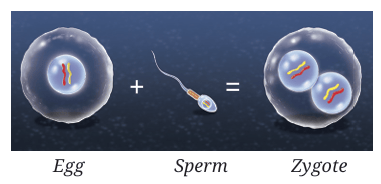
At birth, a girl’s ovaries already have millions of immature eggs. From puberty onwards, usually one mature egg is released every month from one of the ovaries. This is called ovulation. Before ovulation, the uterus starts to prepare itself; the inner lining becomes thick. As the ovulation happens, the egg travels from the ovary to the oviduct. During sexual intercourse, millions of sperm enter through the vagina. They swim through the reproductive tract and may reach the egg in the oviduct. If a sperm encounters an egg and succeeds in fusing with it, a zygote is formed (Fig. 11.20). The inner lining of the uterus becomes thicker and richer in blood vessels. The zygote undergoes a series of mitotic divisions while travelling to the uterus, and implants into the inner lining of the uterus to receive nourishment for development. This implantation marks the beginning of pregnancy.
11.5.6 What happens when an egg is not fertilised?
If an egg is not fertilised, it remains viable for about a day and then it degenerates. The inner lining of the uterus, which became thick and rich with blood vessels to receive and nourish the developing zygote, is no longer needed. So, the lining sheds. This lining, along with some blood, leaves the body through the vagina. This process is called menstruation or a period, and usually lasts 3 to 7 days. You have read about this process earlier. Now, you can connect it to the events of ovulation and fertilisation.
The cycle of ovulation, preparation of the uterus and menstruation repeats typically every 21 – 35 days (often around 28 days), and usually begins at puberty, between the ages of 10 – 14 in girls and continues till menopause i.e., around age 50 (Fig. 11.21).

Threads of Curiosity
What determines a baby’s biological sex?
So far, you have learnt that every person has two sex chromosomes. Females have XX and males have XY chromosomes. The mother always contributes an X chromosome to a baby and the father contributes either an X (Female: XX) or a Y (Male: XY) chromosome. Now, from the above information, can you predict who determines the sex of a baby?Bridging Science and Society
Hygiene practices to follow during menstruation (period):
- Use menstrual products, such as sanitary pads (preferably biodegradable ones), tampons, menstrual cups, etc.
- Wash regularly — clean your genital area with water. Avoid using soap, as this can disrupt the natural bacterial balance.
- Hand washing is the key — always wash your hands with soap and water, before and after changing your sanitary pad.
- Proper disposal of used products — wrap used pads in newspaper or the wrapper they came in before disposing them in a bin. Do not flush them down the toilet.
- Proper care for reusable products — if you use reusable pads, follow the manufacturer’s instructions for cleaning. Ensure reusable pads are completely dry before their next use.
- Change menstrual products regularly — change pads in 4 – 6 hours, or more often if your flow is heavy.
Period is your pride
11.5.7 Pregnancy and childbirth
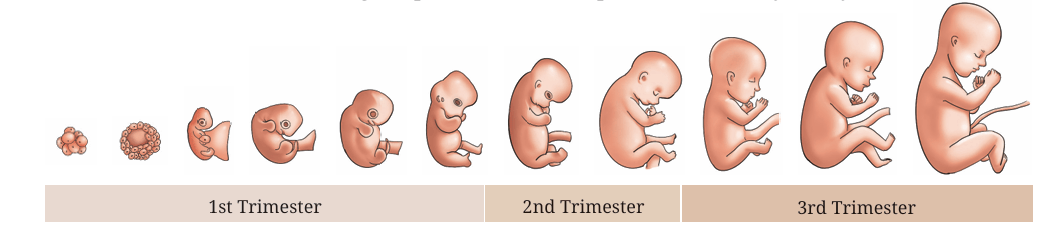
Pregnancy in humans lasts about nine months and is divided into three stages called trimesters. In the first trimester, the fertilised egg develops into an embryo during the first two months and major organs start forming during this time. From about the ninth week, the developing embryo is called a foetus, which continues to grow and develop. In the second trimester, the foetus grows bigger and stronger, and the mother can usually feel its movements. In the third trimester, the baby grows rapidly and gets ready for the life outside the womb (Figure 11.22). The uterus protects and nourishes the baby throughout this time. During childbirth, strong contractions of the muscles of the uterus help push the foetus out through the birth canal. In some cases, if a normal vaginal birth is not possible or safe for the mother or the foetus, doctors may use medical or surgical procedures to help deliver the baby safely.
After birth, a baby needs special care. Breastfeeding is essential because a mother’s milk provides complete nutrition and protects the infant from many diseases. Newborns must be kept warm, vaccinated on time and handled gently. The mother’s well-being is equally important. She requires nutritious food and adequate rest, and it is recommended for her to avoid harmful habits, such as smoking, consuming alcohol, or taking any medicines without medical advice. The health of the mother and the baby are closely connected, and require proper care and support.
Pause and Ponder
- Ravi suddenly notices that he is growing taller rapidly, his shoulders are broadening, and his voice cracks. What stage of life is he entering?
- Rina’s period occurs every 28 days. Her last period was on the 5th of March. On which day is she most likely to get her next period?
- A human zygote has just formed. How many chromosomes does it have?
11.5.8 Mother’s health during pregnancy
A woman’s health during pregnancy plays a vital role in the baby’s growth and safety. She should eat a balanced diet rich in proteins, vitamins and minerals, attend regular medical check-ups, and follow her doctor’s advice regarding light exercise and rest. Her emotional well-being is also important, and support from family members helps her remain healthy and stress-free.
Threads of Curiosity
Bridging Science and Society
11.5.9 What does it mean to be sexually mature?
As we grow through adolescence, our bodies undergo many changes. A significant aspect of this growth is sexual maturation, meaning our bodies are becoming capable of reproduction. It is gradual and takes place alongside the overall body’s growth but this does not mean we are fully ready for adult responsibilities. Sexual maturity (like the production of sperm in boys and menstrual cycles in girls) happens gradually, but emotional maturity takes longer. Being emotionally mature means handling feelings, communicating clearly and making thoughtful decisions.
11.5.10 How can unwanted pregnancies and infections be prevented?
During adolescence, the body becomes capable of reproduction but emotional and social maturity take longer to develop. Being ready for sexual activity is not only about physical changes but also about being able to make thoughtful and responsible decisions. Such responsible choices help prevent unplanned pregnancies, sexually transmitted infections and support healthy relationships.
Since sexual activity involves close physical contact, some infections can be transmitted from an infected person to an uninfected person. These are called Sexually Transmitted Infections (STIs) and include gonorrhoea, herpes, syphilis, genital warts, and HIV (which can eventually lead to AIDS). Some of these are not curable yet. Using condoms can prevent their transmission and also help prevent pregnancy.
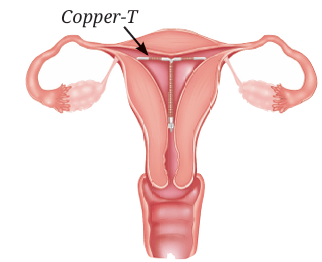
To prevent unwanted pregnancy, different contraceptive (pregnancy-preventing) methods can be used. Some of them act as barriers, like condoms or vaginal covers, which stop sperm from reaching the egg. Some methods involve medicines (oral pills) that change the release of eggs by altering hormones, though these may have some side effects. Another method is the use of Intra-Uterine Devices (IUDs), such as copper-T that are placed in uterus to avoid pregnancy, though they may sometimes irritate the uterus (Fig. 11.23).
Pause and Ponder
- What protective devices can be used during sexual activity to reduce the spread of STIs?
- If a couple uses oral contraceptive pills but not condoms, which risks remain and why?
Surgical methods are also used to stop unwanted pregnancies. These include blocking the vas deferens in males or the fallopian tubes in females, so that the sperm and the egg cannot meet. In some cases, unwanted pregnancies can be removed by surgery, generally only within the first trimester of pregnancy, when the embryo is very small. This procedure is called abortion. The practice of self-selective abortion is a significant concern, often driven by a preference for a specific gender. This practice can lead to a marked imbalance in the societal sex-ratio. So, prenatal sex determination is strictly prohibited by law in India. This is important to maintain sex ratio for healthy forward looking society.
Pause and Ponder
Bridging Science and Society
At a Glance
- Reproduction is the biological process by which living organisms produce new individuals of the same species. It ensures the continuity of life and the transfer of genetic information.
- There are two main types of reproduction: asexual and sexual.
- Asexual reproduction occurs in different ways, such as budding, spore formation and vegetative propagation in plants.
- A flower is the reproductive organ of a plant, with male stamen and female pistil.
- Pollination is the process of pollen transfer from anther to stigma, through self- or cross-pollination.
- During fertilisation, the pollen tube carries the sperm cells to the ovule, where it fuses to form a zygote. After fertilisation, the ovule becomes the seed and the ovary becomes the fruit.
- In humans, the testes produce sperm. Glands like testes, seminal vesicles and prostate produce male hormones.
- Ovaries produce eggs and female hormones. Ovulation takes place around the 14th day of the menstrual cycle.
- Birth control methods include condoms, pills, IUDs (Copper-T), etc.
- If fertilisation occurs, the zygote develops into an embryo and pregnancy begins. In human females, pregnancy usually lasts about nine months, during which the mother’s body undergoes many changes to support the baby’s growth.
- It is important for the mother to have proper nutrition, check-ups and rest, avoid harmful substances for the baby’s healthy growth and support her own body during pregnancy.
Revise, Reflect, Refine
- A flower’s anthers are removed before it matures. Later, pollen from another plant of the same species is dusted onto its stigma and seeds are produced. Which process has been ensured here?
- Self-pollination
- Cross-pollination
- Fertilisation
- Tissue culture
- Arrange the following stages of sexual reproduction in plants in the correct order:
- Pollen germination on stigma
- Fertilisation
- Pollination
- Formation of zygote
- Assertion (A): The zygote formed after fertilisation immediately attaches to the uterus wall.
Reason (R): The uterus wall is always prepared to receive the zygote.
- Both A and R are true, and R is the correct explanation of A.
- Both A and R are true, but R is not the correct explanation of A.
- A is true, but R is false.
- A is false, but R is true.
- Why does asexual reproduction produce offsprings that are genetically identical to the parent?
- Explain why the menstrual cycle stops during pregnancy.
- Why are flowers that bloom at night white or light in colour as compared to flowers that bloom during the day?
- Why do vegetatively propagated plants tend to be more vulnerable to diseases than sexually reproduced plants?
- If all flowers in a type of plant were only capable of self-pollination, how would it affect the genetic diversity over several generations? Explain.
- A farmer wants to produce a large number of genetically identical plants quickly. Suggest suitable reproduction methods and explain why they are effective.
- Suresh prepares slides with pollen grains in different sugar concentrations (0%, 2.5%, 5%, 7.5%, 10%) to study the germination of pollen.
- What are the different hypotheses which can be tested using this set-up?
- What parameters should be kept the same in this set-up?
- Look at the picture given below and think in line with the given prompts and find out which type(s) of pollination might have been followed in these flowers —
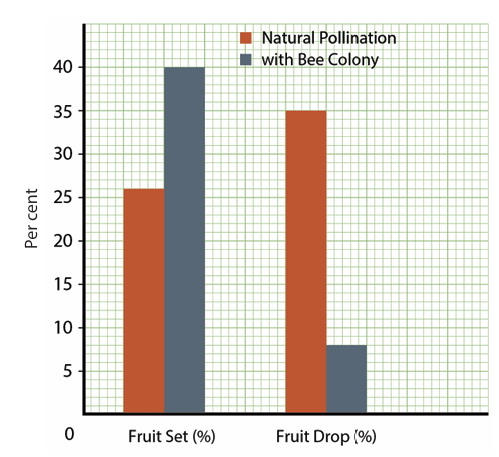
- In the lower Himalayan region of northern India, apples are an important cash crop that contribute significantly to farmer’s livelihoods. The fruit yield in apple cultivation is declining continuously, associated with climate change and a significant decline in the population of natural pollinators. A researcher-farmer group set up two experimental apple orchards at two distinct locations: Places A and B. In apple orchards at Place A, they allowed natural pollinators Per cent to pollinate the flowers of the apple. In apple orchards at Place B, they applied mixed farming techniques of beekeeping. Along with honey, the farmer yielded apples. The yield of apples is depicted in Fig. 11.24, in terms of fruit setting (number of fruits/the total number of corresponding fruit-bearing branches) and fruit drop (premature falling of developing fruits) in the two types of experimental places of apple orchards.
- What are the hypotheses the researcher farmers group has thought of for this investigation?
- What are the different parameters in the experiment?
- Compare and analyse the data of two experimental orchards Places A and B, in terms of high yields of apple fruits.
- Based on your analysis, what do you infer from the data?
- A student claims, “In humans, ovulation always happens on day 14 of the menstrual cycle”. Critically examine this claim and state whether the claim is correct or not. Give at least two reasons for your answer.
| Tomato | Wheat | Papaya |
|---|---|---|
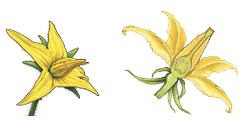 | 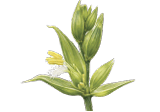 |  |
| Stamens cover the stigma | Flowers open after pollination. | Male and female flowers are often borne on different papaya trees. |
The Journey Beyond
- Read about the ‘Seed Village Programme’ (Beej Gram Yojana) run by the Government of India. Why is it important to save indigenous seeds?
- Prepare a report on IVF, its uses and drawbacks. Discuss it with your class.
- Conduct a survey on crop fields. Interact with farmers on the crops grown on their farms and farm animals based on the following points —
- Which crops do they grow through vegetative propagation?
- Which crops do they grow using seeds?
- Which seeds do they use — indigenous varieties or hybrid varieties? Why? How do they develop hybrid varieties in their fields?
- List the indigenous breeds and hybrid breeds of the farm animals they are using in their farming practices and how are they different from each other?
- Discuss in class, and make a report on how asexual and sexual methods of reproduction are useful in agriculture.
- Explore the crop fields near your school and find out different pollination strategies adopted by different cereal and vegetable crop plants. Talk to farmers on the following points —
- Pollinators of different crops
- Reason for the declining population of pollinators and their solutions
- Assist your elders in cutting fruits in the kitchen. While cutting fruits like lady finger, tomato, brinjal, capsicum, papaya, orange, muskmelon and more, make your observations based on the following and draw diagrams —
- When you cut a fruit longitudinally (Longitudinal Section: L.S.)
- When you cut a fruit transversely (Transverse Section: T.S.)
- Attachment of seeds
Observe the pollinators visiting your school garden. Notice and record their activity. Let each student take pictures of at least five different types of pollinators and which plants they visit. Compile the data and showcase your work to discuss how pollination occurs in different plants.
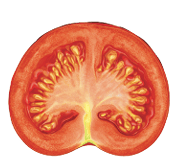
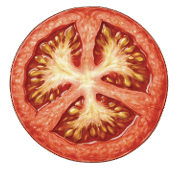
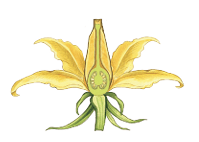
Link your observations of the L.S. and T.S. of the fruit with the internal structure of the ovary of same species.