Table of Contents

Chapter 12
Patterns in Life: Diversity and Classification
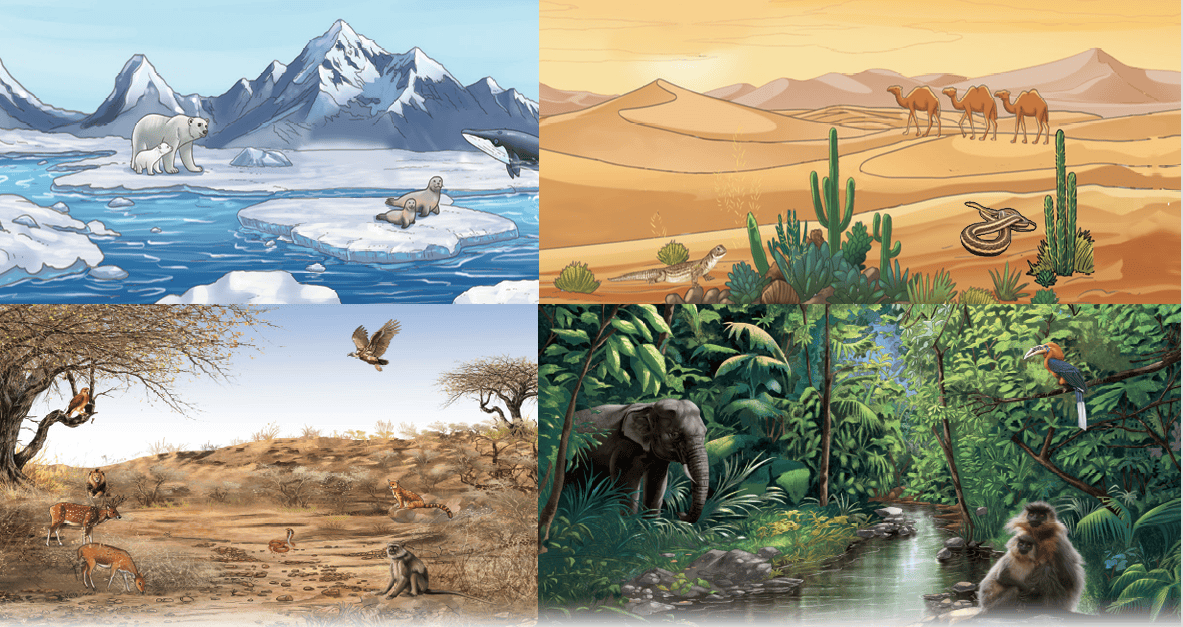
Have you ever wondered why some plants can survive long droughts while others cannot? Or, how certain insects protect crops while others damage them?
The Earth is home to an enormous variety of life forms. From microscopic organisms invisible to the naked eye to giant trees, from glowing jellyfish to soaring eagles, life exists in countless forms and habitats — from the snow-clad Himalayas to the coral reefs of the Andaman Sea. This immense variety of living organisms is known as biodiversity. Biodiversity is essential for life on the Earth. Every organism plays a role in keeping nature stable and functioning. Microscopic algae in the oceans release most of the oxygen we breathe. Fungi and bacteria decompose fallen leaves, and convert waste into manure, making the soil fertile. Birds, bees and bats pollinate flowers, while plants capture sunlight to prepare food that support nearly all life on the planet. These interconnections help sustain ecosystems and make the Earth suitable for living organisms.
Think It Over
- What do you understand by biodiversity?
- How does the grouping of organisms help us understand diversity?
- On what basis, are plants and animals classified?
- How does classification help address problems in farming?
Humans, too, depend on biodiversity for food, shelter, medicines and livelihoods. For centuries, farmers relied on their practical knowledge to conserve diverse crop varieties with useful characteristics, such as drought tolerance, pest resistance and their ability to grow in nutrient poor soils. They realised that diversity reduces the risk of crop failure and strengthens food security.
In such a vast diversity, organisms share certain similarities while also showing many differences. To study diversity systematically, scientists group and classify organisms based on their shared characteristics and evolutionary relationships. Classification helps us understand how organisms are related, how they function and how we can use this knowledge in activities, such as ecosystem management, biodiversity conservation, sustainable farming, and so on.
12.1 India as a Biodiversity Hotspot
The natural landscape of our country is diverse — with mountains in the north, desert in the west, rainforests in the North East India, plateaus in the south, and long coastlines along the Arabian Sea and the Bay of Bengal. Each of these regions has distinct soil types and different climatic conditions like temperature and rainfall.
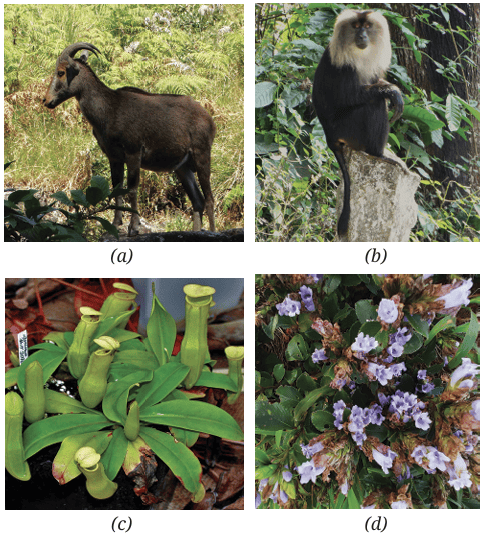
These diverse habitats together support a wide variety of species. Some of these species are restricted to particular regions of the world and are not found naturally anywhere else. Such species are called endemic species. For example, Nilgiri tahr (Fig. 12.1a), Lion-tailed macaque (Fig. 12.1b), Indian variety of the pitcher plant — Nepenthes khasiana (Fig. 12.1c) and Neelakurinji (Fig. 12.1d) are found only in India.
Regions that support a large number of endemic species and have undergone significant habitat loss are known as biodiversity hotspots. These areas are particularly important for biodiversity conservation. Regions, such as the Western Ghats, Indo-Burma (including North East India), the Himalayas, Sundaland (including the Nicobar Islands), are some examples of global biodiversity hotspots. These areas are especially rich in number and in the diversity of organisms. Protecting these regions is equally important, as they support food webs and help ecosystems remain healthy.
12.2 How has the Biodiversity Evolved?
The biodiversity that we see today on the Earth was not always the same. Small differences among individuals affected their chances of survival and reproduction by helping them adapt to changed conditions. These differences accumulated over many generations and gave rise to new forms of life.
The diversity we see today is therefore, an outcome of continuous changes occurring over a vast span of time, shaped by interactions between organisms and their surroundings. The study of this biological diversity is possible through a systematic framework that is provided by classification.
India’s Scientific Contributions
12.3 How to Classify Organisms?
Activity 12.1: Let us compare and classify
Fig. 12.2 shows the diversity of animals in an ecosystem. Observe the image carefully. Can you guess how the organisms are grouped in the image?
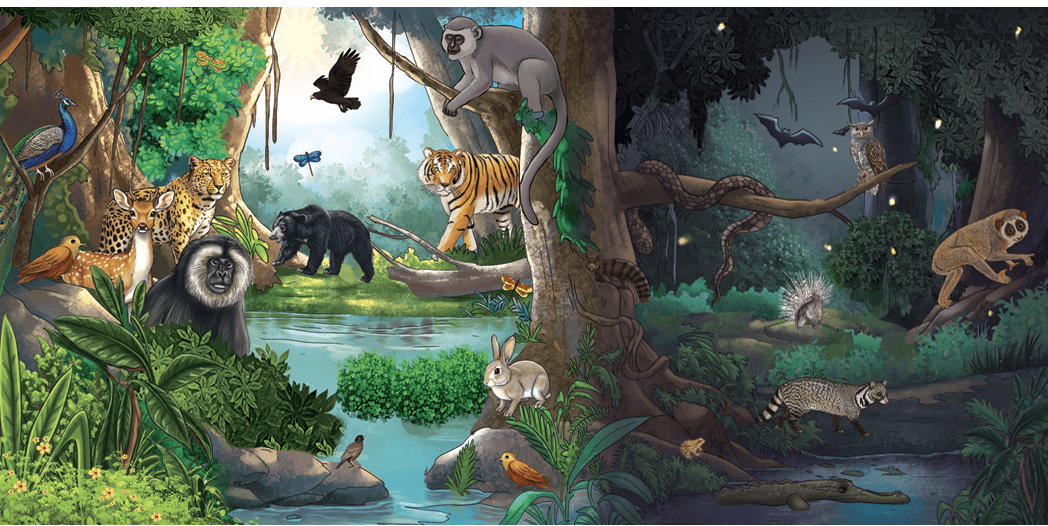
- Ponder on the questions given below:
- Which animals can you identify in the given picture?
- Where are they seen?
- Which animals in the picture seem active:
- during the day?
- during the night?
- both during the day and the night?
- Record your observations in Table 12.1.
- Now, try grouping the same organisms in more than one way. Each time change the criterion you are using for grouping (Table 12.2).
Table 12.1: Observation table for recording the data
| Organism (draw or write name) | Where do you see it? (flying high in air/flying near the ground/tree/water/ forest floor) | When does it appear to be active? (day/night/ unsure) | Any visible feature(s) |
|---|---|---|---|
| Owl | Tree | Night | Feathers |
Table 12.2: Grouping the organisms
| The grouping criterion | Which organisms fit in this group? | What feature or pattern helped you decide? |
|---|---|---|
| Carnivore | Eagle, tiger, leopard | Eating habits |
You may notice that the same organism can fit into different groups depending on the criterion you choose. This leads to an important question: how do scientists decide which features to use while grouping the living organisms? This question leads us to the idea of classification, a systematic way of organising the Earth’s living diversity.
Pause and Ponder
12.3.1 Some criteria to classify living organisms
Scientists often look at broad and easily visible features, and then look at more detailed features. They use a number of characteristics to group living organisms, some of which are given below:
- External features — visible characteristics, such as shape, size and body organisation.
- Mode of nutrition — autotrophic or heterotrophic.
- Internal structures — skeletal patterns, presence or absence of organs and different types of tissues.
- Cell structure — whether the organism is unicellular or multicellular, the cell is eukaryote or prokaryote, presence or absence of cell wall.
- Ecological role — producer, consumer, or decomposer
- Reproduction — asexual and/or sexual methods.
- Genetic similarity — similarities in inherited features, which scientists study in detail using DNA.
These features help in understanding the similarities and differences among organisms. Similar features in organisms suggest that they have evolved from common ancestors.
12.4 The Need for Classification
Imagine walking into a huge library where thousands of books are scattered all over the floor. You want to read the book, On the Origin of Species by Charles Darwin. Where would you begin? Without arranging books into subjects, authors, or sections, finding any book would be difficult. In the same way, the Earth is home to millions of organisms. Therefore, classifying these organisms systematically helps us in understanding them better.
Activity 12.2: Let us read a case study
Carefully read the given case study of Pakke Tiger Reserve.
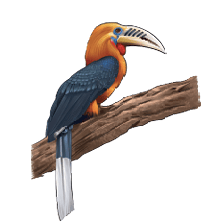
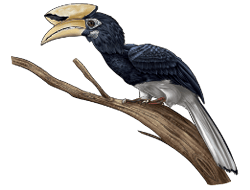
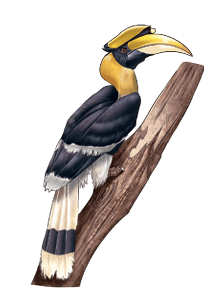
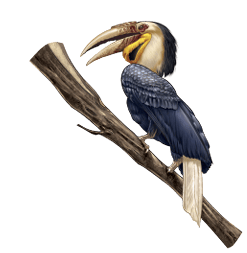
The Pakke Tiger Reserve in Arunachal Pradesh is a forest where scientists have recorded nearly 300 bird species, which is striking given that India as a whole has about 1,300 bird species. Pakke is also known for supporting four species of hornbills — the Rufous-necked Hornbill, the Oriental Pied Hornbill, the Great Hornbill, and the Wreathed Hornbill (Fig. 12.3). These large birds nest only in large, old trees with suitable cavities and feed on specific fruits. As a result, different hornbill species are found in different parts of the forest depending on tree size and fruit availability. Studying such patterns allows scientists to ask precise questions about biodiversity, such as —
- How are species distributed within a forest? Which plants and animals are closely linked?
- How does classifying the four hornbill species help us understand biodiversity?
- How can scientists keep track of so many species?
- The four hornbills look similar in some ways. What features can help scientists distinguish them from one another?
- What would happen if the large, old trees disappeared from the forest?
Think and discuss the case based on the following questions —
Many organisms show similarities in their external features, internal structure (such as tissues and organs) and cellular organisation. To make the study of such vast diversity easier, scientists group organisms based on their similarities and/or differences. This grouping helps to organise information, understand relationships among organisms and study life in a systematic manner. This scientific system of grouping living organisms is known as biological classification.
Biological classification helps us in various ways, such as —
- It makes the study of living organisms more organised and systematic.
- It helps us understand the similarities and differences among living beings.
- It helps us understand how different organisms are related to one another and how they interact.
- It helps us in identifying and naming the newly discovered organisms.
- It supports biodiversity conservation by identifying the organisms that are under the threat of extinction.
- It allows scientists all over the world to discuss about organisms using a common system.
12.5 Biological Classification Systems Over Time
In the previous section, you have learnt to identify various criteria for classifying the huge biodiversity in the world. Scientists have developed different classification systems over time, based on the knowledge available.
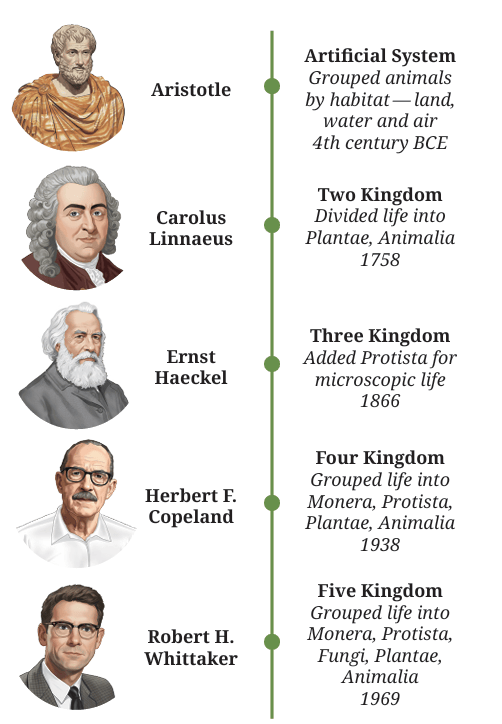
Aristotle, around the 4th century BCE, grouped animals based on their habitat — land, water and air. He also grouped them based on their external appearances. However, this system had limitations because it relied mainly on easily observable external characteristics. In the 18th century, scientists introduced the two kingdom system. All living organisms were divided into Plantae and Animalia.
India’s Scientific Contributions
Plantae-- organisms that do not move from one place to another and synthesise their own food.
Animalia-- organisms that move from one place to another and depends on other organisms for food.
But this system created confusion. Where should organisms like Amoeba, Paramecium and bacteria be placed? Amoeba and Paramecium move like animals but are unicellular and heterotrophic. However, plants and animals are multicellular organisms. To address this, scientists added a third kingdom, Protista, to include unicellular microscopic organisms.
As microscopes improved, scientists noticed an important difference. An amoeba has a true nucleus (membrane-bound) but bacteria do not. Since both are unicellular but very different, bacteria were placed in a separate kingdom called the Monera. This led to a four kingdom classification system — Plantae, Animalia, Protista and Monera. The kingdom Protista includes mostly unicellular organisms with a true nucleus. Later, scientists noticed that fungi like mushrooms, do not move like plants but have a heterotrophic mode of nutrition. They obtain nutrients by absorption, many absorb nutrients from dead and decaying matter (though some are symbiotic and some are parasitic). Therefore, fungi were placed in a separate kingdom. This resulted in the five kingdom classification, which includes Monera, Protista, Fungi, Plantae and Animalia (Fig. 12.4).
12.6 Five Kingdom Classification
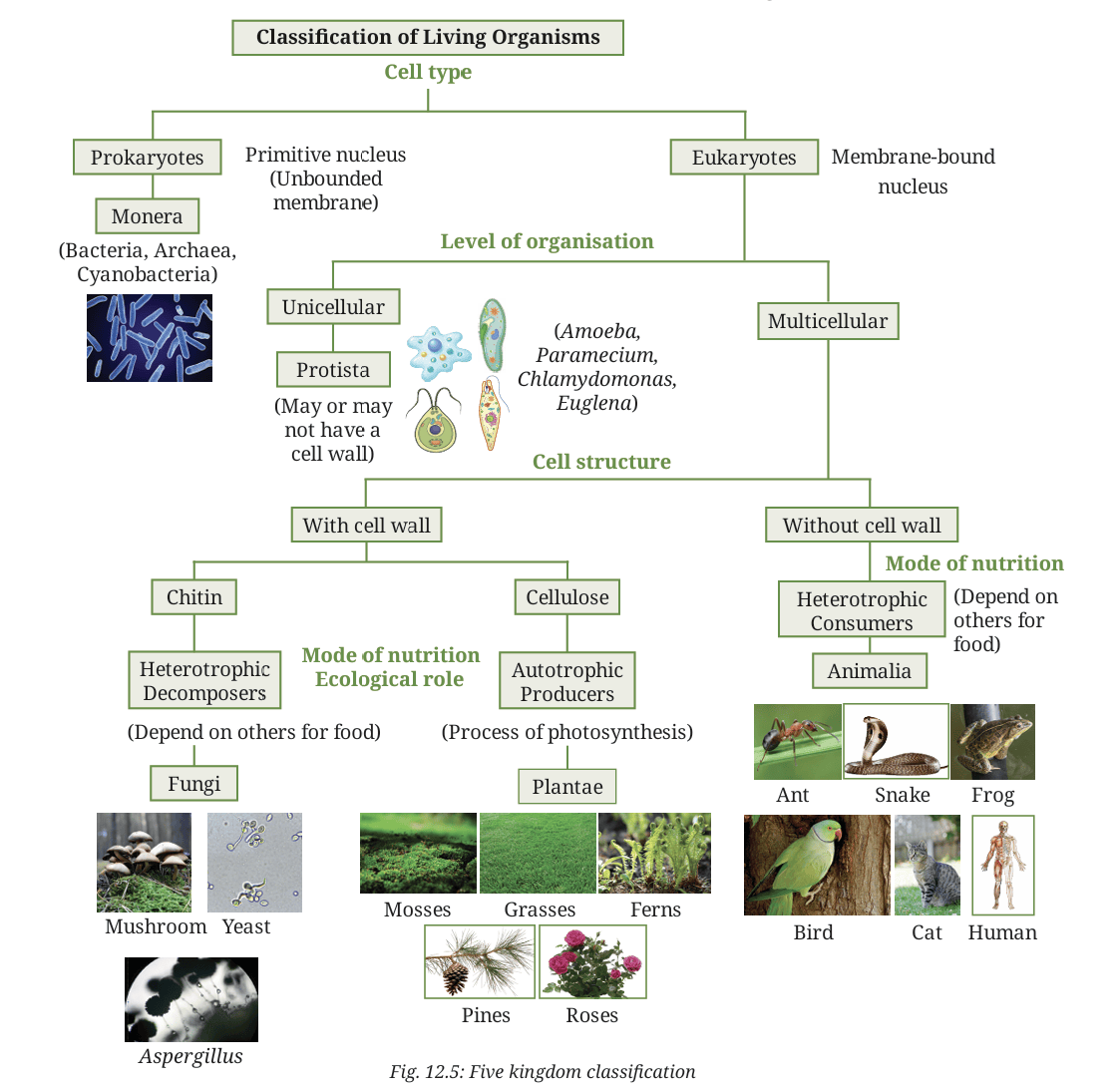
In the five kingdom classification, all life forms are grouped based on certain common features.
Activity 12.3: Let us study
- Study the concept map (Fig. 12.5)
- List the criteria which form the basis of five kingdom classification.
- Compare the criteria you have listed after studying the concept map and the criteria given below:
- Cell type — prokaryote or eukaryote
- Cell structure — presence or absence of a cell wall
- Level of organisation — unicellular or multicellular
- Mode of nutrition — autotrophic or heterotrophic
12.6.1. Kingdom Monera — Unicellular prokaryotes
Activity 12.4: Let us explore
- In the school laboratory, observe the available permanent slides of bacteria and cyanobacteria under the microscope.
- Compare them with Fig. 12.6.
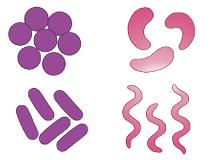
What do you observe? Bacteria and cyanobacteria are single-celled prokaryotes that are grouped under Monera (Fig. 12.6). Bacteria are found everywhere, including soil, water, air, hot springs and other extreme environments where most organisms cannot survive and even inside the human bodies. They are also found in the gut of ruminants and are responsible for the production of biogas from the dung of these animals. Some bacteria are harmful (pathogens) and cause diseases but many are useful like Lactobacillus and Rhizobium. Cyanobacteria are autotrophs and decomposers. In addition to nutrient cycling, some bacteria also break down pollutants like oil, pesticides, sewage, and so on.
Threads of Curiosity
Bridging Science and Society
 Ram Bux Singh is popularly known as the ‘Father of Modern Biogas’. He was a pioneering Indian scientist who contributed to the development of biogas technology. In 1957, he established India’s first scientifically designed biogas plant at Ramnagar, Sitapur, Uttar Pradesh, which marked the beginning of systematic modern biogas research in the country. He later worked extensively on developing low-cost, efficient biogas plants for rural areas. He also served as an international consultant and helped set up biogas plants in several countries. His lifelong efforts played a crucial role in promoting renewable energy, waste management and sustainable development through technology.
12.6.2 Kingdom Protista — Unicellular eukaryotes
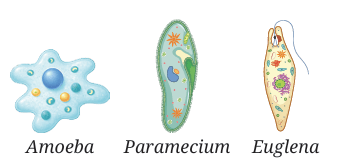
All single-celled eukaryotes without cell wall or with cell wall made up of cellulose are grouped under the kingdom protista. They are microscopic and highly diverse organisms. You can study some of these protists (Fig. 12.7) by making a slide from hay infusion as explained below.
Activity 12.5: Let us make
To make a hay infusion, follow the steps given below —
- Collect a small sample of grass after the lawn has been mowed, or collect straw or fodder.
- Take a small glass bottle and fill one fourth of it with the grass, straw or fodder.
- Fill the bottle with stagnant water or pond water and mix it with the collected plant material.
- Cover the bottle with a muslin cloth and tie it using a thread.
- Keep the bottle aside undisturbed for a week.
- Slightly open the mouth of the bottle by removing the muslin cloth, just enough to insert a dropper inside it and carefully take a drop of water.
- Put the drop of water on a clean slide and observe it under a microscope.
Pause and Ponder
Caution: The hay infusion may smell bad. Therefore, take precaution during lab exercises.
- Wear a lab coat, mask and hand gloves.
- Discard the hay infusion after autoclaving.
Do you notice moving organisms in the drop of water under the microscope? Can you identify them by comparing them with Fig. 12.7?
Protista includes single-celled eukaryotic organisms that live in water or moist places (Fig. 12.7). Some are autotrophic and others are heterotrophic. Protists are an important link in aquatic food chains, some produce oxygen while others serve as food for small animals. Some protists function as decomposers and help in nutrient cycling.
12.6.3 Kingdom Fungi — Multicellular, heterotrophic eukaryotes with a cell wall
Fungi are mostly multicellular eukaryotes with cell walls made of chitin. They do not make their own food. They either absorb nutrients from dead or decaying matter through fine filaments (which together form a network known as mycelium). Most of the fungi are saprophytes and therefore, they play a very important ecological role as decomposers, that means, they feed on dead organic matter, such as fallen leaves, twigs or dead organisms. They break down the complex organic matter into simpler substances and make them readily available in soil as minerals. Some of the fungi establish a mutualistic (symbiotic) relationship with other organisms while others live as parasites, and cause diseases in plants and animals. They reproduce both sexually and asexually, often by forming spores, and grow best in warm and moist conditions.
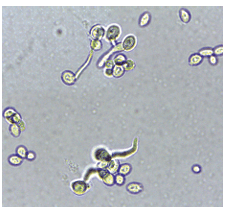
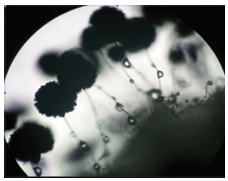
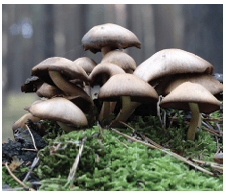
Yeast (Fig. 12.8a) and bread mould are common fungi. However, yeast is a unicellular organism, since its cell wall is made up of chitin, it has been put under fungi. Mushrooms (Fig. 12.8c) are macroscopic fungi that reproduce by spores. Some fungi like Aspergillus (Fig. 12.8b) and Penicillium are used to make enzymes and antibiotics. Fungi are important decomposers and help recycle nutrients. Without them, the decay of dead plants and animals would be greatly reduced, adversely affecting the soil fertility and ecological balance.
Bridging Science and Society
12.6.4 Kingdom Plantae — Multicellular, autotrophic eukaryotes with a cell wall
Plants are multicellular, autotrophic organisms that perform photosynthesis. Their cells have a rigid cell wall primarily made up of cellulose, which provides support and protection. All plants belong to the kingdom Plantae. Plants form the base of most of the food chains and release oxygen which is essential for life on the Earth. Kingdom Plantae is further divided into five classes.

Thallophyta (algae) — Primitive plants
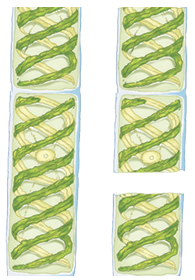
Thallophytes (thallos means undifferentiated body and phyton means plant) are among the simplest plant forms and are mostly found in water or moist environments. They form a thallus, a simple body that allows direct exchange of gases, nutrients and water with the surroundings. They are well-adapted to aquatic habitats. An example of Thallophyta is Spirogyra (Fig. 12.9).
Bridging Science and Society
Bryophyta — First steps on land, still need water
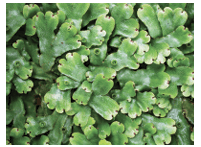
Bryophytes (bryon means moss and phyton means plant), such as mosses and liverworts (Fig. 12.10), which represents an important shift from water to land. You might have seen them as large green mats on damp rocks or even on the walls of some old buildings, or even on soil surfaces as green mats. Bryophytes have a more differentiated body as compared to thallophytes. They have root-like structures called rhizoids, and may possess stem-like and leaf-like simple structures. Bryophytes survive in moist and shady places, growing as green mats on the soil, especially during the monsoons. Examples of Bryophytes include Marchantia and moss (Fig. 12.10).
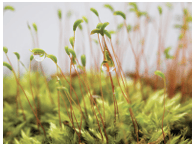
Activity 12.6: Let us explore
- Observe some bryophytes with the help of a hand lens. Collect them in a watch glass.
- Put a drop of water on it and observe it under a dissecting microscope. A dissecting microscope enables us to view magnified images of live specimens.
How do they differ from the leaves that you usually observe in your surroundings?
Bryophytes require water for reproduction. Therefore, they are called the ‘amphibians’ of the plant kingdom. They show how plants began to colonise land, while remaining dependent on moisture.
Pteridophyta — Adaptation to land and having structural transport system
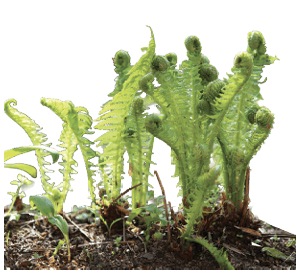
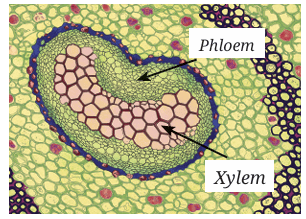
Look at Fig. 12.11a. What changes do you observe in the plant structure as compared to thallophytes and bryophytes? Pteridophytes (pteris derived from pteron means feather and phyton means plant), such as ferns, possess true roots, stems and leaves. How do you think that the transport of water and food takes place in all parts of these plants? One possible explanation is that ferns have specialised transport tissue. How can you test this explanation? A cross section of the stem of a fern can be cut and seen under a microscope. You may also observe a permanent slide of a cross section of a fern stem available in your school laboratory. The cross section shows vascular tissues, xylem and phloem, which transport water and food, respectively, throughout the plant (Fig. 12.11b). Pteridophytes require aquatic conditions for reproduction and do not produce seeds.
Pause and Ponder
- Which plant features reduce their dependence on water but still require moist conditions?
- Why do taller plants need specialised transport tissues?
- How do seeds and fruits affect, where and how plants can survive?
Activity 12.7: Let us compare
- Recall the cross section of the sunflower stem you have studied in Chapter 3 (Fig. 3.7).
- Compare the cross section of the stem of a fern, a pteridophytic plant (Fig. 12.11) with a cross section of sunflower stem you studied in Chapter 3 (Fig. 3.7).
- What difference do you observe in the vascular tissue of the fern stem and of the stem of higher plants? Write your observations. Share and discuss them in class.
Gymnosperms — Reproduction without water
Gymnosperms (gymnos means naked and spermos means seed), such as pines (Fig. 12.12) and cycads are well-adapted to cold and dry regions. Their needle-like or scale-like leaves reduce water loss and withstand harsh conditions. They produce seeds, which protect the developing embryo and contain stored food. Gymnosperms do not require aquatic conditions for fertilisation. Their seeds are not enclosed in fruits and are often exposed on cones.
Angiosperms — Efficient reproduction and seed dispersal
Angiosperms (angeion means vessel and spermos means seeds) or flowering plants, represent plants with the most complex body organisation.
They produce flowers and fruits (Fig. 12.13). Flowers attract pollinators, increasing the efficiency of reproduction, while fruits help spread seeds to new locations. These features allow angiosperms to occupy a wide range of environments. Therefore, they are the most diverse plant group on the Earth.
Activity 12.8: Let us discuss
Collect different leaves from your surroundings, and observe their shape and venation. Group them as monocots or dicots. Discuss how their structures help them adapt in different conditions to survive.
Bridging Science and Society
Different plant groups present different ways of solving problems, each with advantages and challenges or exceptions for survival.
Activity 12.9: Let us study
- Carefully study the salient features of each plant group.
- Analyse the salient features, and write the advantages for survival of the group and the exceptions or challenges faced in the given columns.
Table 12.3: Classes of Kingdom Plantae with their advantages and challenges
| Plant groups and salient features | Advantages of the group for survival | Exceptions/ Challenges |
|---|---|---|
Thallopyta
|
|
|
Bryophyta
|
|
|
Pteridophyta
|
|
|
Gymnosperm
|
|
|
Angiosperm
|
|
|
From algae to angiosperms, plant groups show a sequence of structural changes that help plants meet the challenges of life on land. Early plants relied on water for support and reproduction. Gradually, plant groups evolved transport tissues, seeds and flowers.
Overall, the diversity of plant forms reflects multiple ways of balancing growth, transport, reproduction and survival in different environments.
12.6.5 Kingdom Animalia — Multicellular, heterotrophic eukaryotes
Animals are multicellular and heterotrophic organisms. They depend on other organisms for their food. Most animals exhibit the characteristics of locomotion, rapid response to stimuli and coordinated behaviour. These abilities allow animals to actively search for food, avoid predators and interact dynamically with their surroundings.
One of the major criteria for classifying animals is the presence or absence of a notochord, which is a flexible rod-shaped structure. Based on the absence or presence of the notochord, animals are classified into two groups — non-chordata (invertebrata) and chordata. In some chordates, notochord acts as a precursor for the development of the vertebral column. The chordata is further classified as protochordata and vertebrata.
Invertebrates — Animals without a notochord
Invertebrates lack a notochord, yet they show a wide range of body organisation, from a simple structure to complex organ systems. Studying invertebrates allows us to trace how the animal body gradually changed over time, leading to advancement in traits like movement, diverse feeding habits, and enhanced control and coordination, while also introducing exceptions and new challenges.
Porifera (pore-bearers) — Multicellularity without tissues
Sponges (Fig. 12.16a) represent one of the simplest animal body plans. They are multicellular but lack organisation of tissues and organs. Numerous pores in their body allow water to continuously flow through it, bringing food particles and oxygen directly to individual cells, carrying the waste away. Sponges remain fixed in one place and are found in aquatic environments. Do you think they would be able to survive on land? Why or why not?
Cnidaria — True tissues and active feeding
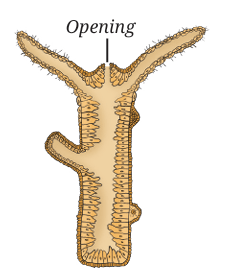
Cnidarians, such as Hydra (Fig. 12.14), jellyfish (Fig. 12.16b) and corals show a major change in body organisation. Tissue-level organisation is present in them which allows specialised cells to perform specific functions, such as tentacles, which are used for capturing prey. Unlike poriferans, cnidarians can catch their prey using tentacles instead of depending on water currents to bring food particles inside through pores. However, cnidarians possess a single opening that functions for both food intake and waste removal. Can you hypothesise what limitations this body structure might have?
Threads of Curiosity
Platyhelminthes (flatworms) — Bilateral symmetry and directional movement
Flatworms show organisational advancement through bilateral symmetry (organism’s body can be divided into two halves along one plane), in which the body has distinct head-tail and front-back regions. This body organisation allows better coordination of movement and this is the beginning of directional activity. Their flattened bodies permit efficient diffusion of gases without specialised respiratory organs but there is still a single opening for food intake and waste elimination.
Many flatworms have adopted a parasitic lifestyle. Hooks and suckers are present in the parasitic forms which helps them to attach firmly to the host tissues for obtaining nutrients (Fig. 12.16c).
Bridging Science and Society
Nematoda (roundworms) — Efficient body design with two openings
Roundworms have elongated, cylindrical bodies (Fig. 12.16d). This body structure allows their efficient movement through soil, water, or host tissues. This body form increases the range of environment in which roundworms can survive, despite relatively simple internal organisation. The body has two openings (mouth and anus). The organ system level of body organisation is distinct in male and female worms.
Annelida (segmented worms) — segmentation and body cavities
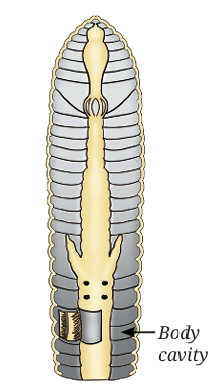
Annelids, such as earthworms (Fig. 12.16e), represent a notable development in body organisation. Their bodies are cylindrical and are divided into segments. What advantages segmentation might offer to an organism? Observing how an earthworm moves may help you form a hypothesis. They possess organ system level of organisation. Presence of muscles help them in locomotion, and nerve cord helps in control and coordination.
Segmentation allows greater flexibility and more precise control of movements. A body cavity is also present in them as shown in Fig. 12.15.
Arthropoda — Jointed appendages and an external skeleton
Arthropods (arthro means limbs and poda means appendages) includes insects, crabs (Fig. 12.16f) and spiders. They have segmented bodies with different segments specialised for different functions. A defining structural feature of arthropods is the development of a hard external skeleton (rigid external covering). What advantages can the outer covering provide?
This outer covering provides protection, reduces water loss and supports powerful muscles, allowing arthropods to survive in dry and exposed environments.
Pause and Ponder
| Image | 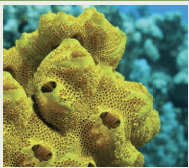 | 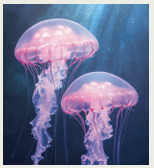 | 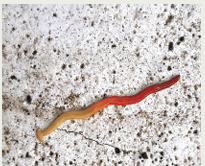 | 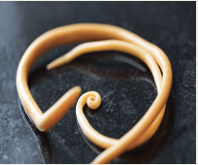 |
|---|---|---|---|---|
| Porifera | Cnidaria | Platyhelminthes | Nematoda | |
| Habitat | Water (Marine) | Water (Fresh and marine) | Water/inside host | Soil/water/inside host |
| Level of organisation | Cellular | Tissue | Organ | Organ system (digestive system) |
| Skeleton | X | X | X | X |
Mollusca — Organ system level organisation with soft bodies
Molluscs, such as snails (12.16g), squids and octopuses show organ system level organisation with soft bodies. In many molluscs, the development of a shell provides protection to these soft bodies. Their body is segmented with a distinct head, a muscular foot and a hump.
This group shows how a basic body plan can be modified in different directions depending on environmental demands.
Echinodermata — Internal support without a notochord
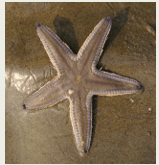
Echinoderms (echinos means spiny and derma means skin), such as starfish (Fig 12.16h) and sea urchins possess a hard internal skeleton made of calcium carbonate. Although they lack a notochord, this internal skeleton provides them protection and controlled movement. Their body organisation is quite like that of more complex animals, showing a gradual shift towards internal skeletal support.
Looking across invertebrates
From sponges to echinoderms, animal body structure shows a pattern of increasing complexity in body organisation. New structural features improve feeding, movement and protection but often introduce new challenges. These help explain survival in diverse environments.
Protochordates — The appearance of the notochord
Protochordates (like Amphioxus) possess a notochord at least once during their life. This structure provides internal support without restricting movement and represents a crucial change in body organisation. Protochordates are a primitive type of chordates which help us understand how animals with a notochord may have arisen from simpler forms.
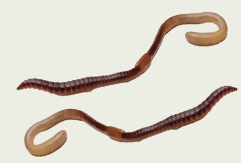 | 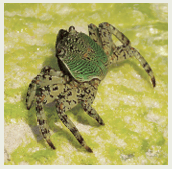 | 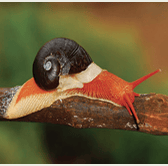 |  |
|---|---|---|---|
| Annelida | Arthropoda | Mollusca | Echinodermata |
| Moist soil/water | Land/water | Water/moist land | Marine water |
| Organ system | Organ system | Organ system | Organ system |
| X | Exoskeleton | Exoskeleton | Endoskeleton |
Vertebrates — Animals with a backbone
Vertebrates possess a vertebral column (backbone), an internal skeletal structure that supports the body and protects vital organs, such as the brain and the spinal cord. This internal framework allows a larger body size, efficient movement and the development of complex organ systems. Vertebrates show advanced sensory abilities and coordinated behaviour.
Vertebrates are classified into five groups, namely fish, amphibians, reptiles, birds and mammals based on the broad patterns of their habitat use, body covering and reproduction.
Bridging Science and Society
Forests with rich biodiversity play a vital role to create physical, biological and chemical barriers to protect against challenges. Some of the examples are as follows:
- Large diversity of trees in mangrove forests helped during the super cyclone that hit Orissa in 1999. Villages with more mangroves experienced less destruction.
- Rich biodiversity generally correlates with lower tick-borne disease risk. In the Western Ghats of India, where forest diversity acts as a biological barrier against Monkey Fever (Kyasanur Forest Disease, KFD), as many animals are the hosts where the virus cannot replicate inside their bodies.
- Diverse microorganisms in forest soils and plant roots absorb, transform, or break down pollutants. This improves water quality and protects ecosystems. Mangrove soils trap sediments and heavy metals, preventing pollution from spreading into oceans and rivers.
12.7 Adaptations as Outcomes of Structural Change
The diversity seen in animals today are outcomes of changes in the body structure over long periods of time. Fins and gills allow fish to move and breathe in water. Feathers and hollow bones make flight possible in birds. Fat storage in camels and thick fur in polar bears illustrate how structural features support survival under extreme conditions. In mammals, mammary glands represent an additional structural and functional change that improves the survival of young ones. These features are interconnected and reflect how different vertebrates tackle the challenges of survival in different environments. All these characteristics show that animal diversity reflects a wide range of body forms found in organisms living under different environmental conditions.
12.7.1 The hierarchical nature of classification
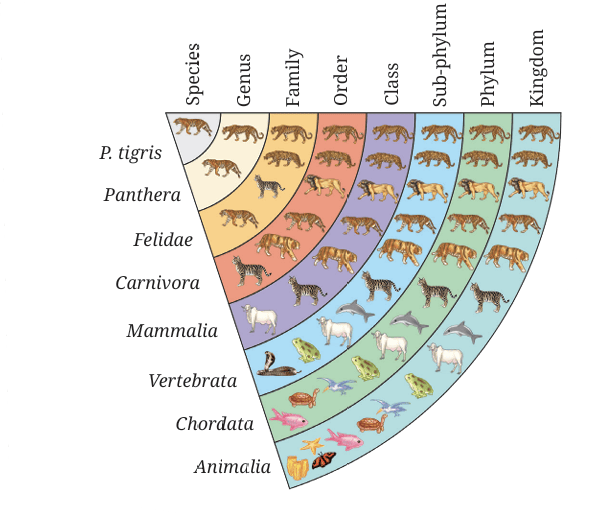
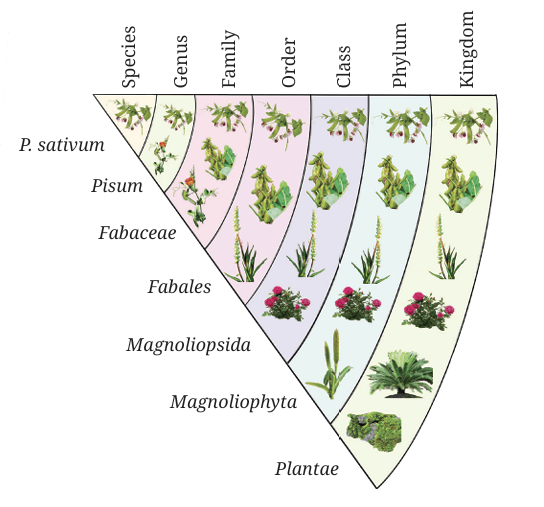
Observe and analyse Fig. 12.17. What do you infer? Classification follows a step-by-step order, starting from very broad groups, and moving towards smaller and more specific ones. At each lower level, organisms share more common features. Every lower group is a part of the group above it.
Kingdom -> Phylum -> Class -> Order -> Family -> Genus -> Species
This arrangement works like an address. Just as a house address helps us locate a place exactly, classification helps scientists identify, compare and study organisms accurately, and understand how they are related.
| Tiger | |
|---|---|
| Kingdom | Animalia |
| Phylum | Chordata |
| Sub-phylum | Vertebrata |
| Class | Mammalia |
| Order | Carnivora |
| Family | Felidae |
| Genus | Panthera |
| Species | P. tigris |
| Pea | |
|---|---|
| Kingdom | Plantae |
| Phylum | Magnoliophyta |
| Class | Magnoliopsida |
| Order | Fabales |
| Family | Fabaceae |
| Genus | Pisum |
| Species | P. sativum |
12.8 Scientific Naming — The Binomial System
A tiger is called bagh in Hindi, or puli in Tamil, tiger in English and tigre in French. If people from different regions discuss this animal, confusion may arise. To avoid this, scientists use a universal system of naming living organisms called binomial nomenclature. This system was introduced by Carolus Linnaeus in the 18th century. According to this, every organism has a scientific name with two parts, written in Latin or a Latinised form (Table 12.3).
Table 12.3: Scientific names of organisms in the binomial system of nomenclature
| S. No. | Common name | Scientific Name |
|---|---|---|
| 1. | Tiger | Panthera tigris |
| 2. | Mango | Mangifera indica |
The first word, Panthera or Mangifera, is the name of the genus and the second, tigris or indica, is the name of the species. A genus groups closely related species that share common features, in this case, Panthera tigris (tiger) and Panthera leo (lion) under the genus Panthera — the roaring cats (possessing the ability to roar), have similar skull structure, and so on. The species name indicates a group of organisms that consists of similar individuals capable of interbreeding and producing offsprings. Together, the genus and species name form a unique scientific name used worldwide.
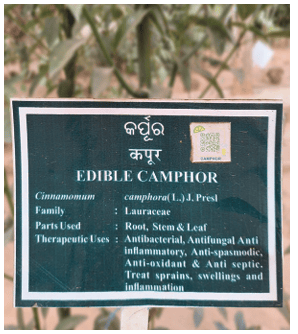
Rules for writing the scientific names
- The name has two parts — genus and species.
- The genus name begins with a capital letter and comes first, followed by the species name, which is written in small letters (lower case).
- The scientific name is written in italics when printed, or underlined when handwritten (Fig. 12.18).
Ready to Go Beyond
- Bacteria
- Archaea
- Eukarya
Threads of Curiosity
Meet a Scientist
 Birbal Sahni was an eminent scientist who studied fossil plants. He founded the Birbal Sahni Institute of Palaeosciences (BSIP) in Lucknow, which continues his work on ancient plants and past environments even to this day. His studies helped link present-day plants with their ancestors and showed that life on the Earth has a long, connected history. His work continues to inspire young scientists to explore how fossils reveal the story of our planet.
12.9 Fossils as Evidence
When we talk of diversity changing over time, what evidence do we have? Fossils are preserved remains of plants and animals found in layers of rocks, sand and mud. Generally, older layers contain simpler organisms, while newer layers show more complex forms. From giant dinosaurs to early humans and ancient plants, some important fossils have been discovered in India. Fossils act as natural records that help us understand how life has changed over millions of years.
12.10 Biodiversity Under Threat
Each species, large or small, plays an important role in nature. Plants produce food and oxygen, animals pollinate flowers and disperse seeds, and microorganisms recycle nutrients. Human activities, such as pollution, deforestation, the overuse of resources and climate change are reducing biodiversity. When one species disappears, others that depend on it may also decline in number and eventually also, disappear.
Pause and Ponder
- Does the term ‘biodiversity’ relate only to the variety of organisms, or does it encompass other elements?
- If you find a new organism in a pond, what features will you observe to classify it and why?
- Why do genetic studies provide deep information about living beings?
- How can changes in climate affect the biodiversity?s
Threads of Curiosity
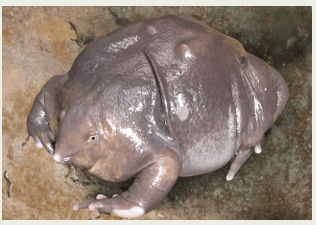
The Purple Frog lives underground for most of the year and comes out only during the monsoon to breed. It belongs to an ancient family of frogs as understood from fossils. Its discovery in 2003 helped scientists understand ancient amphibian groups and highlighted the need for biodiversity conservation in the Western Ghats.
Bridging Science and Society
At a Glance
- Life on the Earth exists in many forms, from simple bacteria to complex animals.
- Scientists classify organisms based on the cell structure, number of cells, mode of nutrition and the organism’s ecological role.
- Whittaker’s five kingdom classification system — Monera, Protista, Fungi, Plantae and Animalia — is a simple and useful system to understand diversity.
- Kingdom Plantae is further divided into five classes — Thallophyta, Bryophyta, Pteridophyta, Gymnosperm and Angiosperm.
- Kingdom Animalia is divided into non-chordata (invertebrates) and chordata (vertebrates) on the basis of formation of notochord. Non-chordata (Invertebrates) has been divided into phyla — Porifera, Cnidaria, Platyhelminthes, Nematoda, Annelida, Arthropoda, Mollusca, Echinodermata.
- Protochordates show a transition from invertebrates to vertebrates as they possess notochord atleast once in their life. Vertebrates are further divided into groups — fish, amphibians, reptiles, birds and mammals.
- Classification is not just about naming organisms. It helps us understand the relationships among organisms, trace the history of life on the Earth and conserve the biodiversity.
Revise, Reflect, Refine
- Meena and Hari observed an animal in their garden. Hari called it an insect while Meena said it was an earthworm. Choose the correct option which confirms that it is an insect.
- Bilateral symmetrical body
- Body with jointed legs
- Cylindrical body
- Body with little segmentation
- Sponges represent one of the simplest animal body plans. Their bodies lack true tissues and organs. Which feature of sponge cells supports its classification under the animal kingdom?
- Absence of mitochondria
- Ability to photosynthesise
- Presence of a cell membrane
- Presence of a cell wall
- Observe two different animals in your immediate environment. What features help you distinguish between them? How do these features help place them into different groups?
- How would a scientist justify choosing cellular organisation as a more fundamental characteristic for the basis of classification rather than the presence of xylem and phloem?
- You find an unlabelled slide of a single-celled organism that has a well-defined nucleus and multiple cilia. Which group would it most likely belong to? Give reasons.
- How does the diversity of organisms contribute to the balance and stability of an ecosystem?
- If all unicellular organisms were grouped into a single kingdom, what problems would arise?
- Viruses were studied in earlier classes. Why are they not placed in any of the five kingdoms? Give reasons.
- If you were asked to revise the five kingdom classification, would you create a separate category for viruses or keep them outside the system? Justify your answer and explain what this indicates about the evolving nature of scientific classification.
- Viruses contain genetic material like living organisms but lack cellular organisation. Which features prevent them from fitting into the five kingdom system? What does this tell us about the limitations of classification systems?
- Both pteridophytes and bryophytes lack flowers and seeds, yet they are placed in different groups. Explain this classification using their key features.
- In the classification hierarchy, which group — class or genus — has fewer members but more features in common? Explain your answer.
- A scientist discovers a new organism with the characteristic features of locomotion and autotrophic nutrition. Which character(s) would help the scientist identify the organism belonging to Protista according to the five kingdom classification?
- A researcher identified a unicellular eukaryotic organism as fungi. What identification key would you suggest according to the five kingdom classification to keep a unicellular organism in the Kingdom Fungi?
- During a long-term ecological study, students examined organisms collected from three different environments — a freshwater pond, damp soil near decaying logs and the digestive tract of animals. Instead of naming organisms directly, scientists recorded only structural, cellular and nutritional features as given in the table below.
- Identify one organism that clearly belongs to the Kingdom Fungi. State one observation that supports your answer.
- Which organism would be placed in the Kingdom Monera? Mention one characteristic that justifies this placement.
- Organisms R and Q are both eukaryotic, yet they are placed in different kingdoms. Analyse the criteria that separate them.
- Explain why organism S cannot be classified using the mode of nutrition alone.
- Organism T does not fit into any of the five kingdoms. Which fundamental characteristic used in classification does it lack and what does this reveal about the limitations of classification systems?
- If classification were based only on habitat, which organisms might be incorrectly grouped together? Explain the scientific consequences of such a classification.
- Imagine scientists discover a new organism that is multicellular, eukaryotic, lacks chlorophyll and absorbs nutrients from a host externally. Should it be placed under fungi or animalia? Justify your reasoning using classification criteria.
| Organisms | Key Observations |
|---|---|
| P | Microscopic; no true nucleus; rigid cell covering; survives high salinity and temperature |
| Q | Multicellular; filamentous body; cell wall present; no chlorophyll; grows on dead organic matter |
| R | Unicellular; true nucleus; contractile vacuole present; moves using flagella; shows photosynthesis in light but heterotrophic in the absence of light |
| S | Multicellular; well-differentiated tissues; backbone present; aquatic respiration during early life stage |
| T | Acellular; contains genetic material; remains inactive outside a host cell |
The students realised that some organisms fit neatly into Whittaker’s f ive kingdom classification, while others challenged the very basis of this classification.
Based on the case study, answer the following questions —
The Journey Beyond
- Visit a nearby park or a water body. Observe the water body and its surroundings. Identify ten organisms and classify them into kingdoms.
- Interview a gardener or a forest worker. Ask them how they identify species. Compare the traditional scientific methods of identification.
- If you were studying the Pakke Tiger Reserve or any other bird sanctuary of your choice, how would you organise the information about the bird species?
- Conduct a survey in a forest area near a village, identify edible and poisonous mushrooms with the help of indigenous knowledge of community resource person(s).
- Collect and study the postal stamps of India and the world released over time on diversified flora and fauna. Based on your learning, make your own criteria and classify them. Organise a philately (collection of postage stamps) exhibition in your school and showcase your work in this exhibition.
- Investigate an extinct species and analyse how its disappearance impacted the organisms that depend on it, and how this affected the ecological balance of the ecosystem.
- Study the diversity of farm animals used in different types of farming practices in various parts of the country.